The way people search for products and services is changing rapidly. Instead of browsing through pages of search results, many consumers now ask AI assistants for direct recommendations. Whether they use ChatGPT, Gemini, Perplexity, or Google's AI-powered search experience, users expect fast, reliable answers. This shift makes GEO ranking factors more important than ever. Brands that understand how AI evaluates content are better positioned to appear in conversations that influence buying decisions. While SEO still matters, the future belongs to businesses that combine it with smarter, AI-focused optimization.
AI Search Prioritizes Trust Before Traffic
Traditional search engines focused on ranking webpages based on keywords, backlinks, and technical optimization. AI search engines take a broader approach. They analyze information from multiple trusted sources before generating a response. Rather than simply listing websites, they recommend products, brands, or solutions they believe best match the user's intent.
This means your content should answer real questions with depth and clarity instead of targeting isolated keywords. AI models are more likely to reference brands that consistently publish reliable information across different topics within their expertise. This is where generative AI search engine optimization becomes an important part of modern digital marketing.
Understanding GEO Ranking Factors That Influence AI Visibility
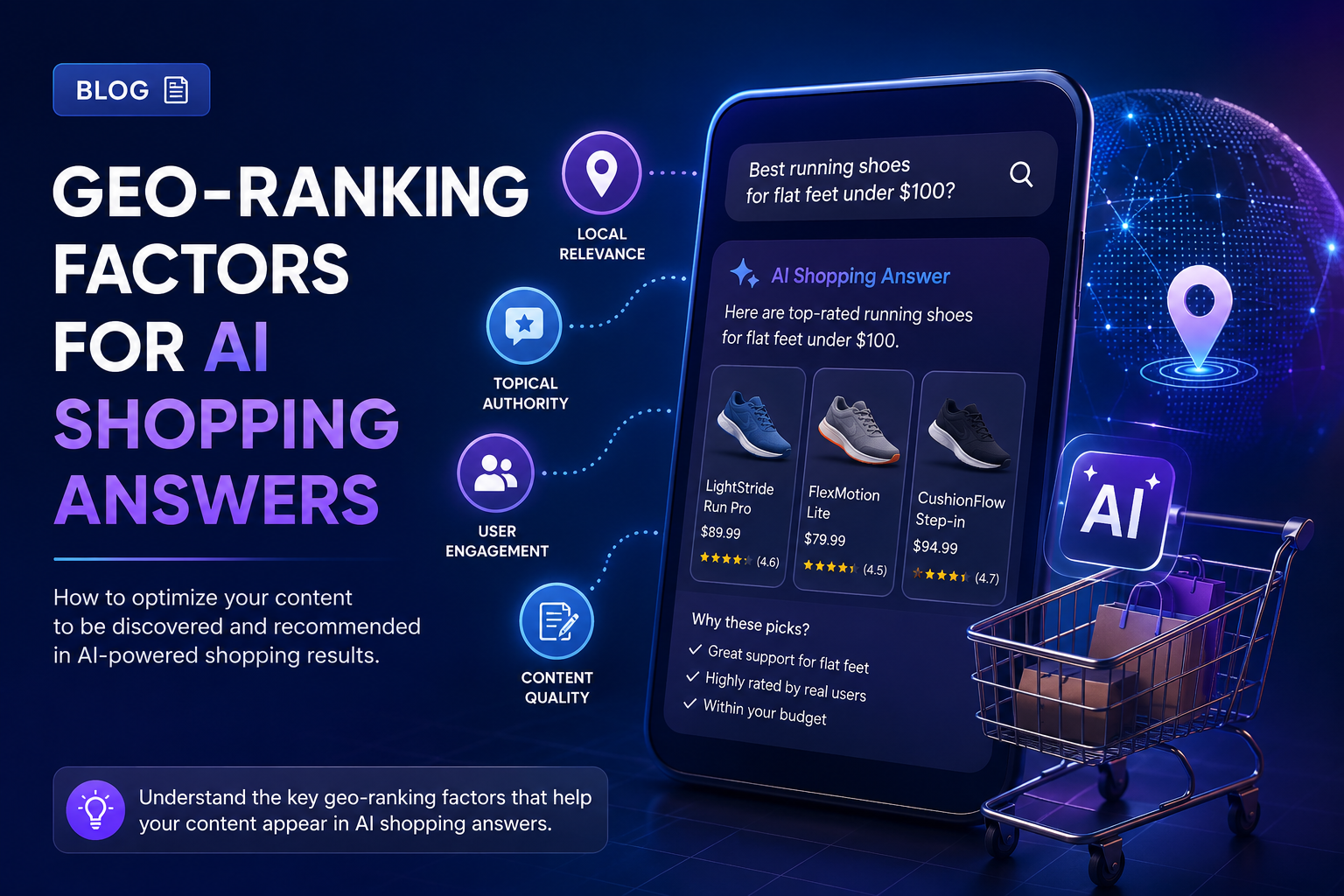
GEO ranking factors focus on how AI systems interpret, evaluate, and trust your content. While search engines still crawl websites, AI models also assess whether your content provides meaningful context, demonstrates expertise, and aligns with user intent.
One of the strongest signals is topical authority. Brands that consistently publish comprehensive content around a specific subject are easier for AI to recognize as trusted resources. Instead of creating disconnected articles, businesses should build content clusters that answer related questions and cover a topic from multiple angles.
Structured information also plays a major role. Clear headings, descriptive titles, organized sections, FAQs, and schema markup help AI understand the relationships between concepts. When information is presented logically, AI can extract accurate answers more confidently.
Freshness is equally valuable. Industries evolve quickly, and outdated information can reduce credibility. Regularly updating content with new examples, statistics, and insights signals that your brand continues to provide relevant knowledge.
Content Depth Creates Better AI Recommendations
AI search engines are designed to solve problems rather than simply retrieve pages. Short articles with limited context rarely provide enough information for AI to build complete answers.
Instead, focus on creating content that explains concepts thoroughly while remaining easy to understand. Include practical examples, comparisons, common challenges, and actionable advice. When readers spend more time engaging with your content, it also reinforces quality signals that benefit long-term visibility.
Rather than writing separate articles targeting slight keyword variations, develop resources that naturally cover related topics. This approach supports several generative engine optimization techniques because AI can identify stronger relationships between concepts within a single, comprehensive piece of content.
Brand Authority Extends Beyond Your Website
AI does not rely exclusively on information from your website. It evaluates signals from across the web to determine whether your brand is trustworthy.
Mentions in industry publications, expert interviews, customer reviews, business directories, research reports, and reputable communities all contribute to your digital authority. Consistent branding across these sources helps AI connect information about your company more accurately.
This is one reason businesses investing in thought leadership often gain stronger visibility in AI-generated answers. When multiple trusted sources reference your expertise, AI has greater confidence recommending your brand.
User Intent Matters More Than Exact Keywords
People interact with AI differently than they use traditional search engines. Instead of typing a few keywords, they ask complete questions.
For example, someone may ask, "Which ecommerce platform is best for growing a DTC brand?" rather than searching for "best ecommerce platform."
Your content should reflect these conversational patterns by answering real questions naturally. Cover different stages of the buyer journey, from educational topics to product comparisons and implementation advice. This improves relevance while supporting generative engine optimization best practices that emphasize context over keyword repetition.
When your content aligns with how users actually ask questions, AI has more opportunities to include your brand in generated responses.
Technical Quality Still Supports AI Understanding
Although AI search emphasizes content quality, technical foundations remain essential. Fast-loading pages, mobile-friendly design, secure browsing, and clean site architecture improve both user experience and crawlability.
Structured data helps AI interpret products, reviews, pricing, organizations, and FAQs more accurately. Internal links guide AI through related content while strengthening topical connections across your website.
Technical optimization should never replace quality content, but together they create a stronger foundation for AI visibility.
Consistency Builds Long-Term AI Trust
Publishing one excellent article is rarely enough. AI systems recognize patterns over time.
Brands that regularly publish accurate, helpful, and well-organized content establish stronger credibility than those producing occasional high-performing pieces. Maintaining a consistent publishing schedule allows AI to associate your website with ongoing expertise within your niche.
Consistency also applies to messaging. Product descriptions, service pages, blogs, case studies, and customer resources should reinforce the same core expertise. Mixed messaging makes it harder for AI to understand your brand's primary focus.
Measuring Success Beyond Rankings
Success in AI search requires looking beyond traditional keyword positions. Businesses should monitor branded searches, referral traffic from AI platforms, content engagement, conversions, and mentions within AI-generated responses.
These insights provide a better understanding of how users discover your brand through conversational search experiences. Over time, they also help identify which content formats generate the strongest AI visibility.
Businesses that continuously refine their content based on user behavior will remain more competitive as AI search continues to evolve.
Preparing Your Content for the Future of AI Search
AI-powered discovery is still developing, but one trend is already clear. Search is becoming more conversational, personalized, and recommendation-driven. Brands that invest today in authoritative content, structured information, and genuine expertise will have a stronger foundation as AI adoption accelerates.
Instead of chasing algorithm updates, focus on building content that answers meaningful questions, demonstrates real knowledge, and delivers value to readers. These qualities remain relevant regardless of how AI search evolves.
Final Thoughts
As AI becomes a trusted advisor during the buying journey, understanding GEO ranking factors is no longer optional. Businesses that combine valuable content, technical excellence, consistent brand authority, and user-focused experiences will be better positioned for AI recommendations. By adopting proven generative engine optimization best practices, applying effective generative engine optimization techniques, implementing the top generative engine optimization strategies for AI visibility, and strengthening your generative AI search engine optimization efforts, your brand can stay visible in the next generation of search.
Frequently Asked Questions
1. How are GEO ranking factors different from traditional SEO ranking factors?
SEO focuses on improving webpage rankings in search engine results, while GEO ranking factors help AI systems understand, trust, and recommend content during conversational searches.
2. Why is structured content important for AI search?
Structured content makes it easier for AI to interpret information accurately, improving the chances of your content being referenced in generated responses.
3. Does AI search still consider backlinks?
Yes. While backlinks remain valuable as trust signals, AI also evaluates content quality, authority, context, consistency, and user intent before making recommendations.
4. How often should GEO-focused content be updated?
Review important content every few months or whenever significant industry changes occur. Fresh, accurate information helps maintain credibility with both users and AI systems.
5. Can small businesses compete in AI search?
Absolutely. Businesses that publish focused, authoritative, and helpful content around their niche can earn strong AI visibility even without the largest websites or marketing budgets.




 Arabic
 Français
 Español
 Português
 Deutsch
 Türkçe
 Dutch
Dutch
 Italiano
 Russian
 Romaian