


Why Choosing the Right Hero Bike Insurance Matters
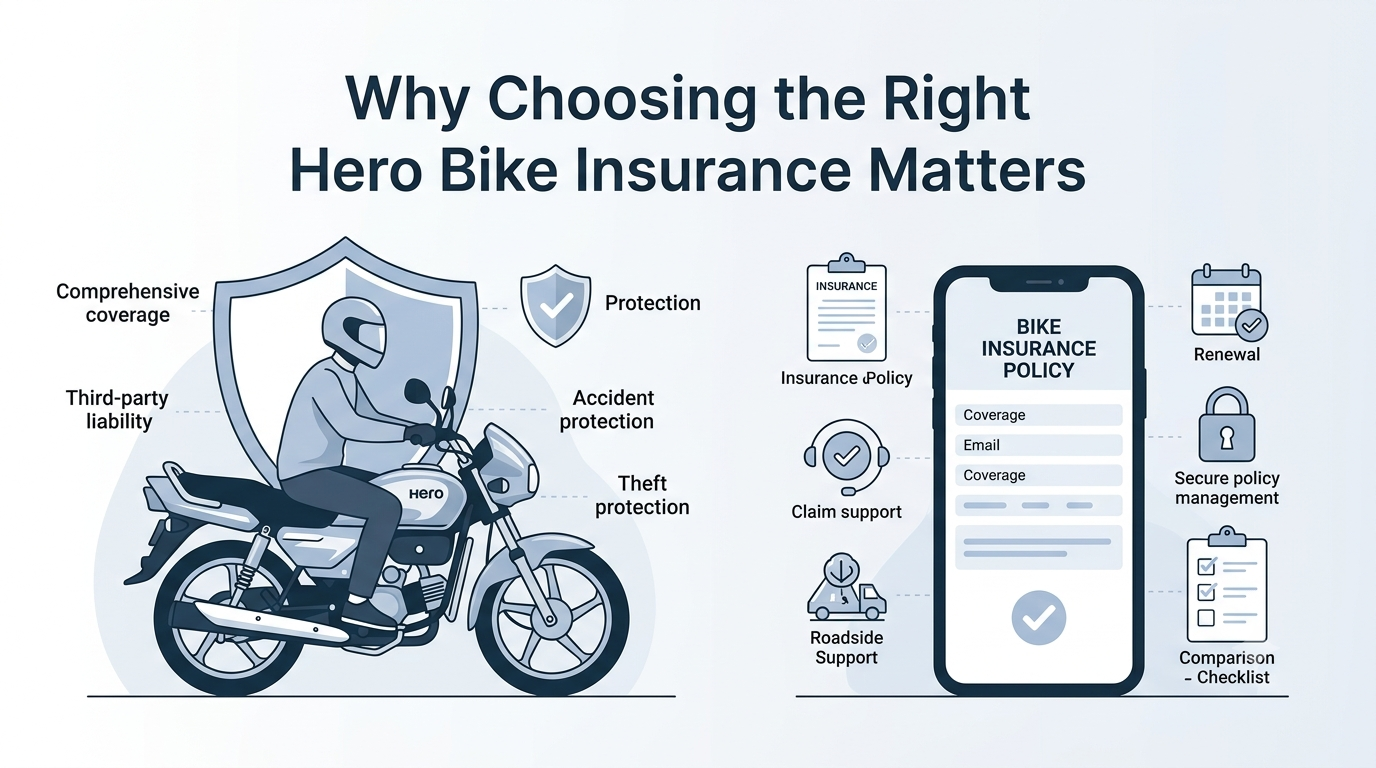
Owning a two-wheeler offers convenience, flexibility, and an affordable way to travel for daily commuting, personal errands, and occasional long-distance journeys. Hero motorcycles are widely used by riders across India, with different models serving different riding requirements. However, responsible two-wheeler ownership involves more than regular servicing and safe riding. Having suitable bike insurance is also an important part of protecting yourself and your vehicle against covered risks.
Choosing the right Hero bike insurance should not be based solely on the lowest premium. Different policies can offer different levels of protection, deductibles, exclusions, add-on covers, and claim conditions. The right insurance policy should match your vehicle, riding habits, budget, and protection requirements.
This guide explains why choosing the right Hero bike insurance matters and highlights the factors you should consider before purchasing or renewing your policy.
Why Is Hero Bike Insurance Important?
Two-wheelers are exposed to several risks while being used on public roads. Accidents, theft, natural events, and other unexpected incidents can result in financial losses.
Motor insurance can provide financial protection against covered risks according to the terms and conditions of the policy. Third-party liability insurance is also a legal requirement for vehicles used on public roads in India.
Depending on your selected policy, insurance may help protect you against:
-
Third-party liabilities
-
Accidental damage to your insured vehicle
-
Theft
-
Fire
-
Natural calamities
-
Certain man-made events
-
Other covered risks
The exact protection depends on the type of policy and its applicable terms, conditions, and exclusions.
1. Choose the Right Type of Insurance
The first step is to understand the available types of two-wheeler insurance.
Third-Party Insurance
Third-party liability insurance provides coverage for certain legal liabilities arising from injury, death, or property damage caused to a third party by the insured vehicle, subject to the applicable policy terms.
It is mandatory for vehicles used on public roads in India. However, it generally does not cover damage to your own motorcycle.
Comprehensive Insurance
A comprehensive policy generally combines third-party liability protection with own-damage coverage, subject to policy terms and exclusions.
Depending on the policy, it may provide protection against covered risks such as accidents, theft, fire, and certain natural calamities.
Standalone Own-Damage Insurance
Standalone own-damage insurance generally covers damage to the insured vehicle from specified risks. It may be considered in situations where third-party liability coverage is already maintained separately.
Understanding these options can help you determine the level of protection suitable for your Hero motorcycle.
2. Consider Your Hero Bike Model
The model of your motorcycle can influence your insurance requirements.
A basic commuter motorcycle may have different insurance needs compared with a more powerful or higher-value Hero motorcycle.
When choosing insurance, consider:
-
Vehicle age
-
Current market value
-
Engine capacity
-
Usage pattern
-
Location
-
Daily travel distance
-
Frequency of long-distance travel
For example, when looking for Hero Super Splendor Insurance, you should consider how frequently the motorcycle is used and whether broader own-damage protection is appropriate for your circumstances.
The right policy should reflect the actual risk exposure associated with your vehicle.
3. Do Not Choose a Policy Based Only on Premium
Price is an important consideration, but it should not be the only deciding factor.
A policy with a lower premium may offer less coverage or different deductibles and exclusions. A slightly higher premium may provide broader protection or additional features that better match your needs.
When comparing Hero bike insurance policies, consider:
-
Coverage
-
Premium
-
Deductibles
-
Exclusions
-
Add-on covers
-
Claim process
-
Network garage availability
-
Customer support
The objective should be to find a balance between affordability and suitable protection.
4. Evaluate the Insured Declared Value
For applicable own-damage and comprehensive policies, the Insured Declared Value, or IDV, is an important factor.
IDV broadly represents the insured value of the vehicle and can influence the amount payable in certain total-loss or theft claims, subject to policy terms and conditions.
When comparing policies, do not select an option simply because it offers a lower premium due to a lower IDV. At the same time, the IDV should be reasonable according to the applicable calculation method and vehicle value.
Understanding IDV can help you make a more informed insurance decision.
5. Review the Available Add-On Covers
Add-on covers can provide additional protection beyond the standard policy. However, they generally involve an additional premium and may have specific limitations.
Depending on the insurer and policy, available add-ons may include:
-
Zero depreciation cover
-
Roadside assistance
-
Engine protection
-
Consumables cover
-
Key replacement cover
-
Return to invoice cover
Not every add-on is necessary for every rider.
For example, roadside assistance may be valuable for someone who frequently travels long distances. A rider using a motorcycle primarily for short city trips may have different priorities.
Always understand the coverage, exclusions, eligibility conditions, and limitations before selecting an add-on.
6. Understand Policy Exclusions
Policy exclusions explain situations that are not covered under the insurance policy.
Common exclusions may include circumstances involving:
-
Driving without a valid licence
-
Driving under the influence of alcohol or drugs
-
Unauthorised use of the vehicle
-
Normal wear and tear
-
Certain mechanical failures
-
Intentional damage
The exact exclusions vary between policies. Therefore, reading the policy wording is essential.
Understanding exclusions before purchasing insurance can help you avoid unrealistic expectations when making a claim.
7. Check the Deductible
A deductible is the amount or portion of an eligible claim that the policyholder may have to bear, as specified under the policy.
Motor insurance may include a compulsory deductible, while some policies may also allow a voluntary deductible.
A higher voluntary deductible can sometimes reduce the premium, but it also means you may have to pay more yourself during an eligible claim.
Choose a deductible that you can comfortably afford. Saving on the premium may not be worthwhile if the deductible becomes difficult to manage when you need to make a claim.
8. Consider the Claim Process
A policy's value becomes particularly important when an unexpected incident occurs.
Before selecting Hero bike insurance, understand how the insurer handles claims. Look for a clear process for reporting accidents, theft, or other covered incidents.
Consider factors such as:
-
Claim registration
-
Required documents
-
Inspection procedures
-
Repair process
-
Network garage availability
-
Cashless repair facilities, where applicable
-
Claim tracking
-
Customer assistance
Remember that claim settlement is subject to policy terms, conditions, exclusions, and assessment of the incident.
9. Check Network Garage Availability
If you choose a policy offering cashless repair facilities, network garage availability can be an important consideration.
Check whether suitable network garages are available in areas where you regularly use your Hero motorcycle.
A convenient network can make the repair process easier for eligible claims. However, cashless repair does not necessarily mean that every expense will be covered. Deductibles, depreciation, excluded components, and other applicable costs may still apply.
10. Protect Your No Claim Bonus
The No Claim Bonus, or NCB, can be an important benefit for eligible policyholders who do not make claims during the relevant policy period.
When renewing your Hero bike insurance, check whether you are eligible for an NCB benefit and ensure that the applicable information is correctly recorded.
If you switch insurers, understand the process for retaining or transferring your NCB, subject to applicable rules and policy conditions.
Maintaining a claim-free record where possible can help you manage insurance costs over time.
11. Renew Your Insurance on Time
A policy should be renewed before its expiry date to avoid a break in coverage.
Set a reminder several weeks before your Hero bike insurance expires. This gives you enough time to review your current policy, compare suitable options, and complete the renewal process.
During renewal, check:
-
Policy expiry date
-
Vehicle details
-
Personal information
-
Coverage requirements
-
NCB eligibility
-
Add-ons
-
Premium
-
Deductibles
Avoid automatically renewing a policy without reviewing whether it still meets your needs.
12. Keep Your Policy Details Updated
Accurate information is essential for effective policy management.
Check that your insurance records contain the correct:
-
Name
-
Address
-
Mobile number
-
Email address
-
Vehicle registration number
-
Vehicle details
If any information changes, follow the appropriate process to update your policy.
Keeping your information accurate can help prevent unnecessary complications during policy servicing or claims.
13. Manage Your Insurance Digitally
Digital insurance services have made policy management more convenient.
Depending on the insurer or platform, you may be able to:
-
Purchase or renew insurance
-
Access policy documents
-
Check policy information
-
Submit service requests
-
Initiate claims
-
Track claim status
-
Contact customer support
Using digital services can make it easier to manage your Hero bike insurance without relying entirely on physical paperwork.
However, always use secure and authorised platforms when making insurance transactions or sharing personal information.
Common Mistakes to Avoid
When buying or renewing Hero bike insurance, avoid these common mistakes:
-
Selecting a policy only because it has the lowest premium
-
Ignoring exclusions
-
Choosing unnecessary add-ons
-
Not checking the IDV
-
Selecting an unaffordable deductible
-
Providing incorrect vehicle information
-
Forgetting the policy expiry date
-
Not understanding the claim process
-
Failing to update policy details
-
Delaying claim notification after an incident
Taking a few extra minutes to review your policy can help you make a more informed decision.
How to Choose Suitable Hero Bike Insurance
Before purchasing or renewing insurance, ask yourself a few simple questions:
-
What type of coverage do I need?
-
How old is my Hero motorcycle?
-
What is its current value?
-
How frequently do I ride it?
-
Do I travel long distances?
-
Which add-ons are genuinely useful to me?
-
Can I afford the deductible?
-
Is the claim process convenient?
-
Are suitable network garages available?
-
Does the policy offer the right balance between cost and protection?
Answering these questions can help you narrow down your options.
Conclusion
Choosing the right Hero bike insurance matters because a suitable policy can provide financial protection against covered risks while helping you meet applicable legal requirements. Whether you own a daily commuter motorcycle or are specifically searching for Hero Super Splendor Insurance, the right policy should be selected based on your vehicle, riding habits, coverage requirements, and budget.
Instead of focusing only on the premium, compare coverage, IDV, deductibles, exclusions, add-ons, claim procedures, and service features. Review your policy regularly and renew it on time to maintain continuous protection.
Along with responsible riding and regular motorcycle maintenance, having appropriate insurance is an important part of responsible two-wheeler ownership. Square Insurance can help customers explore and manage insurance solutions conveniently, making it easier to handle their two-wheeler insurance requirements.
FAQs
Q1. Why is Hero bike insurance important?
Hero bike insurance can provide financial protection against covered risks and third-party liabilities, depending on the policy selected. Third-party liability insurance is also mandatory for vehicles used on public roads in India.
Q2. What type of insurance is suitable for a Hero motorcycle?
The right type depends on your requirements. Third-party insurance fulfils the mandatory liability requirement, while comprehensive insurance generally provides broader protection by combining third-party liability and own-damage coverage, subject to policy terms.
Q3. What should I consider when buying Hero Super Splendor Insurance?
When choosing Hero Super Splendor Insurance, consider the motorcycle's age, value, usage, coverage requirements, IDV, deductibles, exclusions, add-ons, claim process, and premium.
Q4. Is the cheapest Hero bike insurance policy the best?
Not necessarily. The cheapest policy may not provide the level of protection you require. Compare coverage, exclusions, deductibles, add-ons, and claim services before making a decision.
Q5. What is IDV in Hero bike insurance?
IDV stands for Insured Declared Value. It broadly represents the insured value of the vehicle for applicable own-damage policies and can influence certain theft or total-loss claim settlements, subject to policy terms.
Q6. Are add-on covers necessary for a Hero motorcycle?
Add-ons are optional in many cases and should be selected according to your requirements. Consider your motorcycle's age, usage, travel patterns, and specific risks before purchasing additional coverage.

 English
 Arabic
 Français
 Español
 Português
 Deutsch
 Türkçe
 Dutch
Dutch
 Italiano
 Russian