


How Can a Festo Branching Module Improve Air Networks?
Introduction
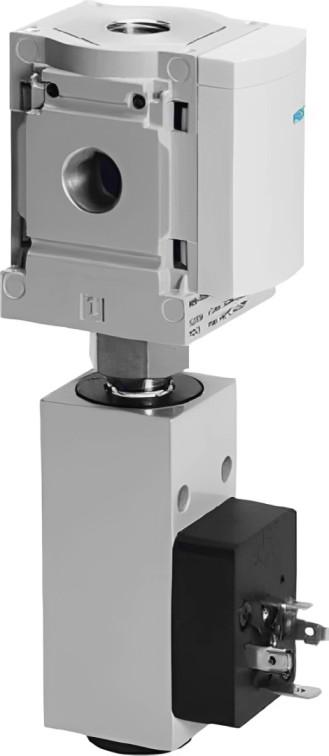
A Festo Branching Module gives engineers a structured way to divide one compressed-air supply into several clearly defined branches. Instead of relying on scattered tee fittings, it creates an organised distribution point for separate machine zones, monitoring devices, and downstream air-preparation components.
This approach suits assembly lines, packaging machinery, test stations, and modular production cells where several pneumatic functions share one upstream supply.
What Does a Festo Branching Module Do?
A branching module receives compressed air through a main inlet and makes it available through additional outlet connections. Each outlet can supply a separate circuit, machine section, or air-treatment stage.
Festo positions the MS6-FRM within its MS-series compressed-air preparation system. Selected versions provide a main flow path with upper and lower branch outlets, allowing the primary supply to continue while additional circuits receive air from the same module.
One documented MS6-FRM-1/2-Y-Z version uses G1/2 connections and has a nominal flow of 14,700 litres per minute in the main direction, with separate upper and lower outlet values. These figures apply only to that exact configuration, so the relevant datasheet must guide final selection.
Why Create Separate Pneumatic Zones?
Dividing machinery into pneumatic zones makes the installation easier to understand. One branch can supply handling equipment, another can operate clamps, and a third can serve cleaning or testing devices.
Suitable Pneumatic Shut-Off Valves can support controlled branch isolation when their flow, pressure, and locking requirements match the application.
Clear zoning also helps technicians identify which outlet supplies each machine function before disconnecting tubing or replacing components.
How Should Air Preparation Be Arranged?
A branching module distributes the air it receives, but it does not automatically filter or regulate every downstream circuit. Each branch should receive the air quality and pressure required by its connected equipment.
Compact FR Assemblies can combine filtration and pressure regulation before selected circuits, reducing the number of separately mounted preparation components.
Where one branch requires both contamination removal and stable outlet pressure, Filter Regulators can provide these functions when their filtration level and flow capacity suit the application.
This arrangement allows general machine devices and more sensitive equipment to receive different levels of air preparation.
How Does Pressure Monitoring Improve Reliability?
Pressure may appear normal while equipment is idle and then fall when several actuators operate together. Monitoring near the branching point helps reveal leakage, restrictions, undersized pipework, or excessive air demand.
Suitable Pressure Gauges provide local readings so technicians can compare conditions at the main inlet and individual branches.
A significant pressure difference may indicate a blocked filter, restricted fitting, damaged tube, poor regulator setting, or excessive simultaneous consumption.
How Can Backflow Between Branches Be Controlled?
Separate branches may operate at different pressure levels or use different air qualities. Without correct circuit design, air can move backwards from one section into another when operating conditions change.
Pneumatic Non-Return Valves allow airflow in the intended direction while limiting reverse movement within compatible circuits.
Backflow prevention is particularly important where one branch uses lubricated air and another must remain oil-free. Festo also offers selected branching-module configurations with non-return functionality for separating different compressed-air qualities.
Where Are Festo Branching Modules Used?
Assembly and Production Cells
Assembly cells often contain clamps, grippers, slides, ejectors, and blow-off points. A central branching module can divide the supply into clearly labelled circuits for each function.
This organised layout reduces confusing tubing routes and makes future modifications easier because additional circuits can be planned around an established distribution point.
Packaging and Sorting Machinery
Packaging systems may use separate branches for product guiding, sealing, rejection, lifting, and transfer operations. Engineers should calculate peak demand because several pneumatic devices may operate simultaneously.
An average air-consumption figure may not reveal the temporary pressure drop created when multiple actuators switch together.
Testing and Service Stations
Test stations may need individual supplies for clamping, pressure testing, cleaning, and component actuation. Separate branches make each function easier to adjust, isolate, and diagnose.
Technicians can inspect one circuit without unnecessarily depressurising unrelated machine sections, provided the isolation arrangement has been correctly designed.
Pneumatic Material Handling
Air-powered systems can move suitable lightweight materials through industrial processes. Pneumatic Material Transfer Units can support these applications when product type, distance, air quality, and capacity have been assessed.
Providing this function with a dedicated branch makes its higher airflow demand easier to monitor without combining it with smaller actuator circuits.
Can Electrical Signals Adjust Branch Pressure?
Some automated processes require pressure to change according to a controller command. Different products, loads, or production stages may need different pneumatic pressure settings.
I/P & E/P Converters can translate compatible electrical signals into pneumatic pressure outputs within a properly designed control system.
The converter should be installed on the relevant downstream branch rather than assuming that one pressure level is suitable for every circuit.
Which Specifications Should Be Compared?
Before selecting a Festo Branching Module, engineers should review:
-
Service-unit series and module size
-
Number and orientation of outlets
-
Thread type and connection dimensions
-
Main and branch flow capacity
-
Maximum operating pressure
-
Permitted operating medium
-
Flow direction
-
Monitoring requirements
-
Non-return options
-
Mounting compatibility
The highest published flow figure should not determine selection alone. Pipe length, regulators, fittings, filters, and simultaneous demand also influence system performance.
How Should the Module Be Installed?
Before installation, isolate the compressed-air supply and release all stored pressure. Confirm the module’s flow direction, port numbers, connection sizes, and position within the service assembly.
Good installation practices include:
-
Keep open ports protected from contamination
-
Use compatible seals and connectors
-
Support attached pipework and tubing
-
Seal unused outlets correctly
-
Keep gauges and switches accessible
-
Label each branch clearly
-
Avoid placing pipe stress on the module
-
Test every connection for leakage
Restore pressure gradually while observing each branch. Unexpected actuator movement may occur if downstream valves are not in their anticipated positions.
How Should Commissioning Be Completed?
Commission one branch at a time. Confirm its operating pressure, flow direction, connected equipment, isolation method, and normal behaviour before opening the next circuit.
Record pressure readings during individual operation and peak simultaneous demand. These values provide a useful baseline for future maintenance and fault finding.
System drawings should identify every outlet and the machine function supplied by each branch.
Why Choose a Festo Branching Module?
A Festo Branching Module transforms one compressed-air supply into a clear and manageable network of downstream circuits. Its modular design supports separate machine zones, pressure monitoring, controlled air quality, and future expansion.
By matching module size, port arrangement, flow capacity, preparation, monitoring, and isolation requirements to the application, engineers can create an efficient pneumatic distribution system that remains reliable and straightforward to maintain.

 English
 Arabic
 Français
 Español
 Português
 Deutsch
 Türkçe
 Dutch
Dutch
 Italiano
 Romaian