


What is PPWR? EU Packaging Regulation & Compliance Guide
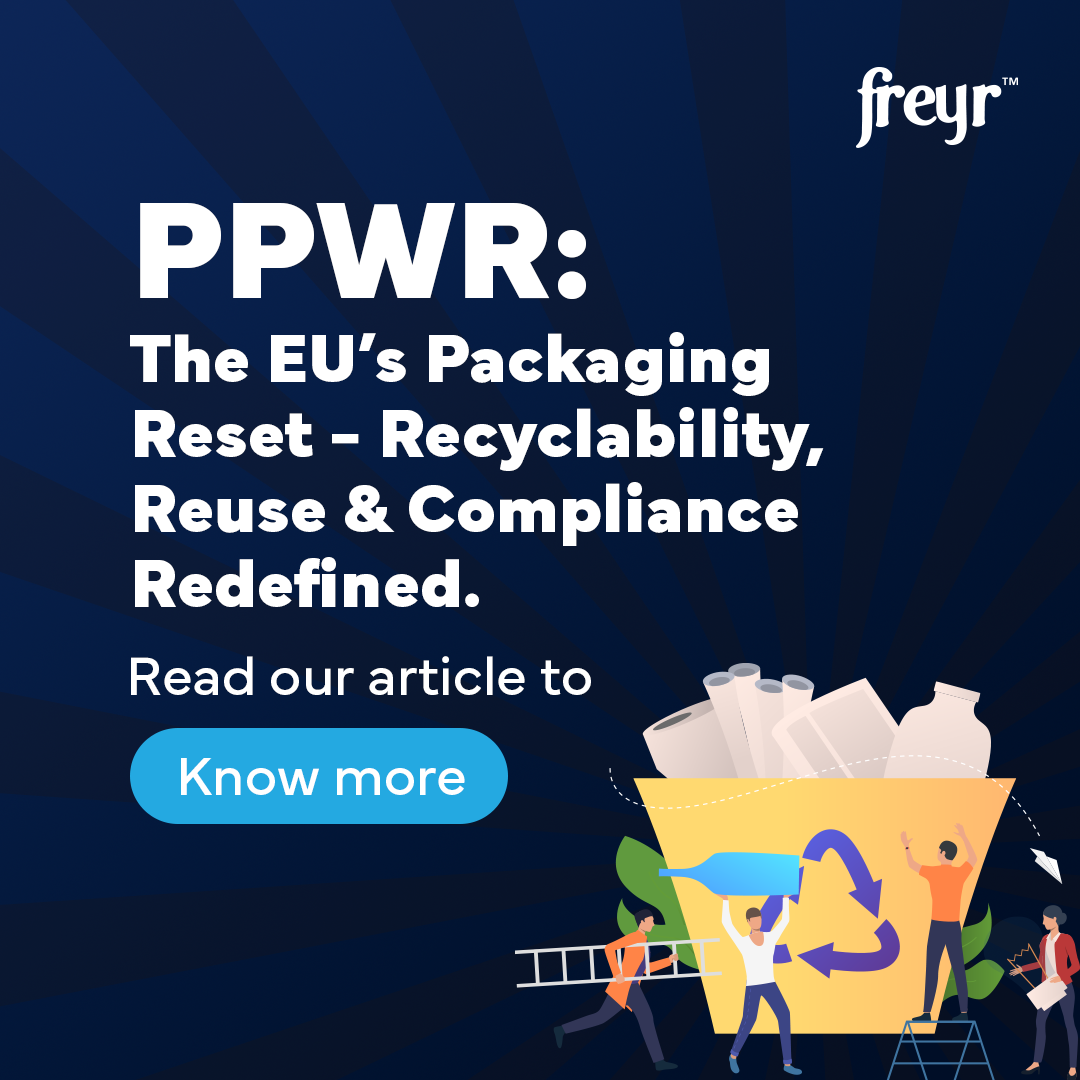
PPWR Explained: How the EU's New Packaging Law Will Reshape Food and Supplement Packaging
Europe is in the middle of one of the biggest packaging overhauls in decades. Regulation (EU) 2025/40 — better known as the Packaging and Packaging Waste Regulation, or PPWR — replaces the packaging directive that had governed the EU since 1994, and it does so with a much heavier hand.
The key difference isn't just the content of the rules, it's the form they take. Directives leave room for national governments to implement things their own way. Regulations don't. PPWR applies directly and identically in every EU member state, which means a company selling into France faces the exact same packaging requirements as one selling into Poland or Portugal.
That consistency is good news in theory — one rulebook instead of 27 — but it also means there's no soft landing through a lenient member state. Compliance is compliance, everywhere at once.
Why Now?
The short answer: packaging waste in Europe has outpaced the systems built to handle it. Recycling infrastructure hasn't scaled with consumption, virgin materials are still the default choice for most packaging, and single-use formats dominate categories where reusable alternatives exist.
PPWR is the EU's attempt to correct course, with a clear circular-economy mandate. The regulation is built to address:
- Packaging waste volumes that keep climbing
- Continued heavy use of virgin, non-renewable inputs
- Recycling and reuse rates that lag behind targets
- Environmental damage tied to single-use packaging
- The EU's broader emissions and sustainability commitments
The Five Things PPWR Actually Changes
1. Recyclability becomes mandatory, not aspirational. By 2030, packaging sold in the EU must be designed to be recycled — and to actually work within the recycling systems that exist today, not a hypothetical future infrastructure.
2. Recycled content isn't optional anymore. Plastic packaging will need to contain a minimum share of recycled material, with the exact percentage depending on the packaging category.
3. Packaging has to shrink. Oversized boxes, redundant layers, and unnecessary void space are explicitly targeted for reduction.
4. Reuse and refill get a real push. More product categories will be expected to offer reusable packaging or refill options instead of defaulting to single-use.
5. Certain chemicals are getting phased out. Substances like PFAS, widely used in food-contact packaging, face new restrictions once concentrations cross defined thresholds.
Timeline: What Happens When
- January 2025 — PPWR is adopted and published.
- February 2025 — The regulation takes legal effect across the EU.
- August 2026 — The bulk of operational compliance obligations become active for businesses.
- 2030 and later — Major targets, including recyclability and recycled-content minimums, become fully binding.
Some provisions phase in as late as 2040, but that long runway shouldn't be mistaken for room to delay. Packaging redesign, testing, and supply chain changes take time — companies that start now will be far better positioned than those that wait for deadlines to arrive.
What Businesses Actually Have to Do
Meeting PPWR means addressing a fairly specific checklist:
- Design packaging so it's collectible, sortable, and recyclable within existing infrastructure
- Meet recycled-content thresholds, which PPWR now organizes into recyclability grades (phasing in from 2030, tightening further by 2038) rather than a simple yes/no classification
- Cut excess material and packaging volume, especially in e-commerce and consumer goods
- Introduce reuse or refill systems where required
- Standardize labels to clearly show material composition, recyclability, and disposal guidance
- Accept extended producer responsibility for the full lifecycle of packaging, including collection and recycling costs
- Complete a conformity assessment and issue an EU Declaration of Conformity — importers must confirm this has been done and retain records
Why Food and Supplement Brands Are Especially Exposed
Few industries depend on specialized packaging the way food and dietary supplements do — packaging here isn't cosmetic, it's what keeps products safe and shelf-stable.
Material redesign is likely unavoidable. Multilayer structures, in particular, may not meet the new recyclability bar. That puts bottles, containers, sachets, pouches, blister packs, and flexible or transport packaging all in the redesign conversation.
Food-contact materials face extra scrutiny. PFAS restrictions could mean reformulating packaging and running additional safety testing, all while staying compliant with existing food-safety rules.
Non-compliant packaging risks losing shelf space. Products that don't meet the new standards may eventually be restricted from EU markets entirely.
Costs rise before they fall. Expect near-term spending on redesign, certification, supply chain adjustments, and new reporting requirements — though companies that move early tend to come out ahead on both cost and reputation over time.
Compliance is now a market-access question, not a side issue. Staying in EU markets will depend on meeting these standards, and early movers get a genuine head start over competitors still catching up.
The Bigger Picture
PPWR isn't a one-off rule change — it's a preview of where packaging regulation globally is headed. For food and supplement companies, that likely translates into:
- Sustainable packaging shifting from differentiator to baseline expectation
- Greater transparency around materials and end-of-life disposal
- Rising investment in recyclable and reusable packaging formats
- Supply chains held to tighter accountability standards
- Consumers who increasingly favor brands with credible sustainability practices
Where This Leaves Businesses
The Packaging and Packaging Waste Regulation (PPWR) is one of the most consequential sustainability regulations to come out of the EU, and its effects will land hardest on industries that can't function without packaging — food and dietary supplements among the most exposed.
Treating this as a compliance formality would be a mistake. It's a structural shift in how packaging gets designed, sourced, and managed, and the companies that adapt early are the ones likely to hold onto — and grow — their position in European markets.

 English
 Arabic
 Français
 Português
 Deutsch
 Türkçe
 Dutch
Dutch
 Italiano
 Russian
 Romaian