


Penetration Testing Companies in India vs Automated Tools: Which Delivers Better Security?
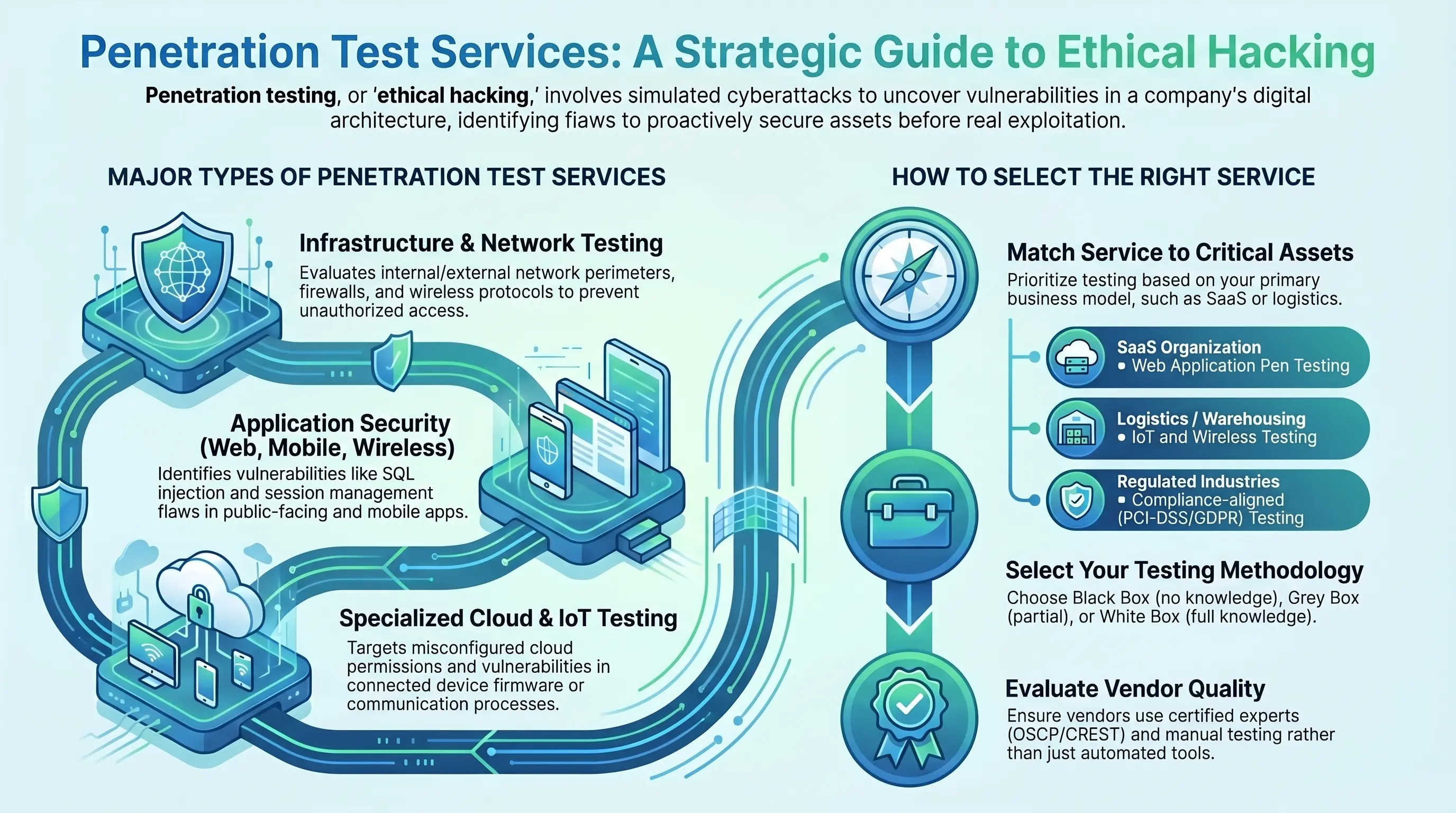
Penetration Testing Companies in India vs Pen Testing Tools
As cyber threats become increasingly sophisticated, organisations are under constant pressure to strengthen their security posture. Many businesses begin by investing in automated vulnerability scanners, believing these tools are sufficient to uncover weaknesses across their digital infrastructure. While automation certainly plays an important role in cybersecurity, it cannot replace the expertise and critical thinking of experienced ethical hackers.
This is why organisations continue to rely on penetration testing companies in india alongside modern pen testing tools. The combination of automated technology and expert-led testing provides a more comprehensive understanding of security risks, helping businesses identify vulnerabilities that technology alone may never detect.
The Growing Need for Comprehensive Security Testing
Modern IT environments are significantly more complex than they were a decade ago. Businesses now operate hybrid infrastructures that include cloud platforms, web applications, APIs, mobile applications, remote work environments, and third-party integrations.
Every new digital service introduces potential vulnerabilities. Attackers continuously develop new techniques to exploit authentication flaws, insecure configurations, business logic weaknesses, and application vulnerabilities.
As a result, organisations require security assessments that go beyond identifying known software flaws and instead evaluate how an attacker could realistically compromise their systems.
What Are Pen Testing Tools?
Pen testing tools are software applications designed to automate various stages of security assessments. They help identify vulnerabilities by scanning systems, networks, websites, and applications for known security weaknesses.
These tools can perform tasks such as:
- Detecting outdated software versions
- Identifying missing security patches
- Discovering exposed network services
- Checking for common web application vulnerabilities
- Analysing configuration weaknesses
- Generating vulnerability reports
Automation significantly reduces the time required to perform routine assessments and provides valuable visibility into an organisation's security posture.
However, these tools primarily identify known vulnerabilities and cannot fully understand the business context in which systems operate.
The Limitations of Automated Security Testing
Although automated scanners are valuable, they have inherent limitations.
Limited Context Awareness
Security tools evaluate systems based on predefined rules and signatures. They cannot understand how different applications interact or whether multiple low-risk vulnerabilities could be combined into a serious attack path.
False Positives
Automated scans frequently report issues that are not actually exploitable. Security teams often spend valuable time investigating findings that present little or no real business risk.
Missed Business Logic Vulnerabilities
Business logic flaws occur when an application's intended functionality can be manipulated in unexpected ways. These vulnerabilities typically require human reasoning and cannot be reliably detected by automated software.
Difficulty Assessing Complex Authentication
Modern authentication systems involve multi-factor authentication, role-based access control, identity federation, and API tokens. Evaluating these mechanisms requires manual analysis that extends beyond automated scanning.
How Expert Penetration Testers Add Value
Professional penetration testers approach systems differently from automated software. Rather than simply identifying vulnerabilities, they think like attackers and evaluate whether weaknesses can actually be exploited.
During an assessment, experienced ethical hackers analyse:
Authentication and Authorisation
Experts verify whether users can gain unauthorised access through privilege escalation, session manipulation, or identity management weaknesses.
Business Workflows
Real-world attackers rarely focus on isolated vulnerabilities. Instead, they exploit weaknesses within business processes to achieve their objectives.
Ethical hackers evaluate payment systems, approval workflows, account management functions, and transaction processes to identify hidden risks.
Multi-Step Attack Scenarios
Experienced professionals combine multiple vulnerabilities to simulate realistic attack chains, demonstrating how seemingly minor issues can lead to significant business impact.
Manual Validation
Every significant finding is verified through manual testing, reducing false positives and providing organisations with accurate, actionable security reports.
Why Human Expertise Remains Essential
Cybercriminals constantly adapt their attack methods. They exploit new technologies, misconfigurations, and application behaviours that automated tools may not yet recognise.
Human testers can:
- Adapt testing techniques during assessments.
- Investigate unusual application behaviour.
- Analyse custom-built software.
- Evaluate emerging technologies.
- Test APIs and integrations manually.
- Identify weaknesses unique to the organisation.
This adaptive approach enables businesses to uncover risks that standard vulnerability scans cannot detect.
Combining Automation with Manual Testing
The most effective cybersecurity programmes do not choose between automation and manual testing—they combine both.
Automated tools provide:
- Fast vulnerability discovery
- Continuous monitoring
- Asset identification
- Routine security checks
- Baseline assessments
Manual penetration testing provides:
- Business logic analysis
- Attack chain simulation
- Exploit validation
- Context-based risk assessment
- Strategic remediation guidance
Together, these approaches deliver comprehensive visibility into organisational security.
Choosing the Right Security Partner
Selecting a security provider involves more than reviewing technical capabilities. Organisations should look for providers that integrate advanced automation with experienced ethical hackers.
Key evaluation criteria include:
Proven Technical Expertise
Testing teams should possess experience across web applications, cloud environments, APIs, mobile platforms, and enterprise infrastructure.
Structured Methodology
A mature methodology combines reconnaissance, automated scanning, manual exploitation, validation, reporting, and remediation verification.
Actionable Reporting
Reports should prioritise vulnerabilities according to business impact while providing clear recommendations for remediation.
Ongoing Support
The best providers work collaboratively with internal teams to validate fixes and strengthen long-term security rather than simply delivering a list of vulnerabilities.
Long-Term Business Benefits
Organisations that combine automated security tools with expert penetration testing gain several advantages.
They improve risk visibility, reduce the likelihood of successful cyberattacks, strengthen regulatory readiness, enhance customer confidence, and support secure digital transformation initiatives.
Perhaps most importantly, businesses gain confidence that their security controls have been tested under realistic attack conditions rather than relying solely on automated vulnerability detection.
Final Thoughts
Automated security tools remain an essential component of modern cybersecurity programmes, providing speed, efficiency, and continuous visibility into known vulnerabilities. However, they cannot replace the analytical skills, creativity, and real-world attack simulation performed by experienced ethical hackers.
By working with qualified penetration testing specialists while leveraging advanced automation, organisations achieve a balanced and comprehensive security strategy. This combined approach delivers deeper risk coverage, more accurate findings, and greater confidence that critical systems are protected against today's evolving cyber threats.

 English
 Arabic
 Français
 Español
 Português
 Deutsch
 Türkçe
 Dutch
Dutch
 Russian
 Romaian