


Machine Learning Fundamentals Training for Future-Ready Technical Teams
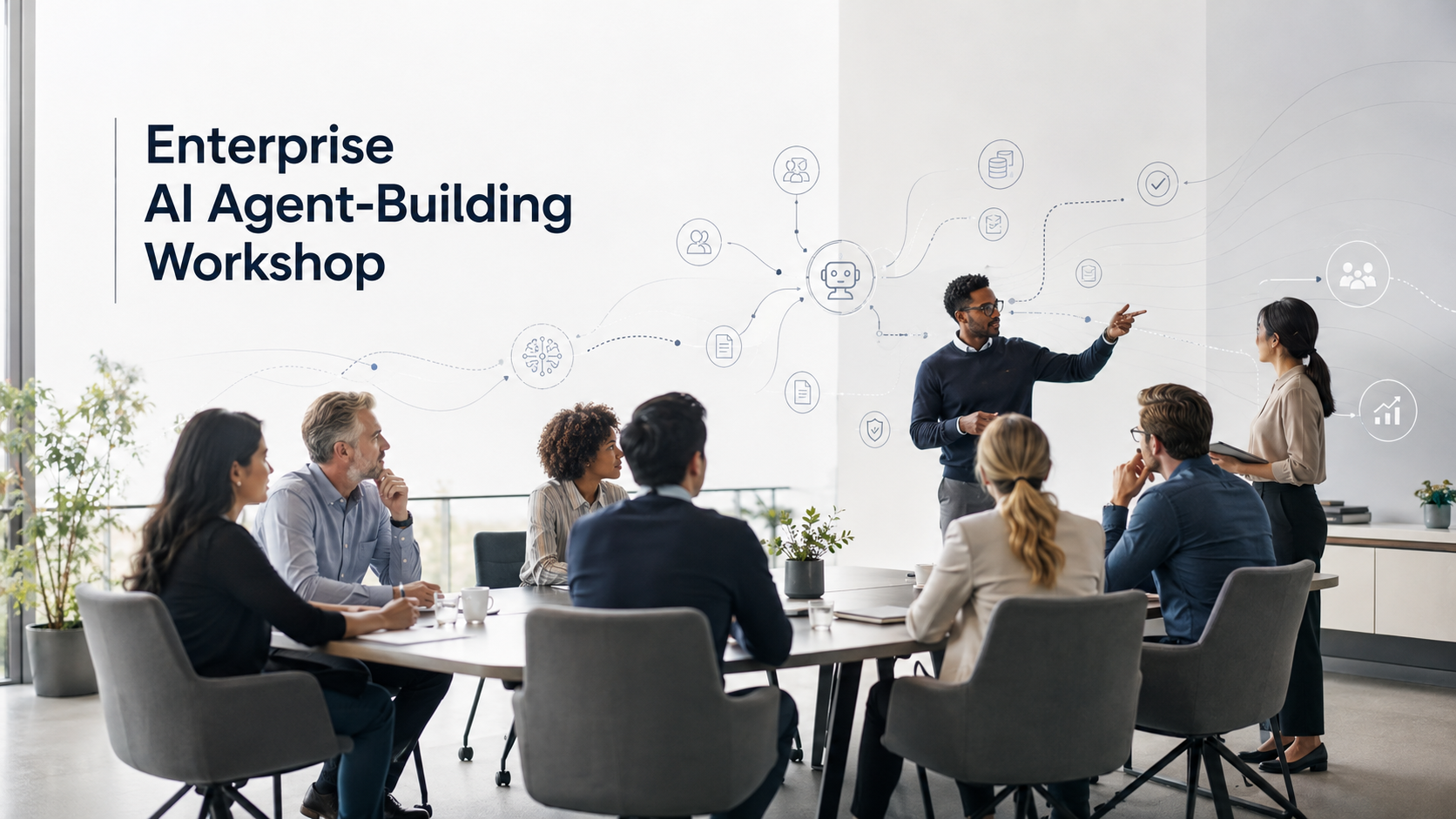
Generative AI may dominate technology conversations, but the systems behind intelligent predictions, recommendations, fraud detection, forecasting, and customer analytics still depend heavily on solid machine learning principles. For professionals who want to move beyond AI buzzwords and understand how models are actually built, evaluated, deployed, and monitored, a Machine Learning Fundamentals course provides the foundation needed to work confidently with real-world ML systems.
The Real Challenge Is Moving Beyond Theory
Many professionals understand concepts such as regression, classification, clustering, and neural networks at a high level. The difficulty begins when they must clean imperfect data, choose relevant features, select an appropriate algorithm, evaluate the model correctly, and explain why the result can be trusted.
This gap matters to enterprises. A model with impressive training accuracy can still fail in production because of overfitting, data leakage, poor feature engineering, inappropriate metrics, or changing data patterns. That is why effective machine learning training should focus on decision-making as much as algorithms.
Build a Complete Machine Learning Workflow
A practical learning path begins with data preparation and exploratory analysis before progressing into supervised and unsupervised learning. Professionals should become comfortable using Python libraries such as pandas, NumPy, scikit-learn, and visualization tools to transform raw datasets into reliable inputs.
From there, Python machine learning training should cover linear and logistic regression, tree-based models, ensemble techniques, clustering, dimensionality reduction, and introductory neural networks. Understanding methods such as XGBoost, LightGBM, and CatBoost also helps learners work with the structured datasets commonly found in enterprise environments.
Evaluation Is More Important Than One Accuracy Score
Strong ML practitioners know that accuracy alone rarely tells the full story. Precision, recall, F1 score, ROC-AUC, calibration, cross-validation, and fairness checks provide deeper insight into whether a model is suitable for its intended use.
For example, a fraud detection model that misses costly fraudulent transactions may be unacceptable even if its overall accuracy looks high. A rigorous ML fundamentals certification therefore helps learners connect model metrics with business consequences.
Production Readiness Changes the Learning Outcome
Building a model in a notebook is only one stage of the lifecycle. Modern teams also need exposure to model deployment, experiment tracking, monitoring, drift detection, and retraining practices.
This makes MLOps fundamentals increasingly important for software engineers, analysts, and junior data scientists. Learning how models move from experimentation into APIs and monitored production environments gives professionals a clearer understanding of how machine learning creates sustained business value.
Use Projects to Convert Knowledge into Capability
The fastest way to strengthen machine learning skills is to solve complete problems rather than study isolated algorithms. Learners should work with realistic datasets, create baselines, engineer features, compare models, tune parameters, document evaluation results, and communicate their conclusions.
A machine learning course for software engineers that includes an end-to-end capstone can help professionals produce tangible evidence of their abilities while developing the judgment required for live projects.
Build an ML Foundation That Supports Future AI Skills
Machine learning remains a critical foundation for data science, deep learning, MLOps, predictive analytics, and many modern generative AI applications. Professionals who understand how data, algorithms, evaluation, and deployment work together are better equipped to adopt more advanced AI technologies responsibly.
NovelVista’s Machine Learning Fundamentals training is designed for corporate teams and technical professionals who want hands-on experience across the ML lifecycle, from Python-based model development and evaluation to production-oriented practices and project work. Explore the programme to build practical machine learning capability that can translate directly into enterprise projects.
Ready to move your team beyond ML theory? Explore NovelVista’s Machine Learning Fundamentals course and request a customised corporate training proposal aligned with your technology stack, datasets, and business objectives.

 English
 Français
 Español
 Português
 Deutsch
 Türkçe
 Dutch
Dutch
 Italiano
 Russian
 Romaian