


How Do You Choose a Bite Correction Surgeon?
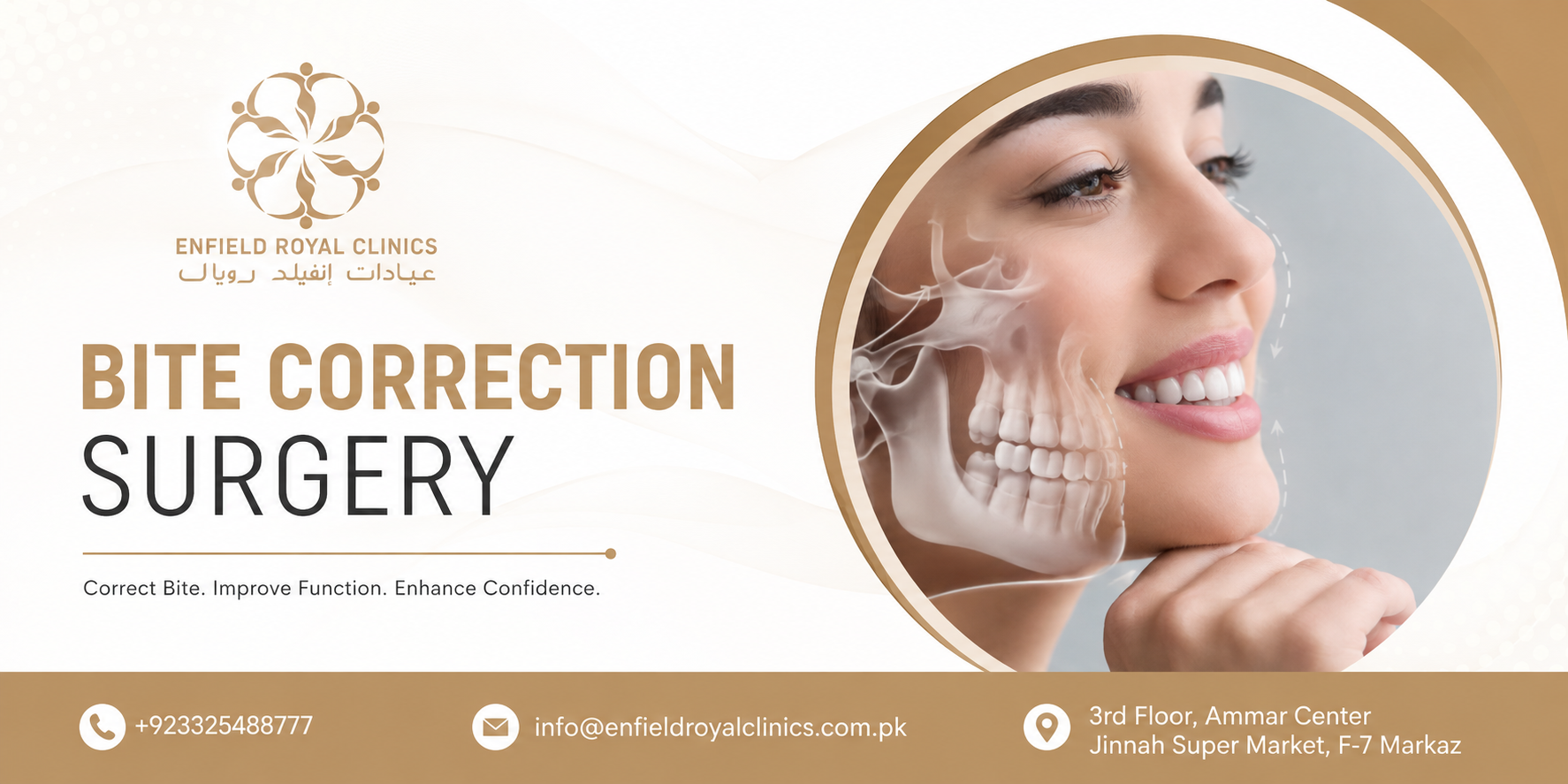
Choosing the right surgeon is one of the most important decisions when considering corrective jaw treatment. Bite Correction Surgery is a complex procedure that requires careful diagnosis, detailed planning, and specialized surgical skills. The surgeon you choose can influence how well your treatment plan addresses both functional and skeletal concerns.
Patients should look beyond advertisements and focus on qualifications, experience, communication, treatment planning, and the quality of the overall care team.
Look for Appropriate Specialist Training
Corrective jaw surgery is different from routine dental procedures. Patients should look for a qualified oral and maxillofacial surgeon with appropriate training and experience in corrective jaw procedures.
The surgeon should understand jaw anatomy, facial structure, bite relationships, and surgical techniques used to reposition the jaws.
Ask about the surgeon's professional qualifications and whether they regularly perform the type of procedure being considered.
Check Experience With Bite Problems
Experience matters when choosing a surgeon for Bite Correction Surgery.
A surgeon who frequently treats skeletal bite problems may be familiar with different types of cases, including severe overbites, underbites, open bites, crossbites, and jaw asymmetry.
Patients can ask how often the surgeon performs corrective jaw procedures and whether they have experience with cases similar to their own.
Review the Complete Treatment Approach
Corrective jaw treatment usually involves more than the operation itself.
Orthodontics may be required before and after surgery to position the teeth correctly. For this reason, patients should consider how closely the surgeon works with an orthodontist.
A coordinated team can help ensure that the surgical and orthodontic stages work toward the same treatment goals.
Ask About the Diagnostic Process
A good surgeon should conduct a detailed assessment before recommending surgery.
The evaluation may include:
- Clinical examination
- Dental photographs
- X-rays
- Digital dental scans
- Bite analysis
- Three-dimensional imaging when appropriate
- Facial measurements
These records help the team understand the underlying skeletal problem.
Be cautious of treatment recommendations made without adequate examination and diagnostic planning.
Discuss Your Specific Bite Problem
During consultation, ask the surgeon to explain exactly what is causing your bite problem.
The issue may be primarily related to the teeth, the jawbones, or a combination of both.
Understanding the cause helps patients understand why Bite Correction Surgery may or may not be necessary.
A responsible surgeon should be able to explain the diagnosis in clear language rather than relying entirely on technical terminology.
Ask About Alternative Treatments
Surgery is not automatically the best solution for every bite problem.
Some patients can achieve satisfactory correction with braces or clear aligners. Others may require surgery because the underlying skeletal discrepancy cannot be adequately corrected through orthodontics alone.
Ask the surgeon whether nonsurgical options are available and what their advantages and limitations would be.
Discuss the Expected Results
Before undergoing Bite Correction Surgery, patients should understand what the treatment is expected to accomplish.
Potential goals may include:
- Improved bite function
- Better chewing
- Improved jaw alignment
- More balanced facial proportions
- Better tooth contact
- Improved oral function
The surgeon should explain what changes are realistically possible based on the patient's anatomy.
Understand the Risks
Every major surgical procedure has potential risks.
During your consultation, ask about possible complications associated with the specific procedure.
These may include bleeding, infection, swelling, discomfort, anesthesia-related complications, changes in sensation, delayed healing, and bite-related problems.
A trustworthy surgeon should discuss both the potential benefits and risks rather than promising perfect results.
Ask About the Surgical Facility
The quality and safety of the facility where Bite Correction Surgery is performed are also important.
Ask whether the procedure is performed in an appropriately equipped surgical facility and whether qualified anesthesia professionals and support staff are available.
Patients should feel comfortable asking about safety procedures and postoperative monitoring.
Understand the Recovery Process
Recovery is an important part of corrective jaw surgery.
Ask the surgeon:
- How long is the initial recovery?
- When can normal foods be introduced?
- When can exercise resume?
- How long might swelling last?
- When can work or school usually be resumed?
- How often are follow-up appointments required?
Understanding the recovery process can help patients plan realistically.
Ask About Postoperative Care
Good postoperative care is essential after Bite Correction Surgery.
The surgeon should provide clear instructions about diet, oral hygiene, medications, physical activity, and follow-up appointments.
Ask who you should contact if you experience unexpected symptoms during recovery.
A clear aftercare plan provides reassurance and helps patients know what to do at each stage.
Consider Communication and Comfort
Technical expertise is important, but communication also matters.
You should feel comfortable asking questions and discussing concerns with your surgeon.
During consultation, consider whether the surgeon:
- Listens carefully
- Explains the procedure clearly
- Answers questions directly
- Discusses alternatives
- Provides realistic expectations
- Explains risks
- Gives clear recovery instructions
Good communication can make the treatment journey easier to understand.
Be Careful With Guaranteed Results
No responsible professional can guarantee an exact surgical outcome.
Healing varies between individuals, and factors such as bone structure, soft tissues, orthodontic treatment, and general health can influence results.
Be cautious of claims that promise perfect facial changes, guaranteed pain relief, or completely risk-free Bite Correction Surgery.
Realistic expectations are an important part of informed decision-making.
Compare More Than One Consultation
For a major procedure, getting a second professional opinion can be helpful.
Another surgeon may offer a different perspective on the diagnosis, treatment approach, or timing.
This does not mean that one opinion is automatically better than another. Comparing explanations can help you understand your options and feel more confident about your decision.
Ask for a Detailed Treatment Plan
Before committing to surgery, ask for a clear treatment plan.
It should explain the recommended procedure, orthodontic requirements, expected recovery, potential risks, and follow-up schedule.
You should also understand the estimated total cost and which services are included.
Having this information in advance can reduce confusion later.
What Makes a Good Bite Correction Surgeon?
A suitable surgeon should have appropriate specialist training, relevant experience, a careful diagnostic process, realistic communication, and a strong focus on patient safety.
They should also work effectively with orthodontic professionals when required.
Most importantly, the surgeon should recommend Bite Correction Surgery only when it is appropriate for the patient's specific skeletal and functional needs.
Final Thoughts
How do you choose a bite correction surgeon? Start by looking for appropriate specialist qualifications and experience with corrective jaw procedures. Then evaluate the surgeon's diagnostic approach, treatment planning, communication, surgical facility, and postoperative care.
Do not choose a surgeon based solely on price, online advertising, or before-and-after photographs. A detailed consultation can help you understand the cause of your bite problem and whether surgery is genuinely appropriate.
Taking time to research your options and ask informed questions can help you make a confident decision about Bite Correction Surgery and your long-term oral health.
For more information visit Enfield royal clinic in islamabad

 Arabic
 Français
 Español
 Português
 Deutsch
 Türkçe
 Dutch
Dutch
 Italiano
 Russian
 Romaian