


Practice Tennis at Home: A Complete Player-Focused Training Guide for Australia
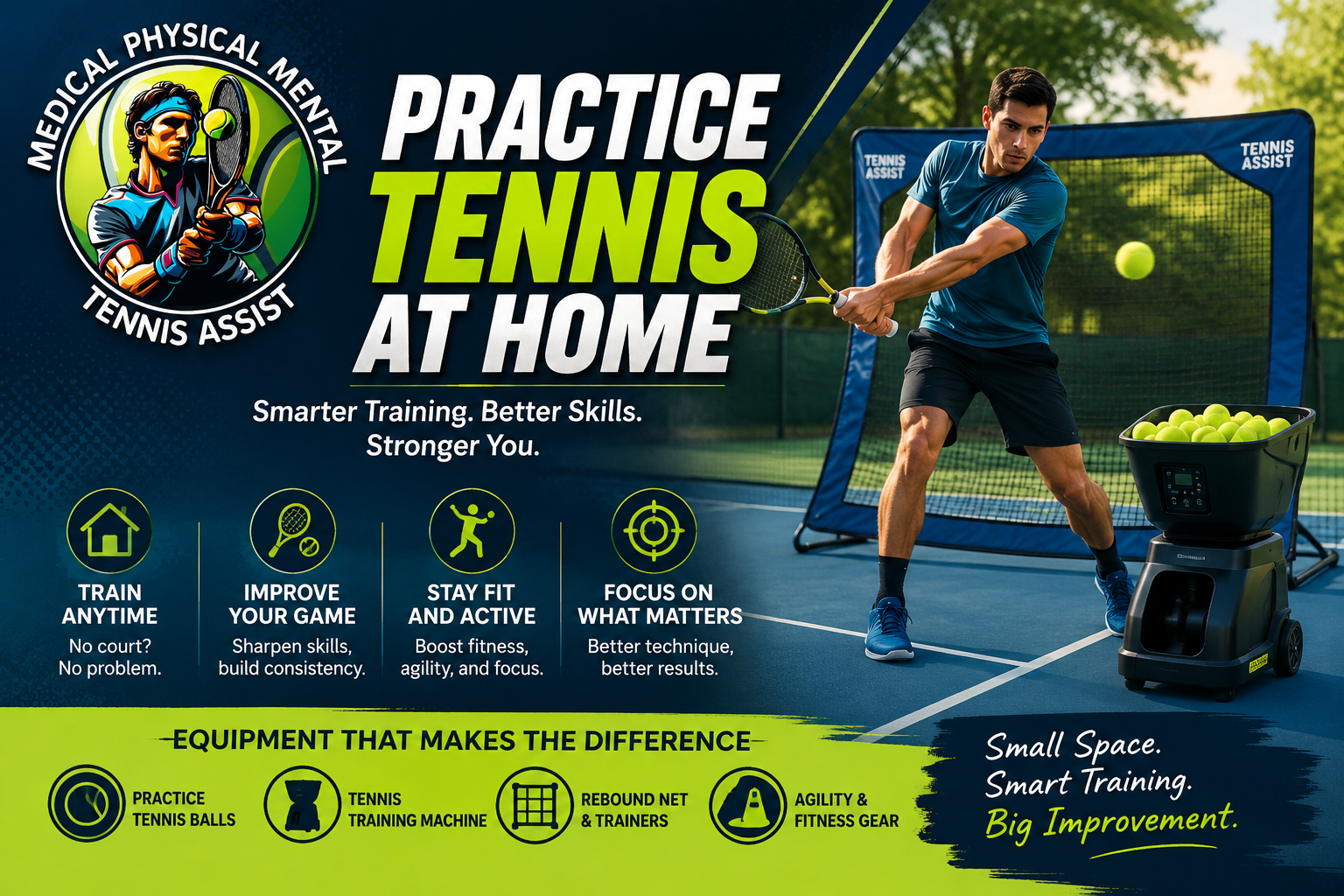
If you want to practice tennis at home, you do not always need a full tennis court, training partner, or long training session. With a safe practice area and the right equipment, players can work on footwork, coordination, racket control, timing, reaction speed, and consistency from home.
For Australian tennis players, home training can be especially useful between club sessions, coaching lessons, and weekend matches. A structured home routine allows you to add extra repetitions without depending on court availability or another player.
What Is the Best Way to Practice Tennis at Home?
The best way to practice tennis at home is to combine technical movements, footwork, ball-control exercises, and fitness drills. Your training should match your playing level and have a clear purpose.
A simple home session can include:
- 5–10 minutes of warm-up
- 10 minutes of footwork
- 10–15 minutes of racket and ball control
- 10–20 minutes using suitable training equipment
- 5 minutes of recovery and stretching
You do not need to train for hours. A focused 20–40 minute session can provide useful additional practice when performed consistently.
Practice Tennis Balls for Better Control
Practice tennis balls can be useful for players who have limited training space or want to focus on control rather than power. Depending on the type of ball, they may provide a slower pace or lower bounce, giving players more time to prepare their racket and position their body.
Beginners can use practice balls to learn basic contact and coordination, while experienced players can use them for controlled repetition.
Useful exercises include:
Racket Control
Try bouncing the ball repeatedly on the racket face. Alternate between the forehand and backhand sides to improve hand-eye coordination.
Controlled Forehands
Practise short-distance forehand contact with an emphasis on racket preparation, balance, and follow-through.
Reaction Drills
Drop a ball, allow it to bounce, and react quickly with your racket or hand. This can help develop reaction speed and coordination.
The goal is controlled repetition rather than maximum hitting speed.
Improve Footwork at Home
Footwork is one of the most important parts of tennis because players need to reach the ball in a balanced position before hitting.
You can practise tennis movement using cones or simple floor markers. Work on lateral shuffles, split steps, forward movement, backward recovery, and changes of direction.
A useful drill is to place three markers in a triangle. Start in the middle, move toward one marker, return to the centre, and then move toward another marker.
Keep your knees slightly bent and stay light on your feet.
For players in Australia who train at home, a driveway, backyard, garage area, or other suitable open space may provide room for basic movement drills. Always check the surface and surrounding area before starting.
How a Tennis Training Machine Can Help
A tennis training machine can be useful for players who want repetitive ball feeds during solo practice. Instead of relying on a partner to feed or return balls, players can work through repeated shots and concentrate on technique.
Training can progress from simple stationary strokes to more demanding movement patterns.
For example:
Stage 1: Practise controlled forehands.
Stage 2: Add backhands.
Stage 3: Alternate between forehands and backhands.
Stage 4: Add lateral movement.
Stage 5: Increase the challenge as your consistency improves.
Start with settings that allow you to maintain proper technique. Increasing speed too quickly can cause players to focus on simply reaching the ball instead of developing good movement and stroke mechanics.
Build a Complete Home Tennis Routine
A player-focused home workout should cover more than hitting.
Warm-Up
Begin with light movement, dynamic mobility, arm circles, leg swings, and easy footwork. A warm-up prepares your body for more demanding activity.
Technical Practice
Use shadow swings to rehearse forehand, backhand, volley, and serve movements. Focus on preparation, body rotation, contact position, and recovery.
Footwork
Perform lateral shuffles, split-step exercises, and directional movement. Keep the movements controlled and maintain good balance.
Ball Practice
Use suitable practice tennis balls for coordination and racket-control drills. Concentrate on consistent contact.
Equipment-Based Training
Where appropriate and safe, use a tennis training machine or rebound-style training equipment to increase repetitions.
Recovery
Finish with easy movement and appropriate stretching. Allow your body enough recovery before another demanding session.
How Often Should You Practice Tennis at Home?
For many recreational players, two to four short home sessions each week can complement regular court training. The ideal schedule depends on your age, fitness, playing level, coaching workload, and match schedule.
For example:
| Day | Home Training Focus |
|---|---|
| Monday | Footwork and movement |
| Tuesday | Rest or light recovery |
| Wednesday | Racket and ball control |
| Thursday | Rest |
| Friday | Tennis training machine practice |
| Saturday | Court training or match |
| Sunday | Light mobility and recovery |
You can change the routine according to your availability.
Home Tennis Training Safety Tips
Safety should always come before the number of repetitions. Make sure your training area has enough space for the movements you plan to perform.
Before starting:
- Check that the surface is stable and not slippery.
- Remove obstacles from the practice area.
- Keep people and pets away from the hitting zone.
- Protect windows and fragile objects.
- Use equipment according to its instructions.
- Avoid full-speed ball hitting in unsuitable indoor spaces.
If you experience unusual pain or discomfort, stop the exercise and seek appropriate professional advice.
Tennis Training in Australia: What Players Should Consider
Australian players have access to a wide range of tennis clubs, coaching programs, courts, and outdoor spaces. Home practice works best as a supplement to these activities rather than a complete replacement for court training.
Players can use home sessions to reinforce skills learned during coaching and then test those skills during regular court practice and match play.
For Australian conditions, also consider heat, hydration, sun exposure, and the playing surface when training outdoors. Early morning or later afternoon sessions may be more comfortable during hot weather, while indoor practice can be useful when outdoor conditions are unsuitable.
Frequently Asked Questions
Can I practice tennis at home without a court?
Yes. Footwork, shadow swings, racket control, coordination, and selected ball drills can be performed in a suitable and safe space.
Are practice tennis balls useful for tennis training?
Yes. They can help players work on control, coordination, timing, and technique, particularly when a slower or more controlled ball is appropriate.
Is a tennis training machine good for solo tennis practice?
Yes. It can provide repeated feeds for players who want to practise strokes, timing, movement, and consistency without depending on a training partner.
How long should I practice tennis at home?
A focused 20–40 minute session can be effective. Consistency and purposeful practice are generally more important than simply training for longer.
What equipment is useful for home tennis training?
Depending on your space and goals, useful equipment can include practice tennis balls, a tennis training machine, cones, agility markers, resistance equipment, and suitable rebound training equipment.
Final Thoughts
Home tennis training gives players another opportunity to develop their game outside regular court sessions. By combining practice tennis balls, footwork drills, racket-control exercises, and a suitable tennis training machine, players can build additional repetitions into their weekly routine.
The most important principle is to train with purpose. Choose one skill, practise it with control, gradually increase the challenge, and track your progress. For players across Australia, this approach can make practice tennis at home a practical part of a balanced tennis-training program.
Tennis Assist provides tennis training and support equipment for players looking to make their practice sessions more structured and productive.

 Arabic
 Français
 Español
 Português
 Deutsch
 Türkçe
 Dutch
Dutch
 Italiano
 Russian
 Romaian