


How to Stop Shadow Agents Without Slowing Copilot Studio Innovation
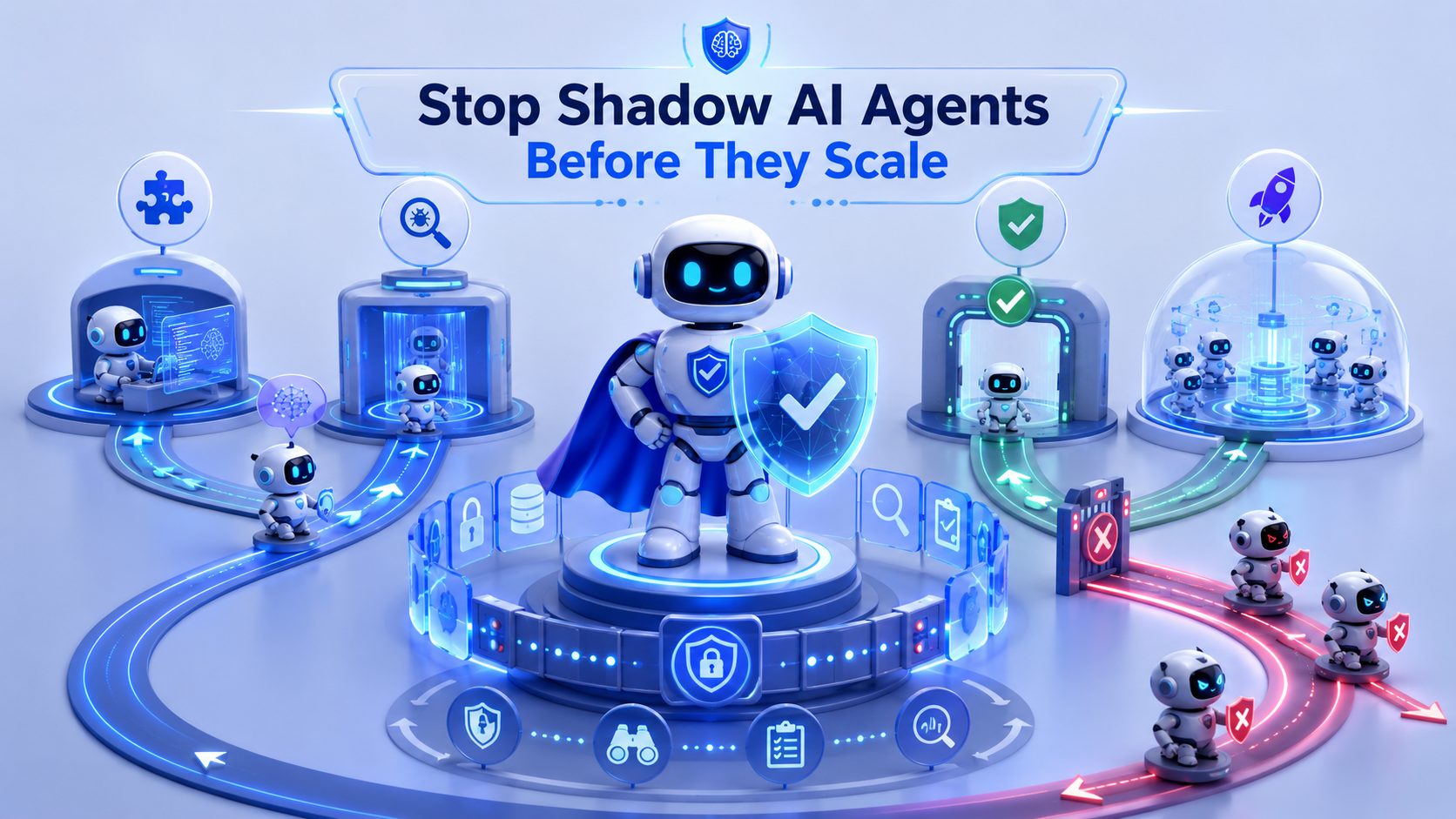
Learn how enterprises can stop shadow AI agents with Copilot Studio governance, DLP controls, managed environments, monitoring, and maker enablement today.
As enterprises adopt AI faster, a new form of shadow IT is emerging: employees creating agents before governance teams know what has been built, what data it can access, or which connectors it uses. The issue is not that employees are experimenting. The risk appears when experimentation becomes operational without ownership, security controls, monitoring, or a defined retirement process.
This is why Copilot Studio governance must evolve alongside business adoption. Organizations need a model that allows innovation without turning every new agent into an uncontrolled technology asset.
Why Shadow Agents Become an Enterprise Risk
Low-code AI platforms make agent creation accessible to business teams. That accessibility is valuable, but it also changes the governance challenge. A maker may solve a genuine workflow problem while unintentionally connecting sensitive information, publishing an agent too broadly, or creating duplicate solutions.
Without strong Power Platform governance, IT teams can struggle to answer basic questions: Who owns this agent? Which environment contains it? What data does it use? Is it still needed? Who reviews changes?
A scalable approach therefore requires visibility before restriction.
Build a Governed Agent Lifecycle
Separate Experimentation from Production
Enterprises should define environments for development, testing, and production rather than allowing every agent to grow inside an unmanaged space. Managed Environments can support clearer operational boundaries, while approval gates help determine when an experiment is ready for wider use.
Use DLP as a Design Control
Effective DLP policies for Copilot Studio should classify connectors according to business risk and data sensitivity. The objective is not to block makers unnecessarily. It is to prevent combinations that could expose corporate information or bypass approved integration patterns.
Maintain an Agent Inventory
Every production agent should have an owner, business purpose, approved data sources, review date, and lifecycle status. Centralized Copilot Studio agent management gives administrators the visibility needed to identify abandoned, duplicate, or high-risk agents before they become operational debt.
Turn Power Users into Governed Makers
Organizations often treat governance and innovation as competing priorities. A better model trains makers to understand the guardrails they operate within.
Structured Microsoft Copilot Studio training can help power users learn how environments, permissions, publishing, connectors, monitoring, and responsible design fit together. Maker enablement aligned with PL-7008 training can also create a common baseline for teams building agents across departments.
This turns governance from an external checkpoint into part of the building process itself.
Create an Operating Rhythm, Not a One-Time Policy
A policy document alone will not control a growing agent ecosystem. Enterprises need recurring reviews for agent inventory, connector usage, ownership, capacity, exceptions, and audit signals. A Center of Excellence can coordinate this operating rhythm across IT, InfoSec, compliance, and business teams.
NovelVista’s Copilot Studio corporate programme reflects this governance-first approach through environment strategy, DLP design, monitoring, admin enablement, maker training, and a structured sustainment model.
Conclusion
The strongest Copilot Studio strategy is not “build everything” or “block everything.” It is controlled enablement.
When organizations combine enterprise AI governance, clear environment boundaries, lifecycle ownership, DLP controls, monitoring, and trained makers, Copilot Studio can scale without creating a hidden estate of unmanaged agents.
Ready to build a governed Copilot Studio maker ecosystem? Explore NovelVista’s Copilot Studio Governance, Environments & Power-User Enablement training and create the controls your teams need before agent adoption accelerates.

 Arabic
 Français
 Español
 Português
 Deutsch
 Türkçe
 Dutch
Dutch
 Italiano
 Russian
 Romaian