


Understanding How a Fistula Develops
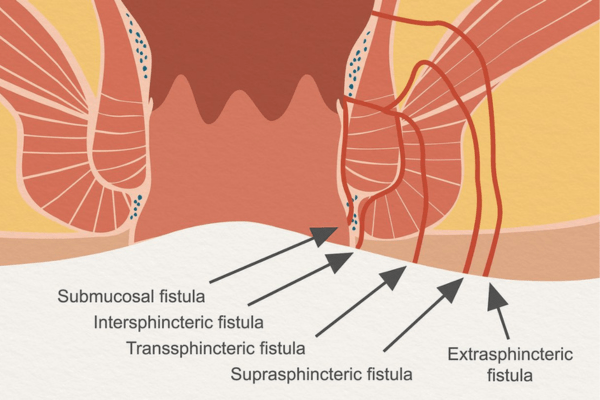
An anal fistula does not usually appear suddenly. In many cases, it develops gradually after an infection forms near the anal canal and an abscess fails to heal completely. Understanding this process can help people recognise warning signs early and seek appropriate medical care.
Many patients initially notice symptoms such as recurring swelling, pain, or pus discharge and assume that the problem is only a temporary infection. However, repeated symptoms may indicate an underlying fistula tract. Consulting a Proctologist in Thrissur can help identify the cause and determine whether Fistula Treatment in Thrissur is required.
What Is an Anal Fistula?
An anal fistula is an abnormal tunnel that develops between the inside of the anal canal and the skin around the anus. It may have an internal opening inside the anal canal and an external opening on the skin.
The tract can allow fluid or infected material to pass from the inside towards the skin. This is why some patients experience persistent or intermittent discharge.
Common symptoms include:
-
Recurrent swelling near the anus
-
Pus discharge
-
Pain or tenderness
-
Skin irritation
-
Foul-smelling discharge
-
Repeated abscess formation
-
Occasional bleeding
-
Fever when an active infection or abscess is present
How Does a Fistula Develop?
The development of an anal fistula often begins with an infection of one of the small glands located inside the anal canal.
The process can generally occur in the following stages:
1. Infection Begins
Small glands inside the anal canal can sometimes become blocked and infected. Bacteria can multiply within the blocked area, resulting in inflammation and the formation of pus.
2. An Abscess Forms
As pus accumulates, an anal abscess may develop. This can cause swelling, throbbing pain, tenderness, and sometimes fever.
An abscess may require prompt medical treatment. In some cases, it may drain naturally, while in others, a doctor may need to drain it.
3. The Abscess Drains
Once the accumulated pus escapes, the pain and swelling may decrease. This can make patients feel that the problem has completely resolved.
However, the reduction in symptoms does not always mean that the underlying infection has healed completely.
4. A Fistula Tract May Remain
If the original infected passage does not close properly, a persistent tunnel can develop between the anal canal and the skin. This becomes an anal fistula.
The external opening may periodically discharge pus or fluid. It may also temporarily close and then become swollen again.
Why Can a Fistula Keep Coming Back?
A fistula can become recurrent when the underlying tract remains untreated. The external opening may close temporarily while the internal tract continues to exist.
This can create a cycle:
Blocked opening → swelling → abscess → drainage → temporary relief → recurrence
Repeated episodes may make the condition more complex. This is one reason why early diagnosis is important.
Can Antibiotics Cure a Fistula?
Antibiotics can be useful when there is an active infection, but they generally cannot eliminate an established fistula tract.
A patient may feel better after taking antibiotics because pain, swelling, and infection can decrease. However, if the abnormal tract remains, symptoms can return.
Definitive treatment depends on the anatomy and complexity of the fistula and should be planned after proper evaluation.
How Is a Fistula Diagnosed?
Diagnosis usually starts with a detailed medical history and physical examination. The doctor may identify an external opening, swelling, tenderness, or discharge.
For complex, recurrent, or deep fistulas, investigations such as MRI pelvis may be recommended. Imaging can help identify the fistula tract and determine its relationship with the anal sphincter muscles.
This information is particularly important when planning treatment while trying to preserve normal sphincter function.
What Are the Treatment Options?
Treatment depends on the fistula's location, complexity, internal opening, and involvement of the sphincter muscles.
Depending on the individual case, treatment may include:
-
Fistulotomy
-
Seton placement
-
LIFT procedure
-
Fistulectomy
-
Sphincter-preserving procedures
-
Laser-based treatment for selected patients
The goal is to treat the abnormal tract while preserving normal anal function as much as possible.
Is Laser Treatment an Option?
Laser Fistula Treatment in Thrissur may be considered for selected patients with suitable fistula anatomy. The technique uses controlled laser energy to treat the fistula tract through a minimally invasive approach.
Potential advantages can include smaller wounds, reduced tissue trauma, and a relatively comfortable recovery in appropriately selected patients.
However, laser treatment is not suitable for every type of fistula. A detailed examination is necessary before deciding whether it is appropriate.
Why Choose Dr. Raviram S?
Dr. Raviram S specialises in the diagnosis and treatment of fistulas, piles, fissures, and pilonidal sinus using modern treatment techniques.
During evaluation, Dr. Raviram S considers the patient's symptoms, fistula anatomy, previous treatment, and overall condition before recommending an appropriate treatment approach. For suitable patients, minimally invasive techniques may be considered as part of personalised care.
When Should You Seek Medical Attention?
Do not ignore recurring swelling, pus discharge, persistent pain, or repeated abscesses near the anal area.
You should also seek prompt medical attention if symptoms are accompanied by fever, increasing pain, or significant swelling.
Early Fistula Treatment in Thrissur can help address the underlying problem before repeated infections make the condition more complicated.
Final Thoughts
An anal fistula often develops as the result of an infection and abscess that fails to heal completely. Although symptoms may temporarily disappear after an abscess drains or infection settles, an underlying fistula tract can remain.
Recognising recurring discharge, swelling, pain, and abscess formation can help you seek medical advice earlier. For suitable patients, Laser Fistula Treatment in Thrissur may be considered among the available minimally invasive approaches.
If you are experiencing recurring symptoms, consult Dr. Raviram S for proper evaluation and an individualised treatment plan.

 Arabic
 Français
 Español
 Português
 Deutsch
 Türkçe
 Dutch
Dutch
 Italiano
 Russian
 Romaian