


Shopify Ecommerce Development Services: Key Features, Benefits & Best Practices

Building a Shopify Store That Makes Online Shopping Easier
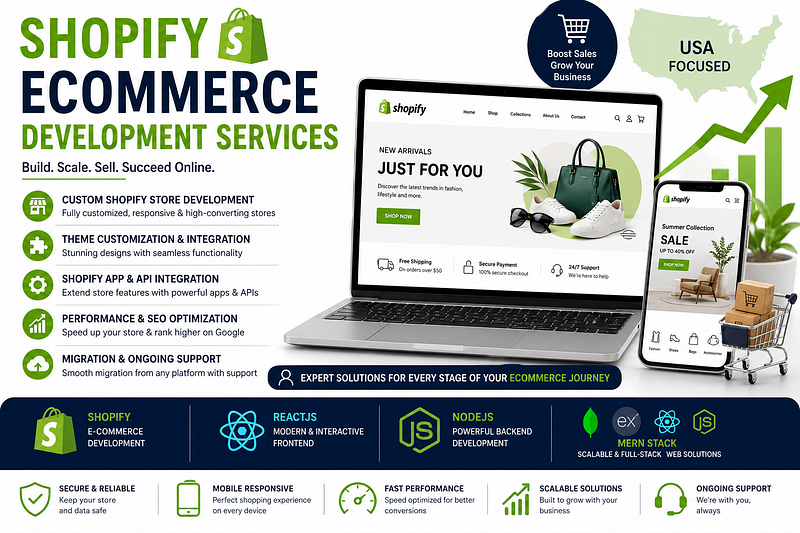
An ecommerce website should answer a customer’s questions before they become reasons to leave. Where is the right product? How much does it cost? When will it arrive? Can it be returned? Is checkout secure?
The easier a store answers these questions, the more comfortable customers can become with purchasing.
This is one reason businesses explore shopify ecommerce development services when launching or improving an online store. The goal is not simply to create attractive pages but to build an organized shopping environment that supports customers from their first visit through checkout.
Think About the Buying Journey
Before discussing themes, applications, or technical features, businesses should understand how customers shop.
Some visitors already know what they want. Others need to compare products. Some arrive through search engines looking for information before deciding what to buy.
A good ecommerce website should support each type of visitor.
The journey can include:
Discovery → Category Browsing → Product Research → Cart → Checkout → Post-Purchase
Every stage creates an opportunity to make the experience easier.
Organize Products Clearly
Product organization becomes increasingly important as an ecommerce catalog grows.
Imagine entering an online store with hundreds of products but no logical categories. Finding the right item would quickly become frustrating.
Useful structures can include product categories, collections, filters, search tools, and related products.
A logical architecture also helps search engines understand relationships between different pages.
Product Pages Should Build Confidence
A product page should provide enough information for customers to make informed decisions.
Depending on the product, that could include:
- Features
- Dimensions
- Materials
- Compatibility
- Pricing
- Availability
- Shipping information
- Return policies
- Customer reviews
The more uncertainty a page removes, the easier it can be for customers to decide whether a product is right for them.
Performance Influences Perception
A website does not need to be complicated to be slow.
Large images, unnecessary scripts, poorly optimized applications, and inefficient theme code can all affect performance.
Businesses should monitor important areas such as:
- Page loading
- Mobile responsiveness
- Image sizes
- Third-party scripts
- Theme performance
- Core Web Vitals
Performance is important not only for search visibility but also because customers generally expect online stores to respond quickly.
Simplify the Checkout Experience
The checkout process deserves special attention.
A customer who has already decided to purchase can still abandon the order if the final steps are confusing.
A cleaner checkout experience can include:
- Transparent pricing
- Clearly displayed shipping costs
- Appropriate payment options
- Simple forms
- Mobile-friendly fields
- Clear confirmation messages
Reducing unnecessary steps can make purchasing more convenient.
Connect the Store With Business Operations
The customer-facing website is only one part of ecommerce.
Behind the store may be inventory systems, fulfillment tools, CRM platforms, accounting software, customer service systems, and marketing platforms.
When these systems are disconnected, employees may need to transfer information manually.
Integrations can help automate these processes.
Businesses exploring Shopify ecommerce development solutions should map their operational systems before deciding how integrations should work.
When MERN May Make More Sense
Shopify can be a strong choice for many ecommerce businesses, but not every project has identical requirements.
Some organizations need highly customized applications. In those situations, MERN stack development services may offer greater control over application architecture, frontend behavior, backend functionality, and data management.
The choice should be based on project requirements rather than assuming one technology is always superior.
The Importance of Strategic Planning
Development teams can build features, but businesses need to determine which features actually matter.
Ecommerce Consulting Services can help identify issues related to user experience, technology, SEO, conversion optimization, analytics, and operational workflows.
For example, a store with high traffic but low sales might not need more features. It may need better product information, clearer trust signals, improved navigation, or a simpler checkout.
Strategic analysis can help prioritize the right improvements.
Designing for Future Requirements
An ecommerce website should be prepared for change.
Businesses may introduce new products, enter new markets, add payment methods, connect new software, or change their customer acquisition strategy.
A flexible development approach makes these changes easier to manage.
Instead of building only for today’s requirements, businesses should consider what the store may need six months or several years from now.
Why Development Should Be Customer-Focused
Technology is useful when it solves real problems.
A custom feature that nobody needs adds complexity. A simple improvement that saves customers several clicks can have far greater value.
That customer-first mindset can guide decisions about navigation, search, product pages, checkout, personalization, and integrations.
For organizations working with Webiators, this type of approach can help connect technical development with practical ecommerce objectives.
Conclusion
Building a Shopify store is not simply a matter of selecting a theme and uploading products. A successful store requires thoughtful planning around customer journeys, product discovery, performance, checkout, integrations, SEO, and future growth.
By focusing on what customers actually need, businesses can create ecommerce experiences that are easier to navigate, easier to manage, and better prepared for changing market demands.
FAQs
1. What makes a Shopify store user-friendly?
Clear navigation, useful product information, fast pages, mobile responsiveness, effective search, and a straightforward checkout all contribute to usability.
2. Why does website structure matter for ecommerce?
A logical structure helps customers find products and helps search engines understand relationships between pages.
3. Can Shopify integrate with business systems?
Yes. Shopify can connect with numerous external platforms through applications, integrations, and APIs.
4. Is MERN better than Shopify?
Neither is universally better. The appropriate choice depends on functionality, customization requirements, budget, maintenance, and business objectives.
5. Why should businesses analyze their store before redesigning it?
Analysis can reveal the actual causes of poor performance and prevent businesses from spending resources on unnecessary changes.
 Deutsch
 English
 Arabic
 Français
 Español
 Português
 Türkçe
 Dutch
Dutch
 Italiano
 Russian
 Romaian