


How Do Canning Jars Support Secure Filling and Storage?
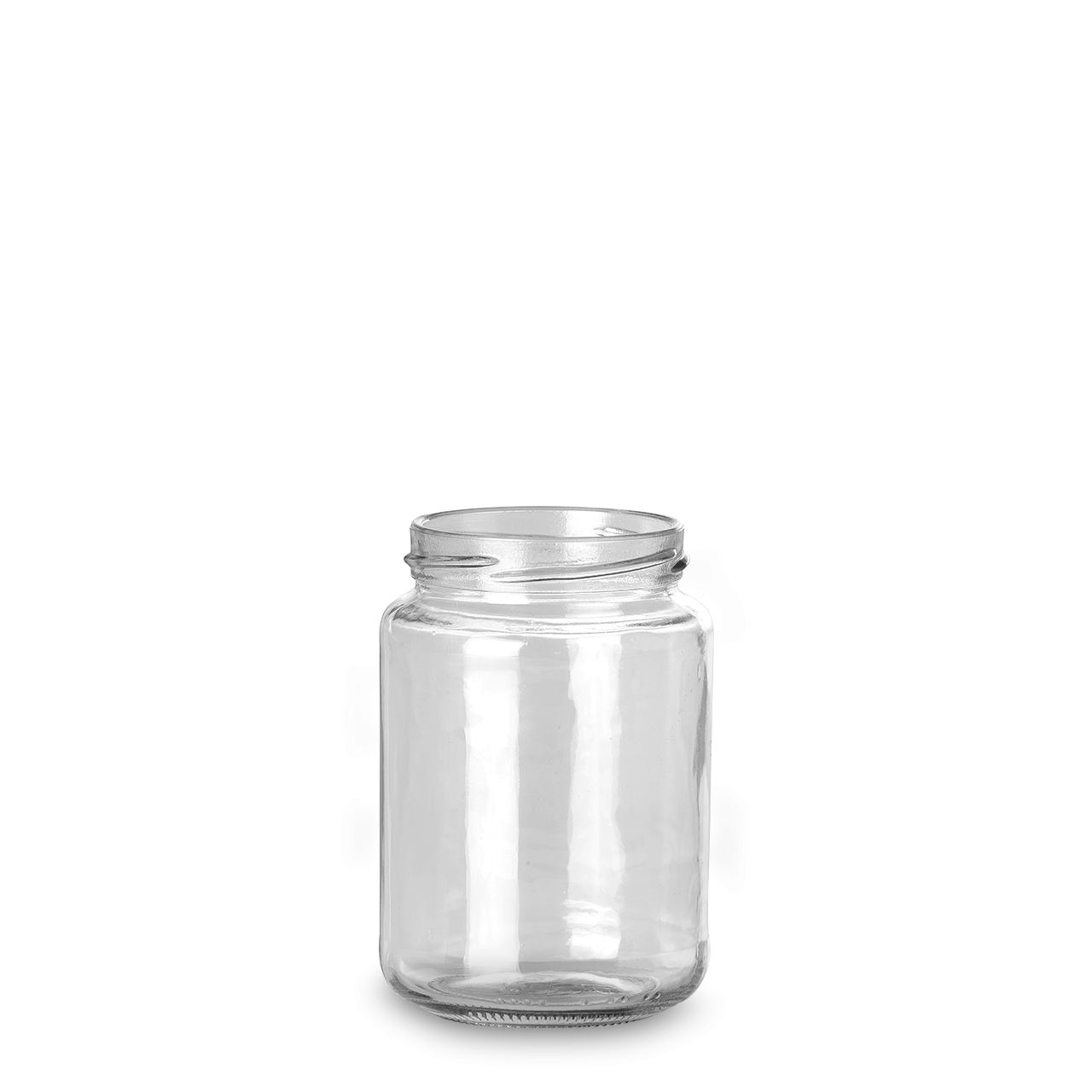
Understanding Glass Selection, Headspace and Closure Performance
Successful packaging depends on the relationship between the container, closure, contents and filling method. AlliedChemi’s Canning Jars category includes clear and amber glass preserving jars with twist-off closures in various capacities and thread sizes. These wide-opening containers can support compatible food, laboratory, ingredient and small-batch packaging workflows when properly assessed.
Selecting a jar by capacity alone is not enough. Glass condition, closure fit, filling temperature, headspace and storage environment must all be considered before a packaging system is approved.
What Distinguishes a Canning Jar from an Ordinary Container?
Canning jars are designed around a wide opening and a closure capable of forming a secure seal. The broad mouth simplifies the filling and removal of products that would be inconvenient to handle through a narrow bottle neck.
Potential applications include:
- Preserves, sauces and compatible food products
- Dry ingredients, herbs and spices
- Powders, granules and solid samples
- Small-batch artisan products
- Laboratory retention samples
- Compatible oils, pastes and semi-solid materials
- Product-development batches
- Organised storage of non-hazardous materials
A jar described as suitable for preserving should not automatically be assumed safe for every thermal process. Pressure canning, retorting, pasteurisation, hot filling and autoclaving create different combinations of heat, pressure and mechanical stress. The exact jar and closure must be approved for the chosen process.
How Should the Correct Jar Size Be Chosen?
The current range includes compact jars and larger formats, with capacities extending from small sample-sized containers to jars suitable for greater filling quantities. Available thread sizes also vary, so the closure must correspond to the exact neck finish.
Jar selection should consider:
- Target net quantity
- Brimful and practical filling capacity
- Required headspace
- Product density
- Size of solid ingredients or particles
- Filling nozzle dimensions
- Closure depth
- Label area
- Carton and pallet arrangement
- Quantity used after each opening
A larger jar does not always improve efficiency. Excessive empty space can affect presentation and expose more of the product to the internal atmosphere. An undersized jar may leave insufficient space for expansion, closure application or process-specific headspace.
Teams should conduct filling trials using the actual formulation because foaming, trapped air and particle distribution can change the practical capacity.
Why Does the Type of Glass Matter?
Glass offers a strong barrier against gases and moisture through the container wall. It also provides visibility and does not flex during normal closure application. However, performance can vary according to glass composition, wall thickness, manufacturing quality and intended use.
Clear glass makes it easy to inspect colour, fill level and product condition. Amber glass can reduce exposure to selected wavelengths of light, which may benefit light-sensitive contents. The level of protection must be confirmed through stability or light-transmission testing rather than assumed from colour alone.
Users comparing other laboratory and packaging formats can explore the broader Glass Bottles category. Where wide access remains necessary but a different thread system is preferred, Wide-Neck Bottles provide alternative glass-container configurations.
How Do Twist-Off Closures Create a Seal?
A twist-off closure engages with corresponding lugs or threads around the jar neck. When correctly fitted, the closure’s sealing surface presses against the rim to create a barrier. The seal’s effectiveness depends on the jar finish, cap dimensions, liner, application force and cleanliness of the contact area.
Product residue on the rim can prevent uniform sealing. Before closure application, the neck should be inspected for:
- Product splashes
- Chips or cracks
- Glass particles
- Damaged threads or lugs
- Moisture or oil
- Uneven sealing surfaces
- Foreign material
The wider Lids for Cans range can support comparisons involving compatible lid and container systems. Selected options within Screw Caps for Cans may also suit other jars or pots when their thread, dimensions and sealing components match.
A cap that appears to fit should not be approved without testing. Small differences in thread style or sealing depth can result in leakage, poor vacuum retention or damage during application.
Why Is Headspace Important?
Headspace is the unfilled area between the product and closure. Its correct size depends on the product, filling temperature and processing method. It provides room for expansion and may contribute to vacuum formation as a hot-filled product cools.
Too little headspace can cause the contents to contact the lid, interfere with sealing or escape during processing. Too much may affect product appearance and create an unnecessarily large internal atmosphere.
A validated procedure should define:
- Filling temperature
- Product level
- Headspace tolerance
- Time between filling and closing
- Closure application conditions
- Cooling method
- Final seal inspection
The same headspace value should not be copied across unrelated products. A thick sauce, dry powder and liquid laboratory sample can behave very differently inside the same jar.
How Should Temperature Be Controlled?
Temperature affects the product, glass and closure simultaneously. Rapid temperature differences between the jar and its contents can produce thermal stress. Placing a cold jar into a hot environment, pouring hot material into unsuitable glass or cooling a filled jar too quickly can increase the risk of breakage.
Temperature-control procedures should be based on supplier documentation and an approved filling method. Suitable Temperature and Monitoring instruments can help teams check product, storage and processing conditions.
Important controls may include:
- Pre-conditioning empty jars where required
- Measuring the actual product temperature
- Avoiding sudden temperature transitions
- Maintaining consistent processing times
- Monitoring cooling conditions
- Recording batch temperatures
- Inspecting jars after processing
- Confirming closure performance after cooling
Ordinary canning jars must not be placed in an autoclave, pressure vessel, oven or freezer unless the exact product documentation permits that use.
How Should Empty Jars Be Prepared Before Filling?
Preparation depends on the application. Food, laboratory and industrial workflows have different cleanliness, microbiological and regulatory requirements. Jars should be stored in a clean, dry and protected location before filling.
A preparation process may involve:
- Checking each jar for visible damage
- Removing dust and packaging debris
- Using an application-approved washing method
- Allowing containers to dry correctly
- Protecting cleaned jars from recontamination
- Handling rims and internal surfaces carefully
- Separating damaged containers
- Keeping closures covered until use
Products within Disinfectants and Biocides can support appropriate workplace and equipment hygiene programmes. They should not be applied directly to jars, closures or product-contact surfaces unless the product instructions and relevant process requirements specifically permit that use.
Cleaning does not automatically achieve sterilisation. Businesses must follow an approved hygiene or preservation method for their industry and product type.
How Can Seal Quality Be Checked?
Seal inspection should take place after the jar reaches the defined post-filling condition. Depending on the closure design, testing may include visual inspection, vacuum measurement, leak assessment or closure-removal checks.
Warning signs can include:
- Raised or distorted lids
- Product around the rim
- Loose closures
- Loss of vacuum
- Air bubbles escaping during testing
- Cracks near the neck or base
- Corrosion inside the lid
- Liner displacement
- Unexpected weight loss
- Product discolouration or odour changes
A sealed appearance does not establish microbiological safety. Food-preservation processes must use validated recipes and processing conditions from an appropriate authority. Laboratory and commercial applications require their own risk assessments and quality procedures.
What Compatibility Testing Is Required?
Although the glass body may provide a useful barrier, the closure liner, coating and sealing compound may react with the contents. Acids, oils, salts, solvents and aromatic ingredients can affect closure performance over time.
Compatibility testing should use the complete filled jar and include expected storage conditions. Samples can be positioned upright and inverted to increase contact with the closure. Development teams should monitor leakage, corrosion, odour, colour, seal strength and changes in the contents.
For chemically sensitive materials, compare suitable options within Medicine Bottles. Amber and clear glass formats are available, but buyers must still confirm the glass specification, thread and closure compatibility for the intended material.
How Should Filled Jars Be Packed for Transport?
Glass requires protective secondary packaging. Individual jars should be separated to prevent glass-to-glass contact, while the outer carton must support the completed weight. Dividers, inserts and cushioning should be selected according to jar shape and distribution risk.
Transport testing may include:
- Drop assessment
- Carton compression
- Vibration exposure
- Temperature cycling
- Closure-retention checks
- Label inspection
- Leakage monitoring
- Pallet-stability trials
The wider Containers, Bottles, Tins and Canisters portfolio can help buyers compare alternative container types when glass jars do not meet the required handling or distribution profile.
Standard canning jars must not be used for regulated dangerous-goods transport unless the complete package carries the necessary approval.
What Should Buyers Check Before Ordering?
A practical purchasing review should confirm:
- Glass type and colour
- Nominal and brimful capacity
- Jar height and diameter
- Opening and thread dimensions
- Closure inclusion or separate availability
- Liner and sealing-compound specification
- Permitted filling temperature
- Suitability for the intended process
- Product-contact documentation
- Required order quantity
- Secondary packaging needs
- Storage and handling procedures
Reusable appearance does not guarantee unlimited reuse. Glass rims, threads and closures can become damaged after processing or repeated handling. Each jar should be inspected, and closures should be replaced whenever required by the manufacturer or validated procedure.
Creating a Reliable Canning-Jar Workflow
Canning jars combine a wide opening, rigid glass construction and compatible twist-off closures in a versatile packaging format. Their effectiveness depends on selecting the correct capacity, maintaining suitable headspace and controlling temperature throughout filling and cooling.
When jar condition, closure fit, hygiene, compatibility and transport performance are assessed together, businesses can create a more consistent packaging process. Careful validation turns a simple glass jar into a dependable storage system suited to the requirements of the actual product.

 English
 Arabic
 Français
 Español
 Português
 Deutsch
 Türkçe
 Dutch
Dutch
 Russian
 Romaian