


Managing Base-Load Demand and Grid Stability in Modern Power Systems
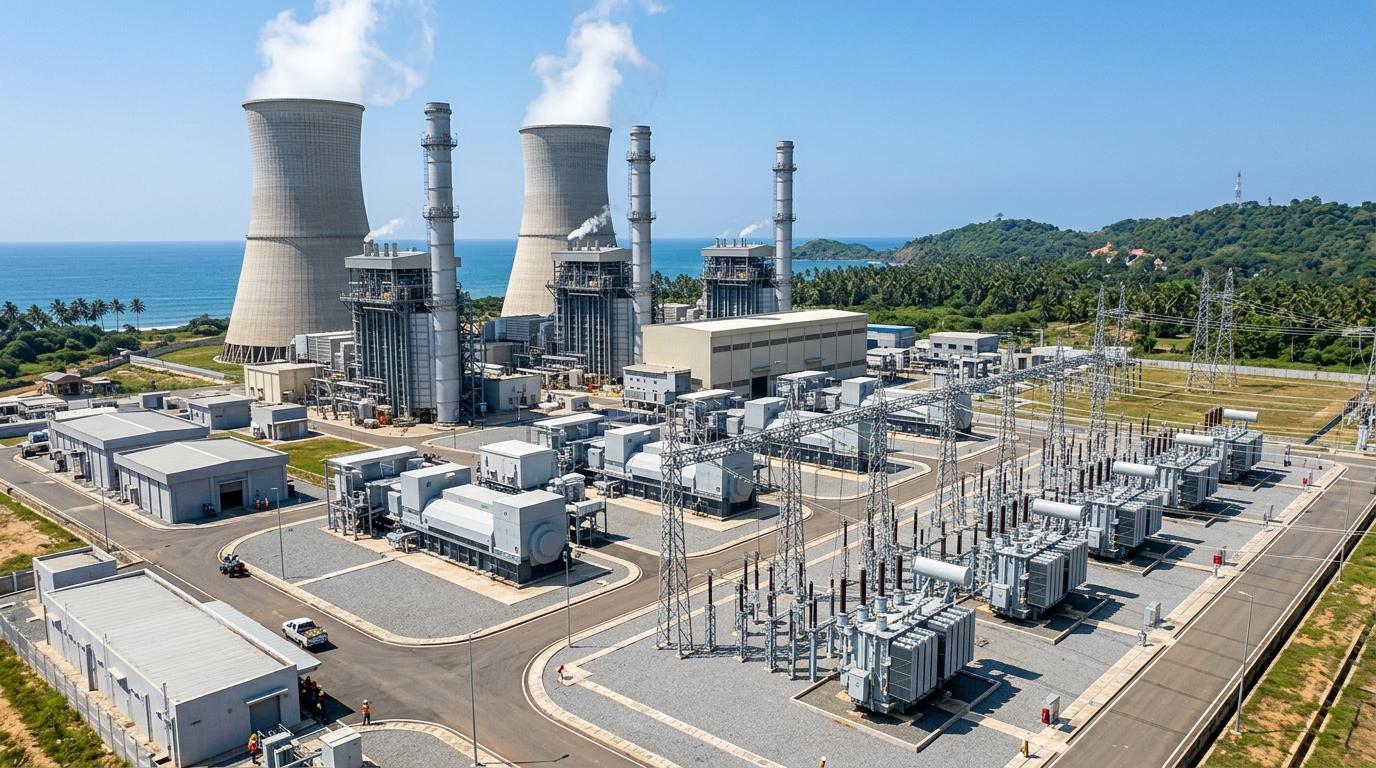
As electrical demand expands alongside industrial growth and urbanization, maintaining a resilient and steady base-load supply is essential to prevent rolling blackouts and voltage fluctuations. Within national energy networks, power plants in sri lanka fulfill a non-negotiable role by delivering predictable, non-intermittent power production around the clock.
Base-Load Power vs. Variable Energy Sources
Renewable sources like solar PV and wind are vital for decarbonization, but their generation profiles fluctuate naturally based on sunlight and weather conditions. Base-load thermal plants—utilizing steam, gas, or heavy fuel engine systems—provide the firm, dispatchable capacity required to balance these supply-side variations.
Key operational functions of dispatchable base-load systems include:
-
Frequency Control: Maintaining standard network frequency (50 Hz) by dynamically adjusting mechanical turbine torque in response to real-time consumer load changes.
-
Spinning Reserve: Providing online, synchronized power capacity ready to ramp up immediately during sudden line outages or generation drops.
-
Voltage Support: Supplying reactive power ($MVAr$) to stabilize line voltages across transmission corridors.
Key Technological Infrastructure for Grid Balancing
Modern dispatchable generation facilities rely on sophisticated electrical and control machinery to interface smoothly with transmission grids:
-
Automatic Voltage Regulators (AVR): Dynamically control generator excitation systems to stabilize output voltage under varying power factor loads.
-
High-Voltage Circuit Breakers & Switchgear: Protect plant alternators and step-up transformers by isolating electrical faults within milliseconds.
-
Power Factor Correction (PFC) Banks: Improve power transfer efficiency across transmission lines by mitigating inductive losses.
-
Heavy-Duty Step-Up Transformers: Step up generator output voltages to high-voltage transmission levels to minimize energy loss over long transmission lines.
Grid Integration Comparison: Thermal vs. Renewable Generation
| Feature | Base-Load Thermal Generation | Variable Renewable Generation (Solar/Wind) |
| Availability / Capacity Factor | High ($75\% - 90\%+$) | Weather-dependent ($20\% - 30\%$) |
| Grid Inertia | High (rotating physical turbogenerator mass) | Low/Zero (inverter-based) |
| Dispatchability | fully controllable on-demand | Non-dispatchable (requires energy storage) |
| Capital Infrastructure Focus | Robust transformers, fuel systems, boilers | Battery Storage (BESS), solar arrays, inverters |
Upgrading Substation Infrastructure for Maximum Grid Resilience
Achieving a stable power network requires continuous investment in heavy electrical engineering, advanced distribution equipment, and high-spec transformers capable of enduring continuous thermal cycling and electrical stress. High-grade grid equipment ensures that generated electricity flows safely from generation busbars straight to commercial and domestic consumers.
To discover robust electrical engineering solutions, custom transformer manufacturing, and grid-tier infrastructure built to support utility power generation, check out the specialized services from LTL.

 English
 Arabic
 Français
 Español
 Português
 Deutsch
 Türkçe
 Dutch
Dutch
 Italiano
 Russian