


Ejector Pumps Repairs New Jersey: Fix the Problem Before a Backup
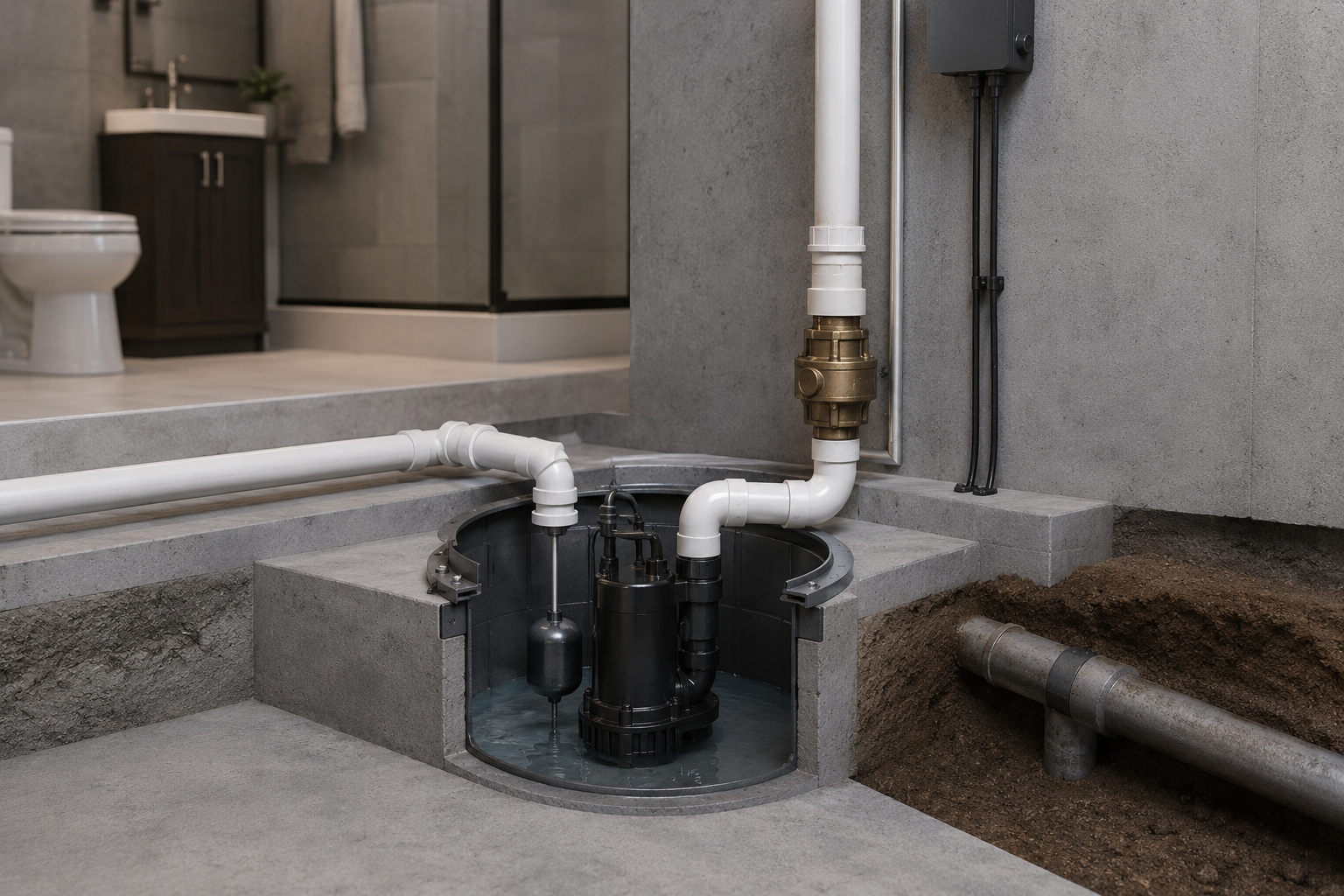
A basement bathroom suddenly drains slowly. The ejector pump starts making an unfamiliar humming sound. Then, without much warning, wastewater begins rising instead of disappearing. Ejector pumps repairs New Jersey can become an urgent concern when these warning signs appear because a small mechanical problem can quickly turn into a serious sewage backup.
For North Arlington homeowners with below-grade plumbing, a reliable sewage ejector system is vital. Understanding its function, identifying early symptoms, and acting promptly can prevent basement emergencies.
Why an Ejector Pump Failure Can Become a Big Problem
An ejector pump is designed to move wastewater from plumbing fixtures located below the level of the home’s main sewer connection. Because gravity cannot always carry this wastewater away, the pump collects it inside a basin and pushes it through a discharge line.
When the system works correctly, most homeowners barely notice it.
When it fails, however, the situation can change quickly.
A blocked pump, failed float switch, damaged check valve, electrical issue, or worn motor can prevent wastewater from leaving the basin. Continued use of connected fixtures may eventually cause the basin to overflow.
That is why ejector pumps repairs New Jersey should not be treated as something to postpone when a pump begins behaving differently.
6 Warning Signs Your Ejector Pump Needs Attention
1. Strange Grinding or Humming Sounds
Unusual sounds may signal mechanical wear, debris, an obstructed impeller, or a failing motor. If your pump becomes noticeably louder, it requires prompt attention.
2. The Pump Runs Continuously
A continuously running pump may not be removing wastewater efficiently. This could indicate a float issue, discharge restriction, or excessive wastewater flow.
3. Basement Drains Become Slow
Slow drainage in basement toilets, showers, or sinks may indicate inefficient wastewater removal.
4. Sewage Odors Appear
Persistent odors near the basin may signal a sealing issue, stagnant wastewater, or other ejector system problems.
5. The Pump Stops Activating
If wastewater enters the basin but the pump does not activate, the float, power supply, controls, or motor may need professional evaluation.
6. Wastewater Starts Backing Up
This is an urgent warning. Stop using fixtures connected to the ejector system and seek professional assistance immediately to prevent overflow.
Repair or Replacement: Which Makes More Sense?
Not every ejector pump problem requires replacing the entire pump.
A professional inspection may reveal issues with the float switch, check valve, discharge line, electrical connection, or blockages. In these cases, repairs can restore proper function.
However, an aging pump that has failed repeatedly may no longer be worth repairing. If the motor is severely worn or the pump cannot handle the property’s wastewater demand, ejector pump replacement NJ may provide a more dependable long-term solution.
Choose repair or replacement based on the pump’s condition, age, capacity, installation, history, and ongoing repair costs.
What Homeowners Should Do When the Pump Starts Failing
If you suspect an ejector pump issue, limit additional wastewater entering the system to stay safe.
Step 1: Reduce Fixture Use.
Avoid using basement toilets, showers, sinks, washing machines, or other connected fixtures unless necessary.
Step 2: Watch for Symptoms.
Observe if the pump is silent, runs constantly, cycles repeatedly, vibrates, or makes unusual sounds. These details assist technicians in diagnosing the issue.
Step 3: Look for Obvious Power Problems.
If the pump has stopped, check if the electrical breaker or GFCI protection has tripped. Never handle electrical components near standing water.
Step 4: Do Not Open the Basin Casually.
A sewage ejector basin contains contaminated wastewater and hazardous gases. Opening or servicing it without proper equipment and procedures poses significant risks.
Step 5: Have the Complete System Checked.
Effective ejector pump service New Jersey should involve more than looking at the pump motor. Consider the basin, float mechanism, check valve, discharge piping, electrical supply, and overall system operation.
Ejector Pump Problems vs. Sump Pump Problems
People sometimes confuse the two systems because both use pumps and may be located in a basement.
They perform very different jobs.
A sump pump manages groundwater and water collected around the foundation, while a sewage ejector pump handles wastewater from plumbing fixtures such as basement toilets, showers, and sinks.
Homeowners planning sump pump installation in NJ should evaluate groundwater protection separately from sewage management. Consider sump pump installation as part of a comprehensive basement water management strategy.
Understanding the difference helps prevent blaming the wrong equipment for the wrong problem.
A Realistic North Arlington Scenario
Consider a homeowner with a finished basement bathroom.
The ejector pump has operated reliably for years, but it recently begins humming longer than usual. The homeowner notices that the basement toilet also seems slower.
Instead of investigating, the homeowner continues to use the bathroom normally.
Several days later, the pump stops activating. Wastewater begins collecting inside the basin, and the homeowner now faces a much more urgent plumbing situation.
This is why ejector pumps repairs New Jersey is not simply an emergency search phrase. Early attention gives homeowners a chance to identify developing problems before wastewater reaches finished flooring, walls, furniture, or personal belongings.
How Long Should an Ejector Pump Last?
No single lifespan applies to every pump. Actual service life depends on pump quality, usage, wastewater volume, installation conditions, maintenance, and operating frequency.
A pump serving a heavily used basement bathroom may experience considerably more activity than one serving an occasional-use space.
Instead of relying only on age, homeowners should watch for changes in sound, cycling behavior, drainage performance, odors, and reliability.
Repeated breakdowns matter because they may indicate that continued repairs are no longer practical.
Frequently Asked Questions
What is a sewage ejector pump?
A sewage ejector pump moves wastewater from below-grade plumbing fixtures to a sewer connection when gravity drainage is not sufficient.
What are the most common ejector pump problems?
Common issues include clogged pumps, failed float switches, damaged check valves, electrical problems, worn motors, and restricted discharge piping.
Can a sewage ejector pump be repaired?
Yes. Depending on the cause, you may be able to repair components such as floats, valves, controls, or blockages. A severely worn or repeatedly failing pump may be better suited for replacement.
Can I use my basement bathroom if the ejector pump is failing?
It is generally best to avoid using fixtures connected to a malfunctioning ejector system until the problem has been evaluated. Continued wastewater flow can increase the chance of a backup.
Is a sewage ejector pump the same as a sump pump?
No. A sump pump removes groundwater, while a sewage ejector pump moves wastewater from plumbing fixtures. Their purposes, installation requirements, and operating conditions are different.
When should I search for ejector pump repair services in New Jersey?
If the pump makes unusual noises, runs continuously, fails to activate, produces persistent odors, or allows wastewater to back up, it's time to seek professional evaluation. Searching for ejector pumps repairs New Jersey before a complete failure can help homeowners address warning signs earlier.
Do Not Wait for Wastewater to Make the Decision
An ejector pump may be hidden beneath a basement floor, but its importance becomes obvious when it stops working.
For North Arlington homeowners, ejector pumps repairs New Jersey can mean the difference between addressing a developing mechanical issue and dealing with a disruptive sewage backup. Strange noises, slow drainage, repeated cycling, and unusual odors are worth investigating, not ignoring.
Whether you need basement sewage pump repair, residential ejector pump repair, a replacement, or a new system, the first step is identifying the cause.
If your pump shows warning signs or has stopped working, contact DeGrace Plumbing to discuss the issue and schedule a plumbing evaluation.

 English
 Arabic
 Français
 Português
 Deutsch
 Türkçe
 Dutch
Dutch
 Italiano
 Russian
 Romaian