


Empowering Innovation With Field Programmable Gate Arrays: Applications And Advancements
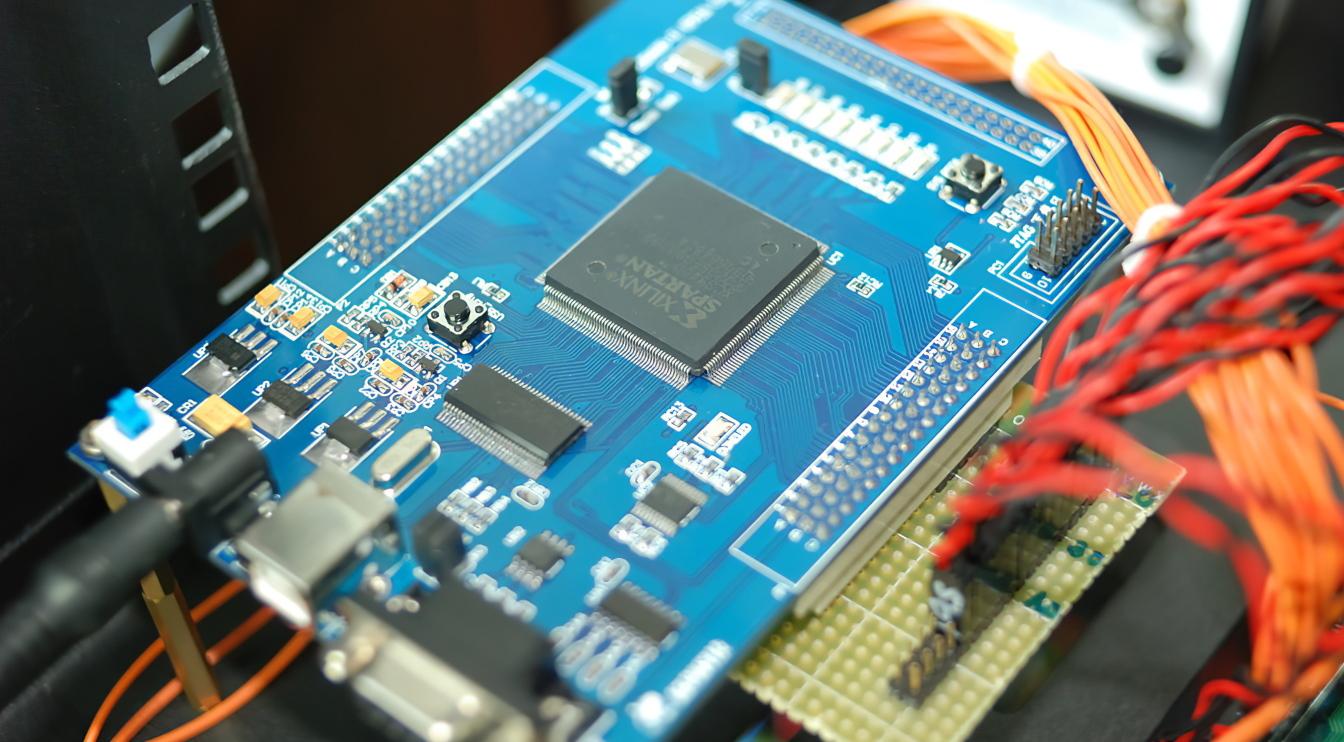
Field Programmable Gate Arrays, commonly referred as FPGAs, are integrated circuits that can be programmed to perform different functions after manufacturing. FPGAs offer flexible, low-cost solutions for various applications by letting engineers program logic blocks on the chip. In this article, we will look into what exactly are FPGAs, their architecture and components, applications areas, advantages and limitations.
What are FPGAs?
An FPGA is an integrated circuit designed to be configured by a customer or a designer after manufacturing. Unlike an Application-Specific Integrated Circuit (ASIC) that has a fixed function determined during manufacturing, an FPGA can be reprogrammed to desired application or functionality requirements. FPGAs contain programmable logic components called logic blocks and a hierarchy of reconfigurable interconnections that allow the blocks to be "wired together" in various configurations.
FPGA Architecture and Components
The basic building blocks of an Field Programmable Gate Arrays are logic blocks and programmable interconnects. Logic blocks contain programmable look-up tables (LUTs) that can realize any logical function of a few variables. Other components in a logic block include flip-flops, programmable registers, tri-states and multiplexers. FPGAs also contain programmable input/output blocks (IOBs) to interface with external devices. Memory blocks called block RAM are also included for storage. Fast carry chains are used to speed up arithmetic functions like addition and multiplication. All these components are connected using reconfigurable interconnects that can be programmed to create desired logic functions.
Some key components of an FPGA include:
Lookup tables (LUTs): Contains a set of 4-8 input LUTs that can realize any logical function.
Flip-flops: Used for registering outputs and for sequential logic.
Interconnects: Routing resources to connect LUTs, memory blocks and I/O pins.
Digital signal processing (DSP) blocks: Customized for arithmetic intensive applications.
Memory blocks: Block RAM for storage and signal processing functions.
Clock management circuitry: Resources for low-jitter clocking.
Programmable I/O blocks: Interface between external connections and internal logic.
Application Areas of FPGAs
Due to their reprogrammability, FPGAs are used in diverse application areas:
Embedded Systems: FPGAs are used in medical devices, industrial control systems, avionics systems, etc. for real-time control and processing.
Telecommunications: FPGAs are deployed in cellular base stations, routers, switches for signal processing and networking functions.
Aerospace: Functions like image processing, radar signal decoding are developed on FPGAs for spacecraft and satellites.
Consumer Electronics: Digital video, audio processing, encryption algorithms are prototyped on FPGA boards for TVs, set-top boxes.
Automotive: ADAS functions for detection/ prevention are developed on FPGA platforms for advanced driver-assistance.
Military and Defense: Used for mission-critical applications like signal intelligence, electronic warfare and radar systems.
Financial Services: FPGAs are part of high-frequency trading platforms for low-latency services.
Advantages of FPGAs
Reprogrammability: Logic functions can be changed via firmware upgrades avoiding hardware changes.
Short design cycle: Functions can be quickly tested and improved using HDL programming.
Flexibility: Same hardware platform can be reused for different tasks reducing NRE costs.
Parallel architecture: FPGA circuits execute operations simultaneously enabling high-speed processing.
Reliability: Design errors can be fixed in the field with configuration updates. No physical changes needed.
Limitations of FPGAs
Higher costs: FPGAs are more expensive than off-the-shelf microprocessors for the same application.
Power consumption: Compared to ASICs, FPGA designs tend to consume more power for the same functionality.
Limited resources: FPGAs have finite resources like LUTs, DSP blocks that may limit design complexity.
Development effort: HDL programming model takes more effort compared to off-the-shelf processors/SoCs.
Performance: Hardwired ASIC implementations provide better performance than programmable FPGAs.
FPGAs provide the flexibility of software and the speed of hardware. Their reprogrammability makes them suitable for rapidly evolving applications. FPGAs are ideal platforms for researchers and engineers to efficiently test algorithms and validate proof-of-concepts. Their versatility and parallel architecture will continue to make them an attractive choice compared to traditional MPU-based solutions for many applications in emerging domains like AI, IoT and autonomous systems.
For more insights, read- https://www.pressreleasebulletin.com/field-programmable-gate-arrays-trends-size-and-share-analysis/
For more details on the report, Read- https://dailynewsmotion.weebly.com/report-blog/under-the-hood-a-comprehensive-guide-to-the-automotive-parts-remanufacturing-market

 English
 Arabic
 Français
 Español
 Deutsch
 Türkçe
 Dutch
Dutch
 Italiano
 Russian
 Romaian