


Understanding the Technology Behind Waste Engine Oil to Base Oil Recycling Machines
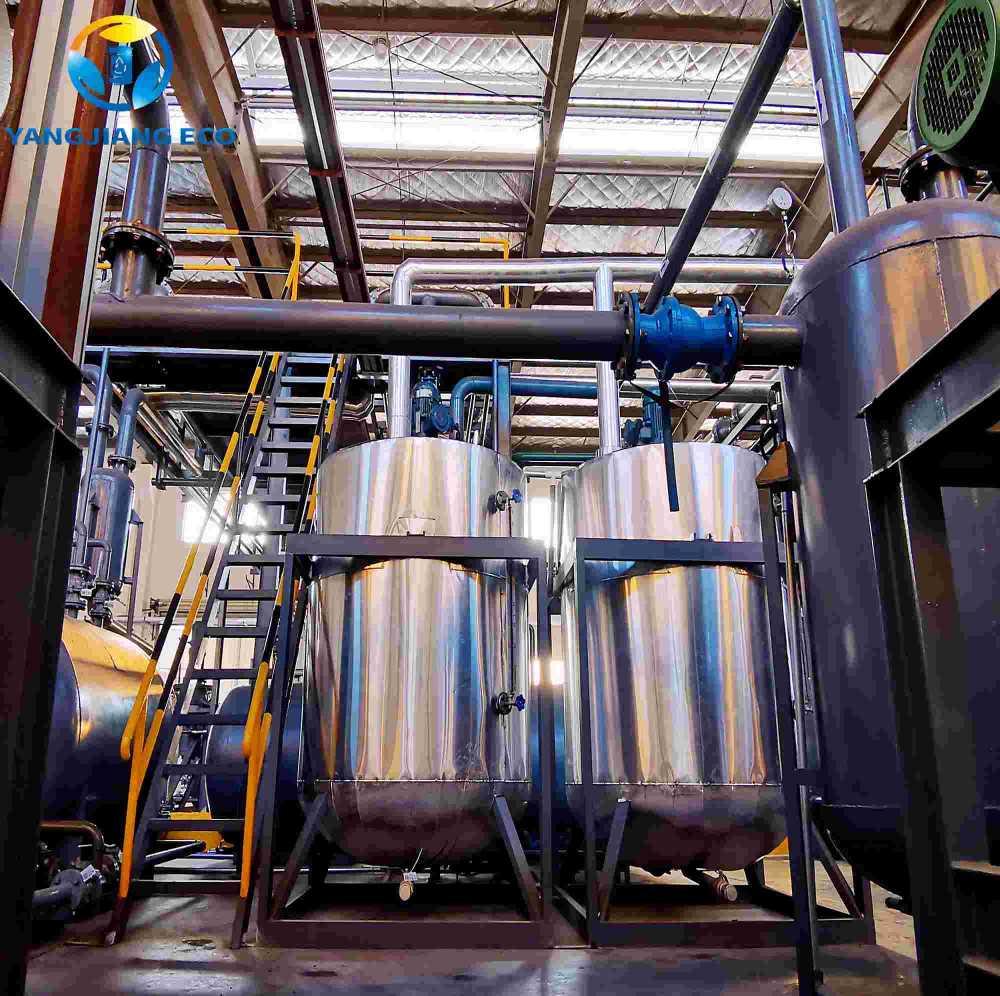
Waste engine oil, a byproduct of automotive and industrial operations, poses a significant environmental challenge. However, advancements in recycling technology are offering sustainable solutions. This blog post will delve into the fascinating world of waste engine oil to base oil recycling machines, exploring the underlying technology and its environmental significance.
The Challenge of Waste Engine Oil
Waste engine oil, contaminated with various impurities like fuel, metal particles, and water, cannot be directly reused. Improper disposal can lead to soil and water contamination, harming ecosystems and human health.
The Recycling Solution: Transforming Waste into Valuable Resource
Waste engine oil recycling machines employ a multi-stage process to transform contaminated oil into a usable base oil. Here's a simplified overview:
Pretreatment:
Dehydration: Water is removed through processes like settling, centrifugation, or vacuum distillation.
De-emulsification: Chemicals are used to break down water-oil emulsions.
Solid Removal: Filters and centrifuges separate solid impurities like metal particles and sludge.
Distillation:
Vacuum Distillation: This crucial step separates the oil into different fractions based on their boiling points. Impurities with higher boiling points are removed, leaving behind a refined base oil.
Hydroprocessing:
Hydrocracking: This process breaks down large hydrocarbon molecules into smaller ones, improving the quality and viscosity of the base oil.
Hydrotreating: Removes sulfur, nitrogen, and other contaminants from the base oil, enhancing its performance and stability.
Benefits of Waste Engine Oil Recycling
Environmental Protection: Reduces pollution by preventing oil spills and minimizing the need for virgin crude oil extraction.
Resource Conservation: Conserves natural resources by reusing a valuable material.
Economic Benefits: Creates a circular economy by transforming waste into a valuable product.
Energy Efficiency: Recycling often requires less energy than producing base oil from crude oil.
The Future of Waste Engine Oil Recycling
Continuous advancements in technology are driving further improvements in recycling efficiency and product quality.
Advanced Filtration Techniques: Membrane filtration and nanofiltration are emerging as promising technologies for removing even the smallest impurities.
Automation and AI: Automation and artificial intelligence are being integrated to optimize the recycling process, improve efficiency, and minimize human intervention.
Focus on Sustainability: The industry is increasingly focusing on sustainable practices, including energy-efficient processes, minimizing waste generation, and utilizing renewable energy sources.
Conclusion
Waste engine oil recycling machines play a crucial role in promoting environmental sustainability and resource conservation. By transforming waste into a valuable resource, these technologies contribute to a cleaner and more sustainable future. As technology continues to evolve, we can expect even more efficient and environmentally friendly solutions for waste engine oil recycling.

 English
 Arabic
 Français
 Español
 Português
 Deutsch
 Dutch
Dutch
 Italiano
 Russian
 Romaian