


Blockchain's Impact on Intralogistics: Enhancing Transparency and Security
Introduction:
The intralogistics industry, which focuses on the efficient movement of goods and materials within warehouses and distribution centers, is undergoing a major transformation driven by emerging technologies. As businesses increasingly demand faster, more accurate, and cost-effective logistics solutions, the industry is turning to innovations such as automation, artificial intelligence (AI), robotics, and blockchain technology to meet these evolving demands. One of the most promising and impactful technologies reshaping the landscape of intralogistics is blockchain, which is enabling end-to-end supply chain transparency.
In this article, we will explore how blockchain is revolutionizing the intralogistics sector and how it plays a key role in improving transparency, traceability, and security in supply chain operations. Additionally, we’ll examine other emerging technologies that are driving the industry’s transformation.
The Intralogistics Market: An Overview
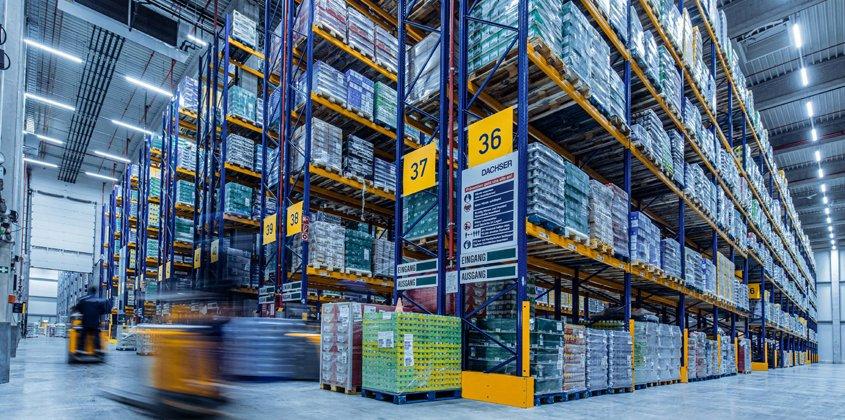
Intralogistics encompasses all activities involved in the internal movement, handling, and storage of goods within warehouses, factories, or distribution centers. The efficiency of intralogistics operations directly impacts overall supply chain performance. As e-commerce continues to grow and supply chains become more complex, businesses are under increasing pressure to optimize their internal logistics processes.
Traditional intralogistics systems were primarily dependent on manual labor, paper-based processes, and limited automation. However, the rise of advanced technologies has spurred a new wave of innovation in the sector, resulting in smarter, more efficient, and automated systems that can handle a growing volume of goods.
Key Drivers of Change in the Intralogistics Market
-
Increased Demand for Speed and Accuracy: The rise of e-commerce and the need for fast deliveries have heightened the demand for more efficient intralogistics operations.
-
Automation and Robotics: Automation technologies are helping warehouses handle goods more efficiently, reducing the reliance on manual labor and improving operational speed.
-
Data-Driven Decision Making: Real-time data and analytics allow for better inventory management, order fulfillment, and predictive maintenance.
-
Supply Chain Visibility: The ability to track goods and materials across the supply chain is becoming increasingly crucial for businesses aiming to stay competitive.
Emerging technologies are addressing these challenges by improving operational efficiency, reducing costs, and enhancing decision-making. Blockchain, in particular, is playing a pivotal role in creating a more transparent and secure supply chain.
Blockchain for End-to-End Supply Chain Transparency in Intralogistics
Blockchain is a decentralized, distributed ledger technology that securely records transactions and stores data across a network of computers. Initially popularized as the underlying technology for cryptocurrencies like Bitcoin, blockchain has found diverse applications across industries, including supply chain management and intralogistics.
In the context of intralogistics, blockchain technology provides a secure and immutable record of every transaction and movement of goods throughout the supply chain. By creating a transparent, real-time digital ledger, blockchain enables companies to trace products from their origin to their final destination, ensuring end-to-end visibility.
How Blockchain Works in Intralogistics
In a blockchain-based supply chain system, each transaction or movement of goods is recorded as a block of data. These blocks are linked together in a chain, ensuring that all information is chronological and tamper-proof. The data contained in each block may include product details, shipment times, locations, and conditions, all of which are validated by network participants.
The decentralized nature of blockchain means that all authorized parties have access to the same data, reducing the need for intermediaries and enabling real-time tracking of goods. Importantly, once a transaction is recorded, it cannot be altered or erased, providing a high level of security and ensuring data integrity.
Benefits of Blockchain in Intralogistics
1. Enhanced Transparency and Traceability
Blockchain technology allows for real-time tracking of goods throughout the supply chain. From raw materials to finished products, every step of a product’s journey is recorded and accessible to authorized stakeholders. This level of transparency enables businesses to have a clearer understanding of where goods are at any given time and can help quickly identify bottlenecks or delays in the supply chain.
For example, if a shipment of goods is delayed, blockchain’s traceability feature allows all parties in the supply chain (manufacturers, suppliers, distributors, and retailers) to see where the product is and why the delay occurred. This helps to resolve issues faster and maintain customer satisfaction.
2. Improved Security and Data Integrity
Blockchain’s immutability means that once data is entered into the blockchain, it cannot be modified or erased without consensus from the network. This ensures that records are tamper-proof, which is crucial for maintaining the integrity of supply chain data. In industries such as pharmaceuticals, food, and luxury goods, where product authenticity and compliance are critical, blockchain helps safeguard against fraud, counterfeiting, and errors in data.
3. Reduced Risk of Fraud and Theft
Blockchain's transparent nature reduces the risk of fraudulent activities and theft within the supply chain. Since all transactions are recorded and time-stamped, it is much harder for bad actors to manipulate data or divert goods without detection. Companies can have a higher level of confidence in the accuracy of their inventory and shipments, leading to fewer discrepancies and more secure operations.
4. Smarter Contracting with Smart Contracts
Blockchain also enables the use of smart contracts, which are self-executing contracts with the terms of the agreement directly written into lines of code. These contracts automatically trigger actions when predefined conditions are met, reducing the need for intermediaries and manual oversight. For example, a smart contract could automatically release payment to a supplier once goods are confirmed to have arrived at their destination.
This automation improves efficiency, reduces administrative costs, and speeds up transactions, helping businesses respond more rapidly to changes in the supply chain.
5. Enhanced Efficiency and Cost Reduction
Blockchain enables faster and more efficient transactions by removing the need for intermediaries such as banks, brokers, and third-party auditors. The digital ledger system makes record-keeping more efficient, as multiple parties can access the same data in real time, reducing the chances of errors and eliminating the need for duplicate data entry.
By streamlining processes and reducing administrative overhead, blockchain can help companies lower costs and improve overall operational efficiency.
Blockchain Applications in Intralogistics
Blockchain can be used across a variety of intralogistics operations, from inventory management to transportation tracking. Below are some specific applications of blockchain in intralogistics:
1. Inventory Management
Blockchain helps streamline inventory management by providing real-time, accurate data on stock levels and locations. When goods are added or removed from the warehouse, the blockchain is updated, allowing supply chain partners to access up-to-date information. This reduces the risk of stockouts, overstocking, and inventory discrepancies, which can lead to cost inefficiencies.
2. Shipment Tracking and Delivery
Blockchain technology enables real-time tracking of shipments, improving visibility and reducing delays. By recording each movement of goods on the blockchain, stakeholders can monitor shipments as they move through various checkpoints. This can improve delivery times, reduce errors, and increase customer satisfaction. Additionally, blockchain can help ensure that goods are stored and transported in compliance with regulatory standards, such as temperature requirements for perishable goods.
3. Supplier and Vendor Management
Blockchain can provide transparency into the performance of suppliers and vendors by tracking key metrics, such as on-time delivery and product quality. This information can be used to assess supplier reliability, negotiate better contracts, and build stronger relationships with trusted partners.
4. Customs and Compliance
Blockchain can simplify the customs and compliance process by providing an immutable and transparent record of the product’s origin, handling, and shipping history. This helps businesses ensure that they meet the required regulations, reduce delays at customs, and avoid potential fines or penalties for non-compliance.
Other Emerging Technologies in Intralogistics
While blockchain is playing a crucial role in reshaping intralogistics, it is by no means the only technology making an impact. Other emerging technologies are also contributing to the modernization of supply chain and warehouse operations:
1. Automation and Robotics
Automation technologies such as automated guided vehicles (AGVs), robotic arms, and drones are streamlining material handling within warehouses, reducing the need for manual labor, and improving efficiency. Robots are capable of performing tasks such as picking, packing, sorting, and transporting goods with greater speed and accuracy.
2. Internet of Things (IoT)
IoT Sensors are increasingly being used to track assets, monitor inventory, and gather data on environmental conditions in warehouses. By connecting devices across the supply chain, IoT enables real-time monitoring and predictive maintenance, ensuring that operations run smoothly and preventing costly downtime.
Download FREE Sample of Sensors Market
3. Artificial Intelligence (AI) and Machine Learning
AI and machine learning algorithms are improving decision-making in intralogistics by analyzing vast amounts of data to predict demand, optimize warehouse layouts, and enhance route planning for deliveries. These technologies enable businesses to optimize operations and respond to changes in real time.
Conclusion
Emerging technologies are reshaping the intralogistics market, and blockchain is at the forefront of this transformation. By enabling end-to-end supply chain transparency, blockchain provides businesses with the tools to enhance security, traceability, and efficiency across the entire supply chain. Combined with other innovations such as automation, IoT, and AI, blockchain is helping create smarter, more efficient logistics systems that are poised to drive the future of the industry.
As businesses continue to adopt these technologies, the intralogistics market will become increasingly agile, transparent, and connected, resulting in faster delivery times, reduced costs, and an overall more sustainable supply chain. By embracing blockchain and other emerging technologies, businesses can ensure that they stay ahead of the competition in an increasingly complex and dynamic logistics landscape.

 English
 Arabic
 Español
 Português
 Deutsch
 Türkçe
 Dutch
Dutch
 Italiano
 Russian
 Romaian