


Become an SRE Expert: Your Path to Site Reliability Engineering Certification
How SRE Originated at Google
Site Reliability Engineering (SRE) originated at Google in the early 2000s when Ben Treynor Sloss, a Google engineer, was tasked with improving the reliability of the company’s large-scale systems. Traditional IT operations teams struggled to keep up with Google’s rapid growth, leading to frequent outages and inefficiencies. To address these challenges, Google introduced SRE as a new approach that combined software engineering principles with IT operations.
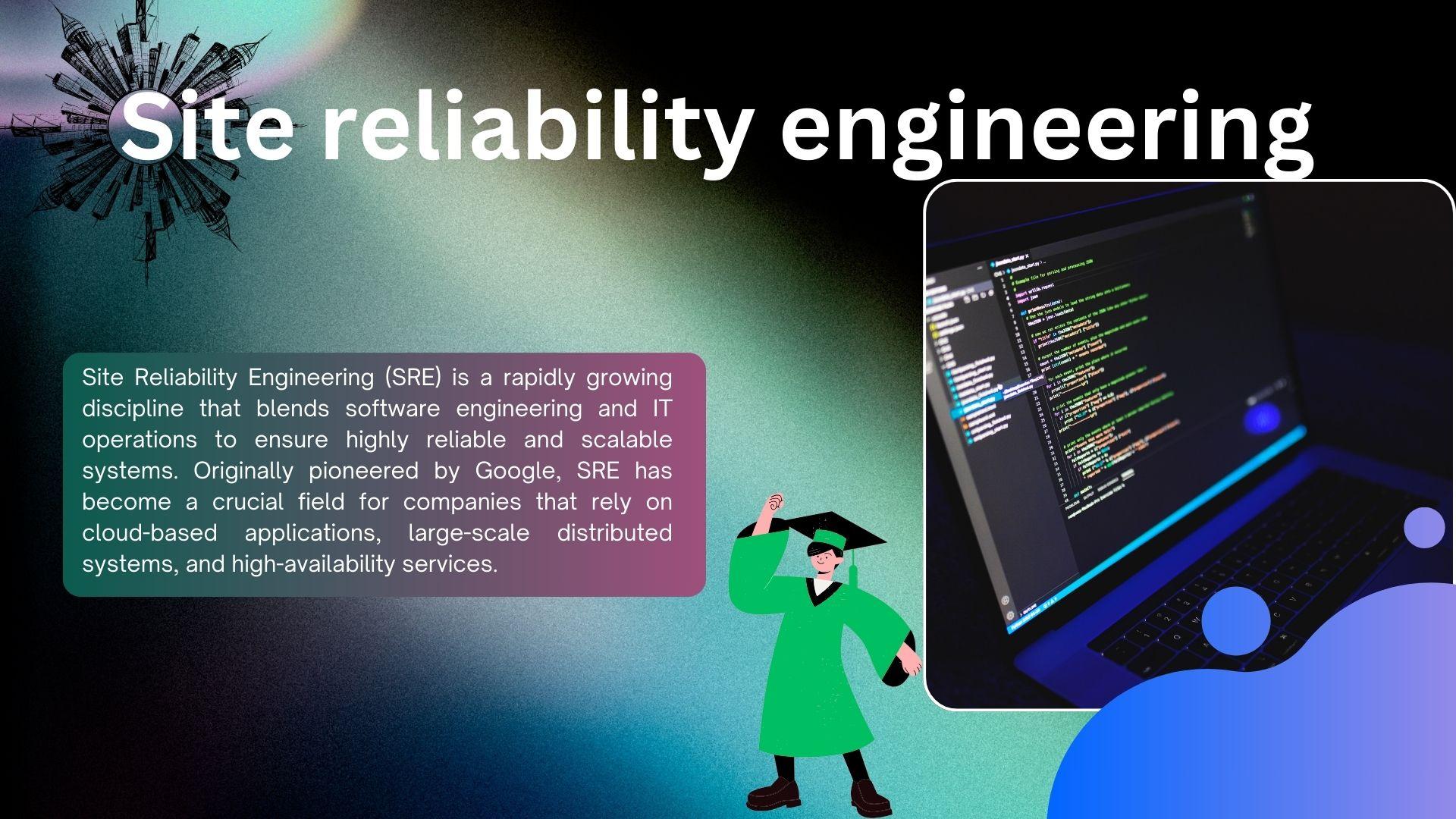
The core idea behind SRE was to treat reliability as a fundamental feature of software systems, rather than an afterthought. This meant using automation, monitoring, and proactive incident management to reduce operational toil and improve system performance. Google’s SRE teams developed key practices such as Service Level Objectives (SLOs), Error Budgets, and Incident Response strategies to ensure high availability while maintaining agility.
Career Opportunities and Job Roles in SRE
Site Reliability Engineering (SRE) certification offers excellent career opportunities for IT professionals looking to specialize in system reliability, automation, and performance optimization. As businesses increasingly rely on digital services, the demand for SRE professionals continues to grow across industries like cloud computing, e-commerce, and fintech.
Career Opportunities and Job Roles in SRE
1. High-Demand Career Path
-
Growing need for SRE professionals in IT, cloud, and DevOps industries
-
High salaries and job stability in leading tech companies
2. Common SRE Job Roles
-
Site Reliability Engineer (SRE) – Automates operations, manages system reliability
-
Reliability Architect – Designs scalable and fault-tolerant systems
-
SRE Manager – Leads reliability teams and incident management strategies
-
Observability Engineer – Focuses on monitoring, logging, and alerting
3. Career Transition Opportunities
-
SRE skills can lead to roles like DevOps Engineer, Cloud Engineer, Platform Engineer
-
Expanding into cybersecurity and AI-driven operations (AIOps)
4. Industry and Companies Hiring SREs
-
Tech giants: Google, Amazon, Microsoft, Netflix
-
Financial, healthcare, and e-commerce sectors adopting SRE practices
5. Certifications and Skill Growth
-
SRE Foundation Certification and Google’s SRE Professional Certification
-
Hands-on expertise in Kubernetes, CI/CD, and automation tools boosts career prospects
Who Should Take SRE Foundation Training?
Site Reliability Engineering (SRE) Foundation training is ideal for IT professionals looking to enhance their skills in system reliability, automation, and performance optimization. As organizations increasingly adopt SRE practices, this training provides a valuable opportunity to advance in high-demand roles.
Who Should Enroll?
-
IT Operations & System Administrators – Learn automation, incident management, and monitoring techniques.
-
DevOps Engineers – Strengthen reliability practices and enhance CI/CD workflows.
-
Software Developers – Gain insights into designing resilient applications and infrastructure.
-
Cloud & Infrastructure Engineers – Understand reliability strategies for cloud-based systems.
-
IT Managers & Team Leads – Learn how to implement SRE principles for team efficiency.
-
Aspirants Seeking SRE Careers – Build foundational knowledge for transitioning into SRE roles.
SRE Foundation training is perfect for those aiming to work in high-growth industries like cloud computing, fintech, and e-commerce, ensuring career advancement in modern IT environments.
Key Topics Covered in SRE Foundation Training
Site reliability engineering Training covers a wide range of topics essential for building reliable, scalable, and high-performing IT systems. Below are the key areas of focus:
-
Introduction to SRE – Overview of Site Reliability Engineering, its history, and its role in modern IT.
-
Service Level Concepts – Understanding Service Level Objectives (SLOs), Service Level Indicators (SLIs), and Service Level Agreements (SLAs) to measure system reliability.
-
Incident Management & Monitoring – Strategies to detect, respond, and resolve system failures efficiently.
-
Automation & Toil Reduction – Implementing Infrastructure as Code (IaC), scripting, and automation tools to reduce manual operational tasks.
-
Error Budgets & Risk Management – Balancing system reliability with innovation by defining acceptable failure thresholds.
Call to Action (CTA): Site reliability engineering certification

 English
 Arabic
 Français
 Español
 Deutsch
 Türkçe
 Dutch
Dutch
 Italiano
 Russian
 Romaian