


Differential Electronic Module: Enhancing Everyday Driving with Smart Torque Control
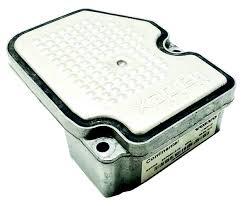
Modern vehicle owners demand more than dependable transportation from their cars. Modern vehicles should respond immediately to sudden changes such as sharp turns, rough terrain and unexpected rain. The differential electronic module stands out as a crucial yet often ignored component among multiple intelligent systems that enable vehicles to adapt smoothly to various driving conditions.
A compact control unit which remains unknown to many drivers handles vital functions for vehicle safety and efficiency as well as vehicle handling. We will examine the operation of this system and understand its growing importance in today's driving experience.
Torque Management: The Foundation of Modern Handling
Your vehicle modifies power distribution to each wheel dynamically as you turn corners or accelerate on wet surfaces. The focus extends beyond engine power because torque management plays a critical role. A mechanical differential used to perform this task by enabling wheels to spin at different rates.
However, mechanical systems have their limits. Their inability to foresee driving surface changes prevents them from adjusting operations while driving. The differential electronic module steps in to enhance power distribution. The differential electronic module combines mechanical torque distribution principles with real-time sensor information alongside active control mechanisms and predictive algorithms.
The Differential Electronic Module Demonstrates Real-Time Operations
Imagine you’re driving on a mountain road. When you navigate a sharp bend the road shifts from dry pavement to loose gravel. Your vehicle must simultaneously handle traction control across all four wheels by directing torque appropriately without reducing stability or performance.
Multiple sensors feed data to the differential electronic module.
Wheel speed sensors
Yaw and pitch sensors
Steering angle sensors
Throttle and brake pressure data
Road condition estimates (in advanced models)
The module utilizes this input data to determine torque distribution between left and right wheels or between front and rear axles on all-wheel-drive vehicles. The system detects potential slip and redirects power to the gripped wheel to avoid traction loss before trouble arises.
A mechanical-only system cannot achieve this degree of precision.
Practical Benefits for Daily Driving
Although the term “differential” appears to fit a racing context the differential electronic module actually improves daily driving by helping drivers in ways they often don’t realize.
1. Better Cornering
The vehicle follows a smoother and more even path through turns by directing additional torque to the outer wheel. The reduction of understeer combined with enhanced responsiveness makes performance cars more agile.
2. Improved Traction in Wet or Icy Conditions
When roads become slippery the module responds quicker than human reflexes. The system detects when a wheel loses grip instantly before transferring torque to the wheels which remain gripped to the surface. The car remains stable and under control throughout acceleration phases and emergency maneuvers through this system.
3. More Efficient Driving
Hybrid and electric vehicles allow users to modify torque settings to improve both performance levels and energy efficiency. The system operates to utilize only essential power at all times which reduces drivetrain stress while extending battery life.
4. Enhanced Off-Road Capability
The module partners with hill descent control and terrain modes among other assistive features to help SUVs and crossovers maintain traction on loose or uneven surfaces when using off-road settings. The system can replicate locked differentials with electronic controls which eliminates the mechanical locking requirement.
Electric and Hybrid Vehicles: A Natural Fit
The differential electronic module's importance increases as electric vehicles gain popularity. Most electric vehicles manage power distribution separately for their front and rear axles while some premium models can distribute power to each wheel independently.
The vehicle now achieves a degree of torque vectoring that internal combustion cars could not previously attain. The module makes power delivery decisions within milliseconds which improves both range and performance while maintaining safety standards without introducing mechanical losses in the drivetrain.
The Future of Vehicle Dynamics
The movement toward vehicles defined by software functionality will result in an increase in systems managed through real-time data alongside adaptive logic. As part of the transition to software-driven vehicles the differential electronic module serves as an on-the-spot processor which manages power distribution throughout the vehicle.
The functionality assumes greater importance when applied to autonomous and semi-autonomous vehicles. The car needs to instantly decide how to manage grip, torque and stability when the road conditions change because there is no driver present. This module functions as an essential system for maintaining balance and predictability in next-generation vehicles.
Conclusion: Small Module, Big Impact
Although the differential electronic module remains concealed under the chassis its impact on vehicle driving performance stands as substantial. The system's continuous torque distribution adjustments for changing inputs results in safer and more efficient journeys while maintaining smooth drive quality.
The smart module becomes increasingly important as more vehicles utilize electric drivetrains and advanced driving assistance features while redefining modern vehicle capabilities through each torque adjustment.

 English
 Arabic
 Français
 Español
 Português
 Deutsch
 Türkçe
 Dutch
Dutch
 Italiano
 Russian