


What is a multi-node server?
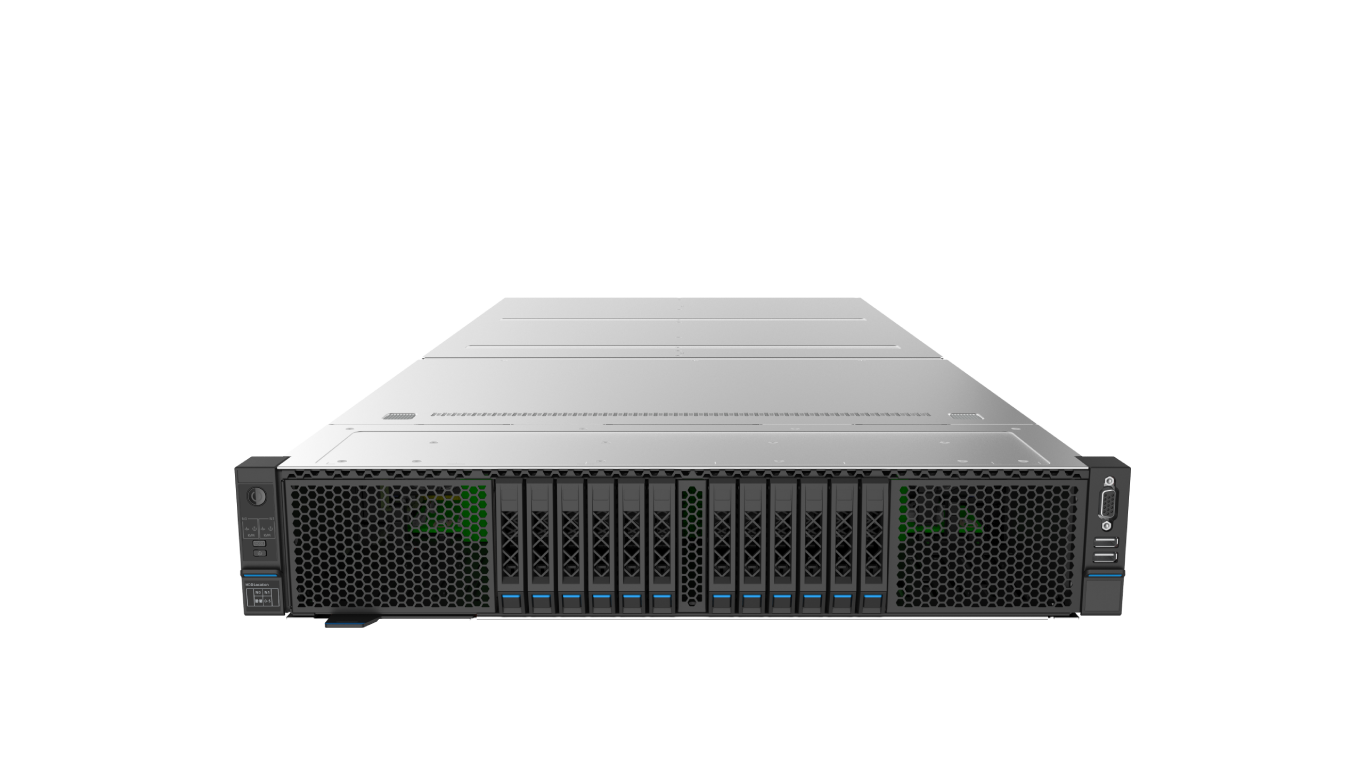
The rapid growth of data-intensive applications, cloud services, and artificial intelligence has reshaped the way enterprises manage their IT infrastructure. To meet the constantly growing demand, the company is increasingly relying on multi-node servers. These systems offer unparalleled scalability, reliability, and efficiency, making them the main products in modern computing.
From powering global cloud platforms to running cutting-edge scientific research, multi-node servers can ensure consistent performance and high availability. But exactly what is a multi-node server? How do they work and why are they so important to today's technological landscape? This in-depth article will answer these questions and many more.
The definition and overview of multi-node servers
What is a multi-node server?
A multi-node server is a single physical system that contains multiple independent computing nodes. Each node operates as its server and has its CPU, memory, and storage. However, these nodes share resources such as power supply, cooling systems, and network interfaces, which are located in a unified chassis or cabinet.
It can be imagined as a group of servers working harmoniously under a cover. Although physically contained in a single framework, nodes can independently complete individual tasks or collaborate to handle large workloads. This versatility makes multi-node servers an economical and efficient solution for enterprises that require high performance and reliability.
How does a multi-node server work?
When the workload is distributed to multi-node servers, the system will assign tasks to each node. For example:
Cloud providers use multi-node setups to host virtual machines, thereby ensuring efficient resource utilization and scalability.
Scientific research teams use them for parallel simulations, such as climate modeling or genome sequencing.
E-commerce platforms distribute user requests to various nodes to handle traffic peaks without interrupting services.
Due to high-speed interconnections such as Ethernet or InfiniBand, multi-node servers can ensure seamless communication between nodes, thereby achieving rapid data transmission and efficient task sharing.
The key components of multi-node servers
Node
An independent server with its own processing, memory, and storage capabilities.
Shared resources
Centralized components such as power supply and cooling systems reduce redundancy and costs.
Internet
High-speed communication links ensure smooth coordination among nodes.
Chassis or shell
The physical framework that accommodates all nodes and shared components is designed for space efficiency.
Management tools
A software platform for monitoring and controlling the performance, operational status, and workload of nodes.
The main features of multi-node servers
Measurability
One of the prominent features of multi-node servers is their scalability. Enterprises can start with a few nodes and expand by adding more nodes as the workload grows. For example:
A social media company may start from the smallest capacity and scale nodes to handle the data brought about by user growth.
Over time, scientific laboratories can expand GPU-intensive nodes for more advanced simulations.
2. High computational density
Multi-node systems maximize the utilization of physical space by accommodating multiple servers in a single chassis. This makes them highly suitable for the following environments:
Data centers must balance performance within a limited floor space.
For edge computing websites, a compact setup is indispensable.
3. Storage optimization
Multi-node servers allow for flexible storage configurations:
Dedicated storage for each node of independent workloads.
Shared storage systems (such as network-connected storage or SAN) for synchronization and collaboration tasks.
High-speed options such as solid-state drives or NVMe hard drives ensure fast data access and are ideal for data-intensive operations like video streaming.
4. Efficiency and redundancy
Because nodes share resources such as power supply and cooling, energy consumption is reduced compared with running multiple independent servers. Furthermore, the built-in redundancy ensures:
Even if a node fails, the operation will continue.
Hot-swappable components can be replaced without stopping the machine.
5. Centralized management
Centralized management tools simplify management tasks. Platforms such as Kubernetes or VMware allow IT teams to:
Monitor workloads and resource utilization.
Automated failover and load balancing.
Deploy the new configuration with the least human input.
These features make multi-node servers indispensable for enterprises seeking flexible, efficient, and powerful IT solutions.

 English
 Arabic
 Français
 Español
 Deutsch
 Türkçe
 Dutch
Dutch
 Italiano
 Russian
 Romaian