


Rotary Pumps Market Developments Feature Innovation in Compact and Modular Pump Designs
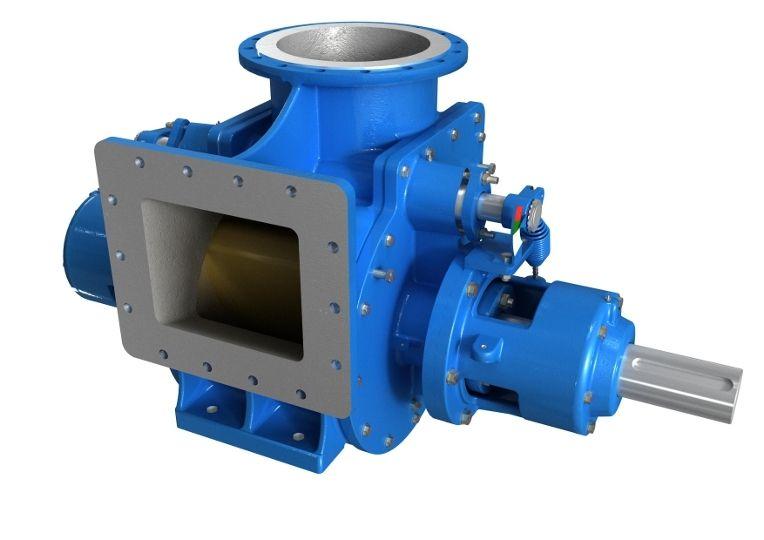
Introduction: The Push for Space-Saving, Scalable Pumping Solutions
As industries pursue decentralized operations, mobile systems, and facility space optimization, the Rotary Pumps Market has responded with a wave of innovations in compact and modular designs. These new-generation rotary pumps maintain the reliability, precision, and fluid handling capacity of larger counterparts while offering advantages in space efficiency, installation flexibility, and ease of maintenance. From portable chemical dosing units to skid-mounted water treatment systems, modularity is redefining how and where rotary pumps can operate effectively.
Why Compact and Modular Designs Are in Demand
The demand for smaller, modular rotary pumps has grown rapidly in recent years due to several factors:
-
Space Constraints: Facilities such as laboratories, offshore rigs, and mobile units have limited real estate for equipment.
-
Cost-Efficient Scalability: Modular pumps allow facilities to scale operations by adding pump units as needed rather than overhauling entire systems.
-
Decentralization Trends: With industries shifting toward distributed operations—especially in water, agriculture, and energy—portable, plug-and-play systems are gaining popularity.
-
Maintenance Efficiency: Modular designs support faster disassembly and reassembly, reducing downtime during servicing or part replacement.
These shifts reflect broader trends toward operational flexibility and lean engineering across sectors.
Key Applications Benefiting from Modular Rotary Pumps
Several industries are actively adopting compact and modular rotary pumps for critical and non-critical applications:
-
Pharmaceuticals: Benchtop modular rotary lobe pumps are used in R&D labs and pilot production, supporting sterile, high-precision fluid transfer.
-
Agriculture: Mobile irrigation and nutrient delivery systems benefit from lightweight, low-footprint rotary gear or screw pumps.
-
Oil & Gas: Skid-mounted fuel and lube oil handling systems often rely on compact, explosion-proof rotary pumps for tight offshore spaces.
-
Food & Beverage: Compact CIP (Clean-in-Place) systems incorporate modular peristaltic or lobe pumps for hygiene and cleaning efficiency.
-
Water Utilities: Decentralized wastewater or greywater treatment installations favor modular pump sets that can be customized based on capacity and media type.
Design Innovations Driving the Market
Pump manufacturers have embraced compact modularity by engineering designs that combine portability, durability, and application-specific adaptability. Key innovations include:
-
Integrated Motor-Pump Assemblies: Reduces installation footprint while simplifying mechanical alignment and wiring.
-
Tool-Free Maintenance Systems: Snap-fit housings and clamp-based connections minimize servicing time.
-
Swappable Pump Heads: Some units allow users to switch rotors or stators to suit different viscosities or fluid chemistries without changing the base unit.
-
Self-Priming Features: Eliminates the need for auxiliary priming equipment, especially beneficial in mobile units.
-
Multi-Unit Configurability: Some rotary pump platforms are designed for side-by-side installations, allowing several pumps to work in tandem for higher throughput or redundancy.
These design features make rotary pumps increasingly attractive for modular system integrators and OEMs.
Performance Without Compromise
Compact rotary pumps are not simply scaled-down versions of traditional systems—they are engineered to meet high performance standards. Despite their size, these pumps deliver:
-
Precise flow control, often with digital calibration for metering and dosing applications.
-
Low shear and pulsation, preserving the integrity of sensitive fluids.
-
Material flexibility, with options in stainless steel, engineered polymers, or coated aluminum for chemical compatibility.
-
Thermal and pressure tolerance, suitable for demanding conditions like fuel transfer or high-viscosity processing.
As a result, even the smallest rotary pump systems can maintain the reliability and consistency required by mission-critical processes.
Market Adoption and Business Models
Compact and modular rotary pumps are opening new business opportunities for manufacturers and service providers:
-
Rental and Leasing Models: Mobile units and temporary setups create a market for short-term pump deployment solutions.
-
Packaged Systems: Pumps bundled with tanks, valves, and control units are being marketed as turnkey modules for water treatment or chemical injection.
-
OEM Partnerships: Manufacturers are collaborating with system integrators to supply pre-certified modular pump units for custom-built industrial machinery.
-
Aftermarket Kits: Some brands now offer modular upgrade kits, enabling legacy systems to convert into smart, serviceable pump modules.
This shift supports faster sales cycles, easier logistics, and repeat business through upgradable product lines.
Limitations and Design Considerations
While modular and compact rotary pumps offer clear advantages, they also come with certain limitations:
-
Flow and Pressure Limits: Small size may restrict their use in high-volume or high-pressure systems.
-
Cooling Requirements: Compact form factors can pose heat dissipation challenges in continuous-duty applications.
-
Durability Under Load: Lightweight designs must still withstand vibration, wear, and media-induced stress.
Designers and engineers are addressing these challenges by selecting premium materials, reinforcing pump frames, and incorporating thermal protection systems.
Conclusion: Small Size, Significant Impact
Compact and modular rotary pump designs are transforming the boundaries of pump utility across industries. They bring versatility, speed, and space-efficiency to operations ranging from pilot plants to field-based installations. As industries continue to decentralize, scale dynamically, and prioritize serviceability, these pump innovations will shape the next wave of fluid handling solutions.

 Arabic
 Français
 Español
 Português
 Deutsch
 Türkçe
 Dutch
Dutch
 Italiano
 Russian
 Romaian