


How Is the Liquid Handling System Market Revolutionizing Lab Automation?
Introduction
According to the latest report by Next Move Strategy Consulting, the Liquid Handling System Market has entered a new era of precision, automation, and scalability—responding to surging demand in genomics, diagnostics, and drug discovery. This market is projected to continue expanding at USD 7.77 billion with a 6.9% compound annual growth rate from 2025 to 2030. Fueled by large-scale public health programs, a shift toward personalized medicine, and AI-enabled systems, liquid handling is becoming the backbone of modern labs. This article dives into the key forces shaping this transformation.
1. Why Are Automated Systems Dominating the Market?
Automation is central to modern laboratory efficiency:
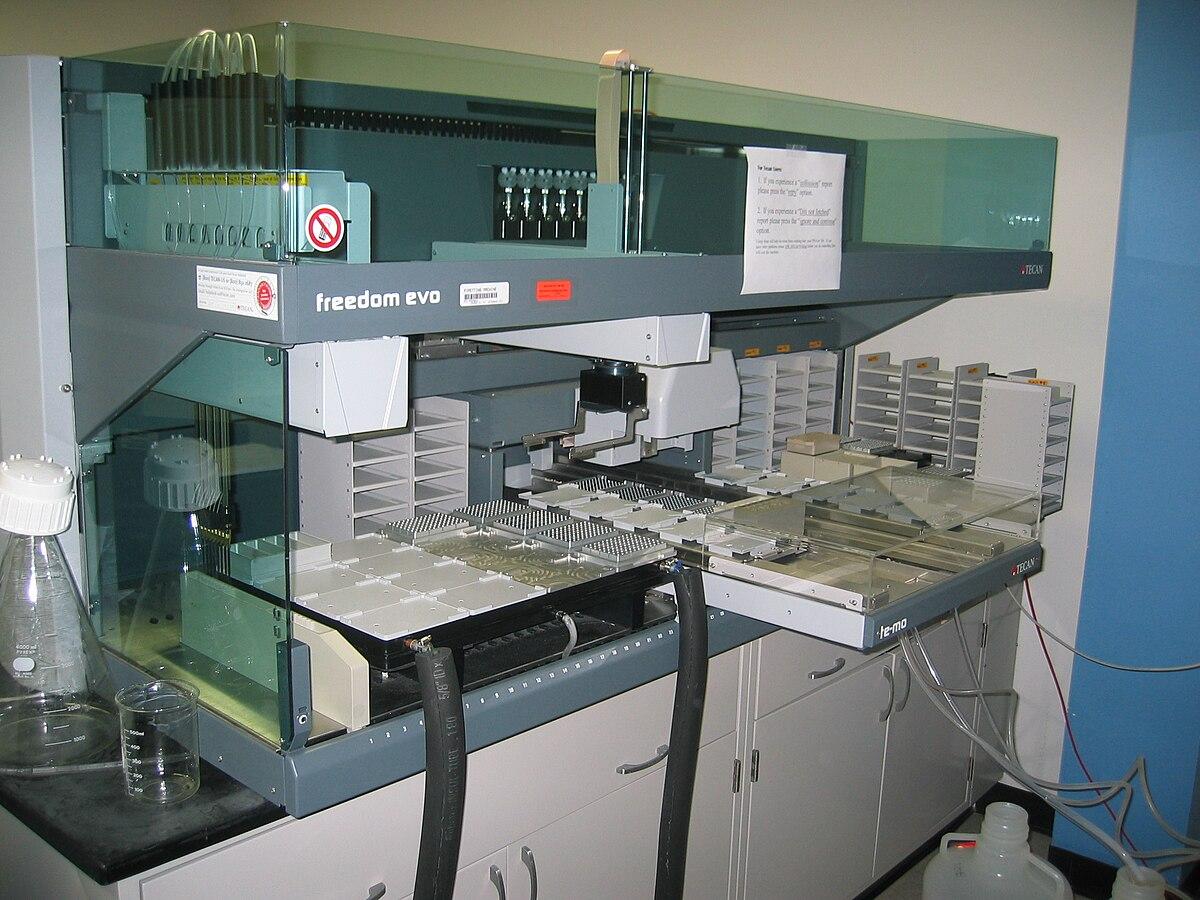
- High-throughput workflows: Automated liquid handlers reduce manual pipetting errors, enabling rapid preparation of qPCR, ELISA, and NGS assays.
- Government investments: Agencies like NIH (U.S.) and ICMR/DBT (India) are equipping labs with robotic systems to support pandemic preparedness and precision medicine
- Clinical diagnostic upgrades: Bodies like the CDC and WHO are deploying automation for epidemiological testing, ensuring faster and more reliable results
2. What Impact Did COVID-19 Have on Adoption?
COVID-19 exposed diagnostic capacity bottlenecks:
- Labs rapidly adopted automated liquid handlers to scale up testing operations—especially for viral RNA extraction.
- Pandemic-era funding helped labs secure state-of-the-art systems, leaving a lasting boost in test readiness
3. How Are AI and Modularity Redefining Precision?
Modern systems combine intelligence with flexibility:
- Opentrons Flex System (2023) is a prime example—modular, AI-compatible, and adaptable to genomics and diagnostics workflows
- AI integration enhances accuracy through automated error detection and workflow optimization, providing labs with dynamic efficiency gains.
4. Which Regions Are Leading the Charge?
North America
- Leads global adoption, driven by NIH-funded automation upgrades and demand for next-gen precision tools like Revvity’s Fontus system (2023)
Europe
- Growth supported by a strong biotech base and innovative compact systems, such as SPT Labtech’s Firefly (2023), optimized for NGS workflows
Asia-Pacific
- Rapid expansion in precision medicine is led by initiatives like India’s Genome India Project and tools such as DISPENDIX’s I.DOT LT launched at SLAS 2025
Rest of World (RoW)
- Emerging demand in Latin America, Middle East, and Africa—supported by scalable systems like Revvity’s Fontus entering these regions.
5. What Applications Are Dominating?
Key use cases include:
- Drug discovery: Screening thousands of compounds demands robotic precision and speed.
- Genomics & proteomics: High-throughput liquid handling is essential for sequencing and biomarker profiling.
- Clinical diagnostics: Lab automation is integral to modern epidemiology and disease monitoring.
- Forensics & academic research: Reproducibility and accuracy are critical for reliable scientific output.
6. What Challenges Are Slowing Adoption?
- Upfront costs: High-capital investments—reagents, maintenance, training—delay procurement, particularly in smaller labs
- Integration hurdles: New systems must integrate with legacy lab setups, requiring both technical compatibility and user training.
- Demanding usability: To ensure widespread adoption, even the most powerful systems must remain easy and intuitive to operate.
7. What Innovation Trends Will Define the Future?
AI-First Systems
Automation is taking a smarter turn with AI for real-time validation and error marking.
Modular Platforms
Flexible systems like Opentrons Flex allow labs to scale based on workflow—ideal for mixed sample types.
Compact yet Powerful
Space-efficient platforms like Firefly cater to labs that need power without requiring large footprints.
Democratic Access
More affordable systems—like I.DOT LT—are spreading capabilities to emerging markets, supported by government funding.
8. How Should Stakeholders Respond?
- Vendors should focus R&D on modular, AI-driven, and user-friendly systems tailored to genomics and diagnostics.
- Labs and CROs need strong justification for investment—emphasizing reproducibility, throughput, and future scalability.
- Governments have a role: funding modular systems in academic and public-health settings drives ecosystem-wide capability.
9. What Lies Ahead?
Today’s lab automation is evolving rapidly—shifting from discretionary tools to essential infrastructure. With ongoing public health funding, private-sector support, and breakthroughs in AI and modular design, the liquid handling market is positioned to become central to biomedical and diagnostic innovation.
Conclusion: Why Liquid Handling Systems Matter More Than Ever
The Liquid Handling System Market isn’t just growing—it’s transforming science. By integrating automation, AI, and modularity, it’s setting the stage for faster, more reliable, and more accessible research and diagnostics. Innovations like the Opentrons Flex, SPT Labtech Firefly, and government-backed expansions in India are driving a revolution in lab efficiency and quality. As workflows become more complex and applications more specialized, liquid handling systems are emerging as the unsung heroes of modern science.
This article is grounded in NextMSC’s HC3350 report and current market developments—highlighting that liquid handling remains a foundational pillar for the future of life sciences.

 English
 Arabic
 Español
 Português
 Deutsch
 Türkçe
 Dutch
Dutch
 Italiano
 Russian
 Romaian