


Milling Machine: A Complete Guide to its Function, Types, and Uses
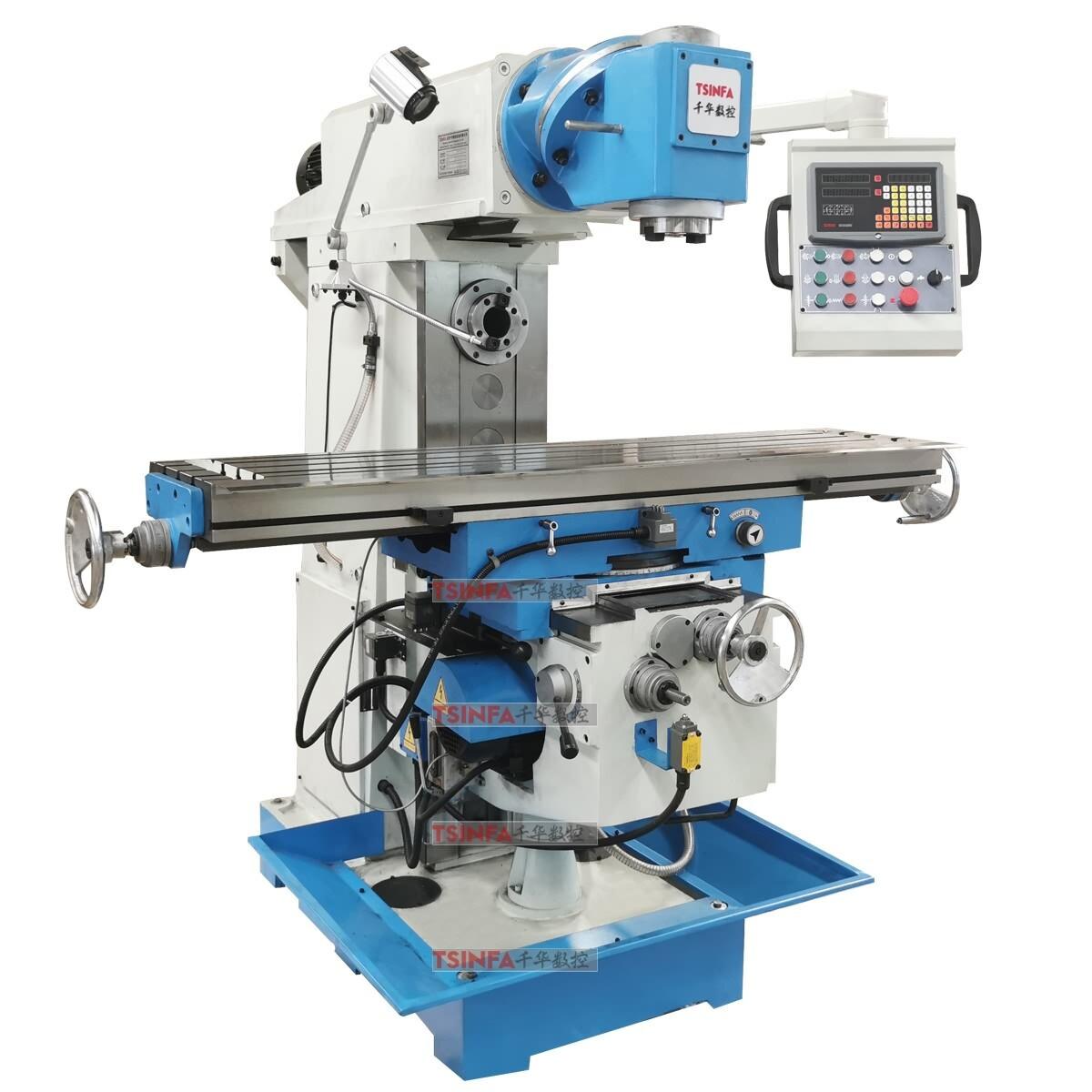
A milling machine is a versatile piece of machinery used in metalworking, woodworking, and manufacturing processes. It operates by rotating a cutting tool to remove material from a workpiece. The exact precision and flexibility of this tool make it a cornerstone in modern engineering and production.
In this article, we’ll take a deep dive into the milling machine—its components, types, functions, and applications. Whether you're a beginner in mechanical engineering or an industry professional, understanding how a milling machine works can help improve your machining efficiency and product quality.
What is a Milling Machine?
A milling machine is a mechanical device designed to shape solid materials, particularly metal, by removing excess material with the help of rotary cutters. The workpiece is usually secured to a movable table, and the cutting tool rotates at high speed to create precise cuts, grooves, slots, and holes.
Unlike lathes, which rotate the workpiece, milling machines rotate the cutting tool. This critical distinction allows for a greater range of cutting operations and geometry formation.
Main Components of a Milling Machine
To understand how a milling machine functions, it’s essential to know its key components:
-
Base and Column: The foundation of the machine, providing support and stability.
-
Knee: Mounted on the column, the knee allows vertical movement of the workpiece.
-
Table: The platform where the workpiece is fixed. It moves longitudinally and laterally.
-
Saddle: Supports the table and controls its lateral movement.
-
Spindle: Rotates the cutting tool at high speeds.
-
Overarm/Arbor: In horizontal milling machines, the arbor holds the cutting tool.
-
Power Feed: Automates the movement of the table.
-
Control Panel: Interface for operators to control speed, feed rate, and tool paths.
Types of Milling Machines
Milling machines are available in several configurations. The classification depends on factors such as the orientation of the spindle, control system, and automation level.
1. Horizontal Milling Machine
The spindle is placed horizontally, and cutting tools are mounted on an arbor. This type is ideal for heavy-duty tasks like slotting and gear cutting.
2. Vertical Milling Machine
Here, the spindle is positioned vertically, and the cutter moves up and down. It is suitable for precise drilling, boring, and die-sinking operations.
3. Universal Milling Machine
Combines the features of horizontal and vertical milling machines. It offers greater flexibility for complex jobs.
4. CNC Milling Machine
Controlled by computer programming (CNC stands for Computer Numerical Control). These machines deliver extreme precision and are commonly used in aerospace and automotive industries.
5. Turret Milling Machine
A type of vertical mill where the spindle can be moved in multiple directions. It’s perfect for small shops and detailed craftsmanship.
Functions and Capabilities
A milling machine performs multiple operations with remarkable accuracy. Here are some of its primary functions:
-
Face Milling: Produces flat surfaces using a cutter mounted on a spindle.
-
Slot Milling: Cuts slots or grooves into the workpiece.
-
Side Milling: Machines vertical or angular surfaces on the side of the workpiece.
-
Drilling and Boring: Some milling machines also function as drill presses.
-
Gear Cutting: Especially in horizontal mills, gears can be cut using special cutters.
-
Engraving: CNC milling machines can engrave complex designs and texts.
-
Die-Sinking: Used in the creation of molds and dies for shaping materials.
Advantages of Using a Milling Machine
Using a milling machine offers a wide array of benefits in terms of accuracy, productivity, and cost-effectiveness.
-
High Precision: Especially with CNC models, milling machines can deliver micron-level accuracy.
-
Versatility: One machine can perform various operations like cutting, drilling, and contouring.
-
Time-Saving: Automated movements and feeds reduce manual labor and operational time.
-
Custom Production: Ideal for both mass production and one-off custom parts.
-
Durable and Reliable: Built to handle tough materials and operate under high loads.
Applications of Milling Machines
The milling machine finds applications in almost every manufacturing sector. Its capability to produce complex shapes and precise dimensions makes it indispensable.
Automotive Industry
Used to manufacture engine blocks, gears, crankshafts, and other components.
Aerospace
Produces high-precision parts like turbine blades, aircraft frames, and structural elements.
Construction and Heavy Equipment
Machines components like hydraulic arms, brackets, and tracks.
Medical Equipment
CNC milling machines are often used to create surgical tools, implants, and prosthetics.
Electronics and Technology
Manufactures small precision parts for electronic devices and circuit boards.
Manual vs CNC Milling Machines
There are key differences between manual and CNC milling machines:
|
Feature |
Manual Milling |
CNC Milling |
|
Operation |
Hand-operated |
Computer-controlled |
|
Accuracy |
Moderate |
High |
|
Complexity |
Suitable for simple tasks |
Ideal for complex jobs |
|
Cost |
Lower upfront cost |
Higher investment, but more efficient |
|
Learning Curve |
Easier for beginners |
Requires programming knowledge |
CNC milling machines, though expensive, have revolutionized modern manufacturing with their ability to execute repeatable and intricate designs.
Safety Considerations
Operating a milling machine requires strict adherence to safety protocols:
-
Always wear safety goggles and protective gear.
-
Keep hands away from moving parts.
-
Secure the workpiece firmly before starting.
-
Use the correct cutting tool for each job.
-
Keep the work area clean to avoid accidents.
Regular maintenance and inspection of components also help in prolonging machine life and ensuring consistent performance.
Choosing the Right Milling Machine
Selecting the appropriate milling machine depends on several factors:
-
Material Type: Different materials require different cutter types and spindle speeds.
-
Production Volume: CNC machines are better for high-volume, repetitive jobs.
-
Workpiece Size: Larger tables and spindles are needed for bulkier materials.
-
Budget: Manual machines are cost-effective for smaller workshops, while CNC machines are investments for industrial-grade work.
Conclusion
The milling machine is an essential tool in modern-day manufacturing and fabrication. Its ability to perform a wide variety of tasks with accuracy and efficiency makes it indispensable across industries.
Whether you're machining metals, plastics, or composites, a milling machine offers unmatched precision and flexibility. From simple face milling to intricate CNC-controlled designs, this powerful machine continues to shape the future of production and design engineering.
If you're considering investing in one or looking to understand how your existing machine can be optimized, learning about the various types, functions, and applications of milling machines is the first step toward success.

 English
 Arabic
 Français
 Español
 Português
 Deutsch
 Dutch
Dutch
 Italiano
 Russian
 Romaian