


Exploring the Impact of Fog Computing on Modern Distributed Network Architectures
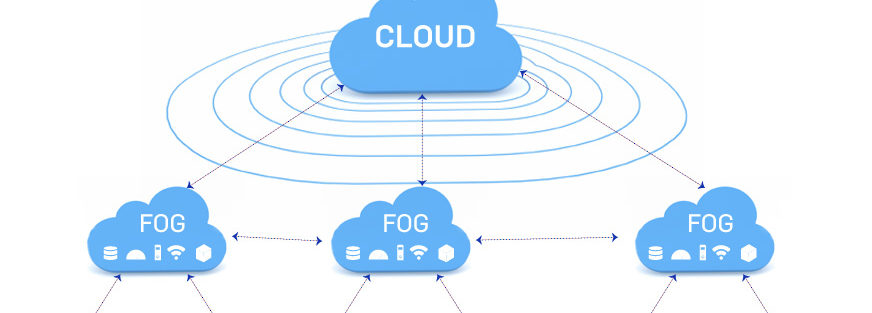
Fog computing is emerging as a crucial paradigm in the evolution of distributed computing environments, aiming to enhance data processing capabilities by extending cloud services closer to the source of data generation. As connected devices proliferate and the Internet of Things (IoT) continues to expand exponentially, fog computing addresses the limitations of traditional cloud infrastructures by enabling low-latency, high-efficiency data handling at the network edge.
Understanding the Fundamentals and Architecture of Fog Computing
At its core, Fog Computing decentralized computational resources and services closer to IoT devices and data sources by deploying edge nodes that perform processing, storage, and networking functions. Unlike conventional cloud computing models which centralize processing in distant data centers, fog computing distributes tasks across numerous intermediate nodes such as gateways, routers, and even local servers positioned geographically near end devices. This architecture not only reduces bandwidth consumption by limiting irrelevant data transfer to remote clouds but also enhances response times for mission-critical applications by processing data locally or regionally.
The fog environment consists of multiple layers—device layer, fog layer, and cloud layer—each playing distinct roles in data management. The device layer comprises sensors, actuators, and IoT devices that generate continuous streams of data. The fog layer, made up of edge nodes, analyzes and filters this data in real time, enabling prompt decision-making. When further processing or storage is required, data can be transmitted upward to the cloud layer. This multi-tiered approach offers scalability and flexibility while ensuring increased security and privacy by limiting sensitive data exchanges beyond the local network perimeter.
The Role of Fog Computing in Enhancing IoT and Smart City Applications
The integration of fog computing is significantly advancing the capabilities of IoT ecosystems and smart city initiatives. Urban infrastructures rely heavily on real-time data processing for applications including traffic management, environmental monitoring, and public safety systems. Fog nodes enable these systems to instantly analyze sensor data at the edge, minimizing latency and enhancing reliability. For example, fog computing supports smart traffic lights by processing vehicular data locally, thereby optimizing flow dynamically and reducing congestion without constant cloud connectivity.
Moreover, fog computing plays a vital role in handling the data deluge from billions of IoT devices embedded in industrial, healthcare, and transportation sectors. In industrial IoT scenarios, fog computing facilitates predictive maintenance by continuously monitoring machinery through localized analytics, preventing costly downtime. Similarly, healthcare applications benefit from near real-time patient data processing, enabling faster diagnosis and monitoring without compromising data privacy with constant cloud exposure.
Key Benefits and Challenges Associated with Deploying Fog Computing Solutions Today
Implementing fog computing solutions delivers distinct advantages such as improved bandwidth efficiency, reduced latency, and enhanced data security. By filtering and analyzing data at the edge, organizations can dramatically cut down on excessive data transmission to cloud data centers, lowering operational costs. Additionally, time-sensitive applications whether in autonomous vehicles or augmented reality benefit immensely from fog’s proximity computing, achieving near-instantaneous responsiveness unattainable with pure cloud models.
However, deploying fog computing architectures also presents unique challenges. Managing and orchestrating distributed fog nodes requires sophisticated software frameworks to ensure seamless interoperability among heterogeneous devices. Security remains a concern due to increased attack surfaces across various edge devices and networks. Furthermore, issues of standardization and integration complexity can hinder widespread fog adoption, necessitating ongoing innovation in protocols and coordinated industry standards.
Commercial Implications and Transactional Opportunities in Fog Computing Ecosystem
From a commercial perspective, fog computing opens new avenues for service providers, hardware manufacturers, and software developers to innovate and monetize edge-based solutions. Organizations are engaging in partnerships to design integrated fog platforms combining AI for edge analytics, enhanced security protocols, and flexible cloud-edge hybrid environments. These collaborations create transactional opportunities spanning product sales, managed services, consulting, and subscription-based models tailored to diverse industry requirements.
Enterprises adopting fog computing solutions benefit from cost efficiencies by optimizing network usage and improving operational agility while delivering superior customer experiences powered by real-time insights. The commerce around fog technologies is poised to grow as digital transformation accelerates across sectors such as manufacturing, healthcare, automotive, and smart cities. Market participants actively invest in research and development to enhance edge device capabilities, culminating in richer, intelligent fog ecosystems driving future innovation.
Get More Insights on Fog Computing
Get This Report in Japanese Language -フォグコンピューティング
Get This Report in Korean Language -포그 컴퓨팅
Read More Articles Related to this Industry –
How ICT Companies Can Leverage Google Business Profile for Local SEO Success
How Predictive Maintenance is Revolutionizing Industrial IoT
Prescriptive Analytics vs. Predictive Analytics: Key Differences and Applications
About Author:
Ravina Pandya, Content Writer, has a strong foothold in the market research industry. She specializes in writing well-researched articles from different industries, including food and beverages, information and technology, healthcare, chemical and materials, etc. (https://www.linkedin.com/in/ravina-pandya-1a3984191)

 Arabic
 Français
 Español
 Português
 Deutsch
 Türkçe
 Dutch
Dutch
 Italiano
 Russian
 Romaian