


AI Game Development Workflow: Storylines, Characters, and Environments Explained
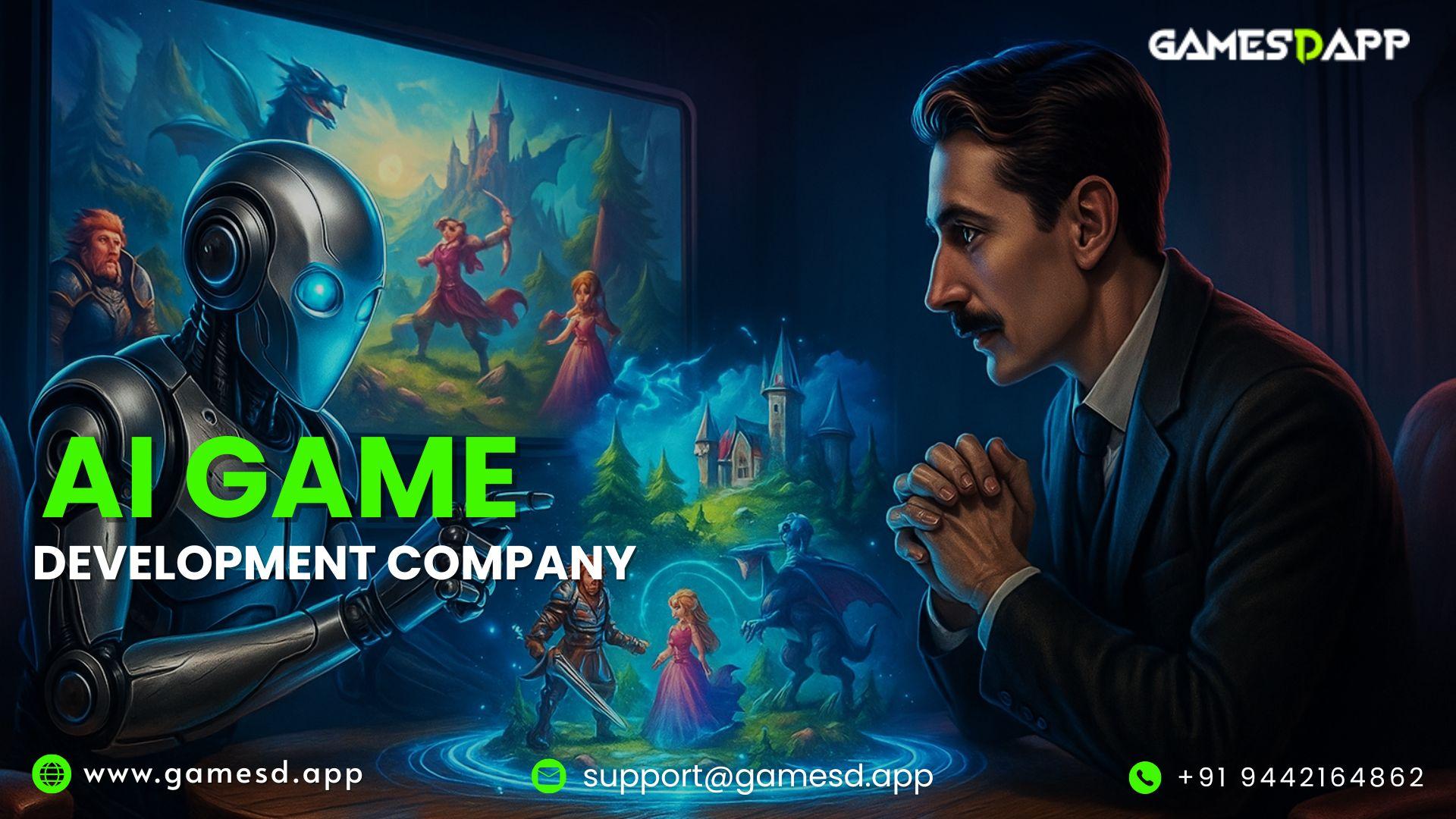
Imagine stepping into a game where the story bends around your choices, the characters remember your past actions, and the environment evolves as though it were alive. This is the new frontier of AI Game Development, a shift from static, scripted experiences to living, adaptive worlds. At the center of this transformation is the AI Game Development Workflow, a process that infuses intelligence into every stage of creation, from the first storyline draft to the final playable build.
What Is AI Game Development Workflow?
AI Game Development Workflow is the structured process of integrating artificial intelligence into different layers of game design. Unlike traditional workflows that rely on manual scripting and fixed rules, AI workflows enable games to adapt, learn, and evolve. This involves weaving intelligence into storylines, characters, and environments, creating experiences that feel unpredictable yet believable. Instead of games being pre-written products, they become dynamic ecosystems that respond uniquely to each player.
Storylines That Think and Adapt
Storytelling in games has always been about immersion, but AI takes it a step further by making narratives reactive. With AI-driven story engines, plots can branch endlessly, dialogues can evolve based on player choices, and missions can reconfigure themselves in real time. A decision made early in the game might alter relationships, reshape alliances, or even unlock entirely new story arcs. This flexibility allows developers to move beyond fixed scripts, offering players deeply personal adventures where no two playthroughs are identical.
Characters That Feel Alive
Characters are the emotional anchor of every game, and AI is transforming how they are built. NPCs (Non-Playable Characters) can now learn from player interactions, develop unique behaviors, and respond in ways that feel natural instead of robotic. Playable characters, to, can evolve through adaptive skill sets and personality-driven dialogue. When combined with professional 3D Character Design Services, the result is a cast of heroes and companions that feel less like scripted assets and more like entities with depth, memory, and individuality, giving players the sense that they are truly engaging with a living world.
Environments That Evolve in Real-Time
The worlds that players explore are no longer static backdrops. With AI-driven procedural generation and environmental modeling, landscapes can shift and grow dynamically. Cities expand as time passes, ecosystems react to player activity, and weather systems create moods that influence gameplay. Whether it’s a fantasy realm where forests regenerate after battles or a futuristic city adapting to political shifts, AI ensures environments remain fresh and believable long after the first playthrough.
AI Agents Behind the Scenes
While AI powers storylines, characters, and environments on the surface, behind the curtain are intelligent agents driving development workflows. These agents handle everything from testing gameplay balance to optimizing code and generating assets. They simulate thousands of player behaviors to identify exploits, refine difficulty, and ensure smooth performance. By automating these complex but repetitive tasks, AI frees developers to focus on creative innovation instead of manual debugging and micromanagement.
Benefits of AI Game Development Workflows
The adoption of AI in gaming is growing because the benefits are clear:
Speed & efficiency: Projects that once took months can now be done in weeks.
Cost reduction: Automated workflows reduce production budgets.
Immersion: Adaptive storylines, smarter NPCs, and dynamic worlds improve player engagement.
Scalability: Studios can handle larger game universes without ballooning teams.
Innovation: Developers can experiment with new mechanics and creative ideas without the usual time or resource constraints.
Challenges in AI Game Development
Of course, AI isn’t without challenges. Developers must navigate:
“AI slop”: Poorly executed AI assets (low-quality art, clunky dialogue) can hurt a game’s reputation.
IP and originality concerns: Who owns AI-generated content, the tool, the studio, or the developer?
Player perception: Some gamers fear AI may reduce creativity or authenticity.
Balancing automation with artistry is crucial to ensuring AI enhances, not replaces, the craft of game development.
The Future of AI Game Development Workflows
Looking ahead, the future of AI in gaming is both exciting and inevitable. Trends include:
Next-gen NPCs: Characters that not only talk but also adapt to emotions, history, and context.
Fully adaptive worlds: Games where environments react to players in real-time at every level.
AI-built games: Multi-agent AI systems capable of designing, testing, and even publishing titles with minimal human intervention.
In short, AI is moving from being a tool to becoming a collaborative creator alongside human developers.
Conclusion
The AI game development workflow is transforming the way stories, characters, and environments are created. By combining automation with creativity, developers can design immersive, scalable, and cost-effective games that evolve with players in real time.
At GamesDApp, a leading AI Game Development Company, we help studios and entrepreneurs harness this shift to build smarter and richer gaming experiences. By blending human creativity with machine intelligence, the future of gaming promises worlds that feel more alive than ever.

 English
 Arabic
 Français
 Português
 Deutsch
 Türkçe
 Dutch
Dutch
 Italiano
 Russian
 Romaian