


Keyword Cannibalization and Internal Links Explained
Search engine optimization (SEO) is more than just using the right keywords. A well-structured site with unique content and strong navigation can make or break your rankings. Two important factors that often get ignored are keyword cannibalization and internal links.
If you don’t control keyword overlap, your pages will fight against each other instead of ranking higher. If you don’t build a good internal linking SEO structure, search engines won’t understand which content matters most. In this guide, we’ll explore how these two concepts work and how you can use them together for better results.
Understanding Keyword Cannibalization
Many people ask, what is keyword cannibalization? It simply means that two or more of your pages target the same keyword. Instead of creating authority, this competition weakens your site.
For example:
-
Page A is about “SEO tools.”
-
Page B is also about “SEO tools.”
Now, Google has a tough time deciding which page to rank. As a result, both pages may appear in lower positions. This is what we call cannibalization in SEO.
Why Keyword Cannibalization Hurts SEO
Here’s why cannibalization SEO problems should not be ignored:
-
Rankings drop – Instead of one page ranking high, both rank lower.
-
Link equity splits – Backlinks get divided between similar pages.
-
Search engines get confused – Google struggles to understand the page’s purpose.
-
User journey suffers – Visitors may land on the wrong page and leave quickly.
This makes it clear that knowing how to fix keyword cannibalization is crucial for every website owner.
How to Fix Keyword Cannibalization
There are simple ways to solve SEO keyword cannibalization:
1. Content Audit
Check your website and list all pages that target similar keywords. Tools like Google Search Console can reveal overlapping rankings.
2. Merge Similar Pages
If two pages cover the same topic, combine them into one stronger piece of content. Redirect the old page to the new one.
3. Adjust Keywords
Instead of repeating the same phrase, give each page a unique angle. For instance, one can focus on “SEO basics,” while another covers “advanced SEO tools.”
4. Use Internal Linking
Support your primary page by linking to it from secondary pages. This improves internal linking for SEO and shows Google which page is more important.
5. Canonical Tags
When duplicate content is unavoidable, use canonical tags to mark the main page for Google.
By following these steps, you can control cannibalization in SEO and strengthen your site’s rankings.
The Power of Internal Links
Now let’s turn to internal links, which are connections between pages on your own website. They are a vital part of SEO internal linking strategy because they:
-
Help Google crawl and index your site.
-
Pass ranking signals from one page to another.
-
Improve user experience by guiding visitors.
-
Highlight the most important content on your site.
Think of internal links as roads on a map. Without them, search engines may get lost and fail to discover important pages.
Internal Linking Best Practices
To get the most out of internal linking SEO, follow these rules:
-
Use relevant anchor text – Instead of “read more,” use descriptive text like “internal linking best practices.”
-
Focus on priority pages – Make sure your money pages and pillar content get more internal links.
-
Link naturally – Add links only where they help users, not just for SEO.
-
Balance links – Too many links on one page may dilute value.
-
Update links regularly – Whenever you publish a new post, add links from old related content.
Following these internal linking best practices helps distribute authority across your website.
Internal Linking for SEO: A Real Strategy
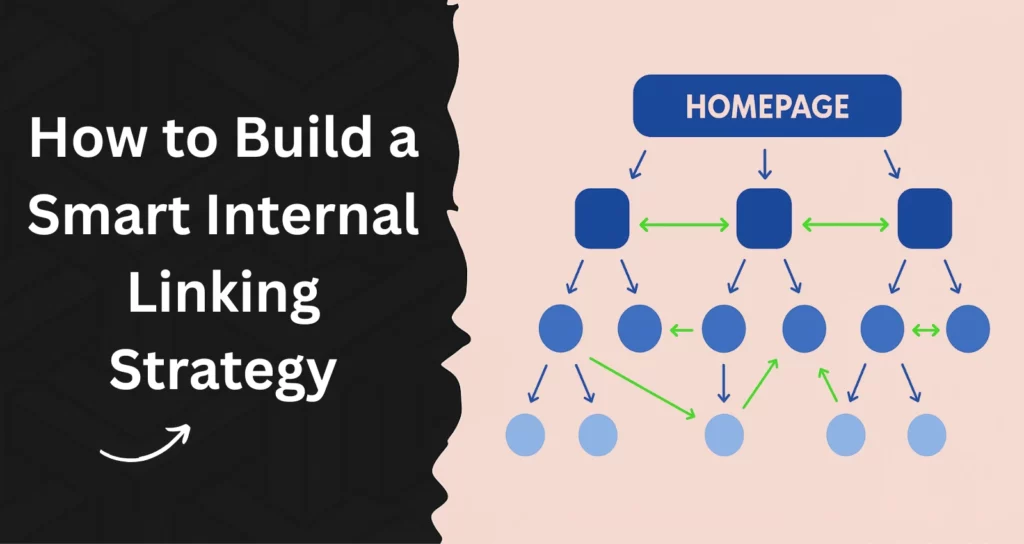
A good SEO internal linking strategy makes your website stronger over time. Here’s how to build one:
-
Create a pillar page (main guide) for your biggest keywords.
-
Write supporting blog posts around related subtopics.
-
Link all supporting posts back to the pillar page with targeted anchor text.
-
Link pillar pages to each other if topics are related.
This structure not only improves internal linking for SEO, but also reduces the risk of cannibalization SEO because every page has its own role.
How Internal Linking Helps Fix Keyword Cannibalization
Internal linking is one of the best solutions to handle keyword cannibalization. Here’s why:
-
It directs authority toward the page you want to rank.
-
It clarifies to Google which page is the “main” one.
-
It avoids confusing signals by building a clear content hierarchy.
So, when you notice overlapping content, you can use internal linking SEO to strengthen one page while still keeping the other live.
Long-Term SEO Growth with Both Strategies
SEO is not about quick wins. It’s about building a sustainable structure. Combining fix keyword cannibalization steps with strong SEO internal linking strategy ensures your site stays healthy.
Here’s a simple plan:
-
Run keyword audits every few months.
-
Keep a keyword map to avoid overlap.
-
Consolidate content when needed.
-
Strengthen internal linking patterns.
-
Track results in Google Search Console.
With these methods, your website will grow steadily without internal competition.
Conclusion
Two of the most overlooked areas of SEO are keyword cannibalization and internal links. When ignored, cannibalization reduces rankings and authority. When mastered, internal linking helps search engines and users navigate your site with ease.
By applying internal linking best practices and fixing cannibalization in SEO, you will create a stronger, more focused website. Remember, SEO success comes not from creating more pages, but from creating smarter connections between them.

 English
 Arabic
 Français
 Español
 Português
 Deutsch
 Türkçe
 Dutch
Dutch
 Italiano
 Russian