


10 Common Bone Injury Types Explained | ER OF COPPELL
Introduction
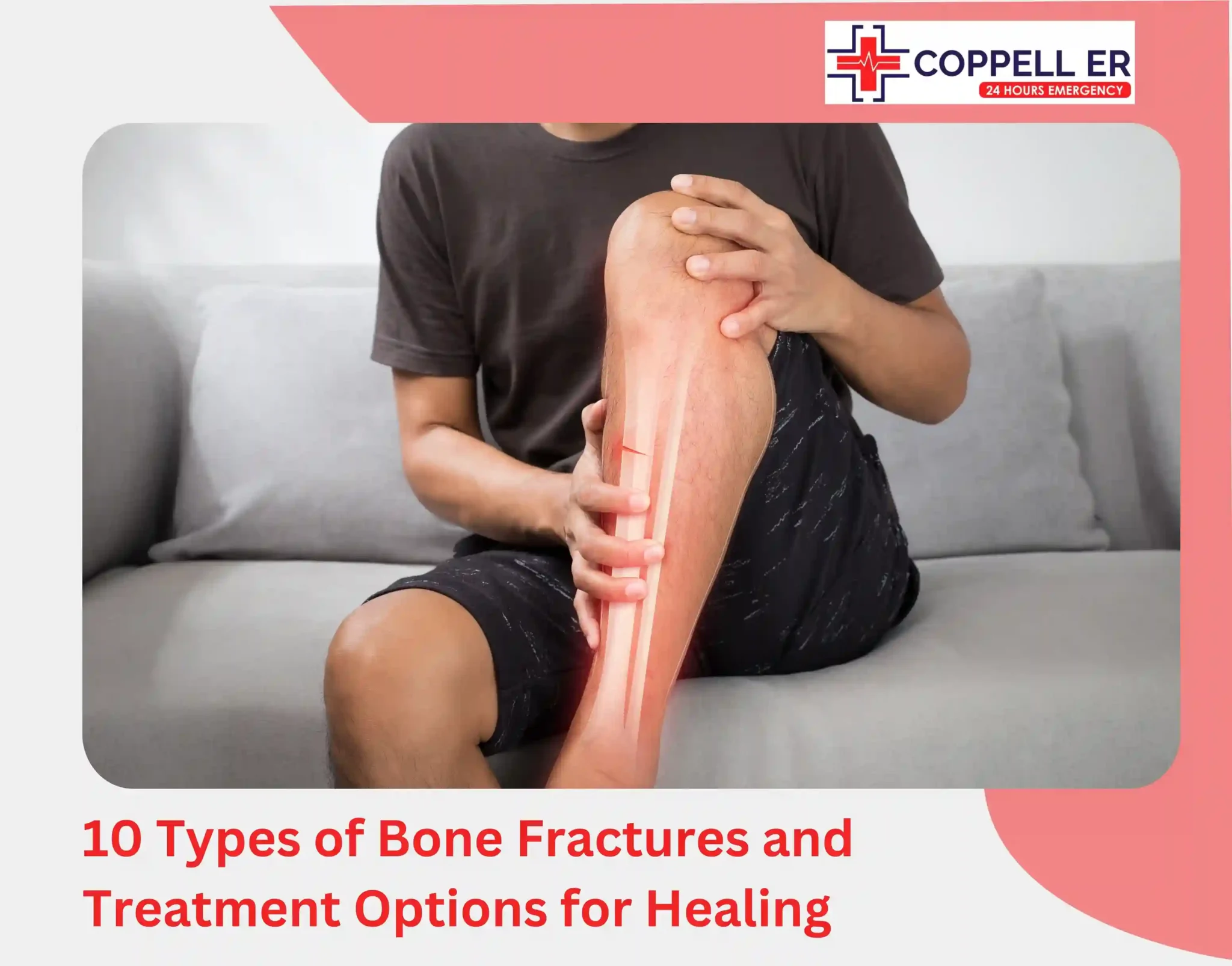
Bone injuries are common medical problems that can affect people of all ages. From small cracks to serious fractures, these injuries can impact movement, cause pain, and affect daily life. Understanding different bone injury types helps in early recognition, better treatment, and faster recovery. At ER OF COPPELL, our experienced team is available 24/7 to provide immediate emergency care for all kinds of bone injuries.
What Are Bone Injuries?
Bone injuries happen when too much force, stress, or trauma is applied to the bones. They may occur from accidents, sports activities, falls, or medical conditions like osteoporosis. Some bone injuries heal quickly with rest and treatment, while others require surgery or long-term medical care.
10 Common Bone Injury Types
1. Hairline Fracture
-
A tiny crack in the bone.
-
Often caused by repetitive stress, like running or jumping.
-
Symptoms: mild pain, swelling, and difficulty in movement.
2. Greenstick Fracture
-
Common in children because their bones are softer.
-
The bone bends and cracks, but does not break completely.
-
Quick treatment leads to full recovery.
3. Transverse Fracture
-
A straight break across the bone.
-
Usually caused by a direct hit or accident.
-
May require a cast or surgery depending on severity.
4. Oblique Fracture
-
The break occurs at an angle across the bone.
-
Common in long bones like legs or arms.
-
Can be unstable and need surgical fixation.
5. Comminuted Fracture
-
The bone shatters into three or more pieces.
-
Often caused by severe trauma like car accidents.
-
Needs surgery and longer healing time.
6. Compound (Open) Fracture
-
The broken bone pierces through the skin.
-
Very dangerous because of infection risk.
-
Requires emergency medical attention at places like ER OF COPPELL.
7. Closed Fracture
-
Bone breaks but does not pierce the skin.
-
May still cause swelling and internal damage.
-
Needs X-ray to confirm and proper immobilization.
8. Compression Fracture
-
Happens when the bone is crushed or compressed.
-
Common in the spine, especially in older adults with weak bones.
-
Causes pain, reduced height, and posture issues.
9. Spiral Fracture
-
Bone twists and breaks in a spiral shape.
-
Often occurs in sports or accidents.
-
Can take longer to heal because of its pattern.
10. Pathological Fracture
-
Occurs due to underlying conditions like cancer or osteoporosis.
-
Bone becomes weak and breaks easily.
-
Needs both bone treatment and care for the medical condition.
Signs and Symptoms of Bone Injuries
-
Severe pain at the site of injury
-
Swelling, redness, or bruising
-
Inability to move the affected area
-
Visible deformity in severe fractures
-
Bone poking through skin (in open fractures)
Causes of Bone Injuries
-
Accidents: Road accidents, falls, or sports collisions
-
Repetitive Stress: Continuous running or physical work
-
Weak Bones: Osteoporosis or aging
-
Medical Conditions: Bone cancer, infections
-
Direct Trauma: Heavy impact on a particular body part
Diagnosis of Bone Injuries
Doctors may use:
-
X-rays: To see the exact break.
-
MRI Scans: To detect small or hidden fractures.
-
CT Scans: For detailed images of complex injuries.
Treatment Options for Bone Injuries
1. First Aid
-
Immobilize the injured area.
-
Apply ice to reduce swelling.
-
Seek emergency care at ER OF COPPELL.
2. Non-Surgical Treatments
-
Casts and splints to keep bones in place.
-
Pain medication.
-
Physical therapy after healing.
3. Surgical Treatments
-
Metal plates, screws, or rods to stabilize bones.
-
Bone grafts for severe cases.
-
Emergency surgery for compound fractures.
Recovery and Healing Process
-
Healing time depends on the type of fracture.
-
Simple fractures may heal in 6–8 weeks.
-
Severe fractures may take months.
-
Proper nutrition, rest, and therapy are important.
Preventing Bone Injuries
-
Eat calcium and vitamin D-rich foods.
-
Exercise regularly to strengthen bones.
-
Use protective gear in sports.
-
Avoid risky activities without proper safety.
-
Get regular bone health checkups.
Why Choose ER OF COPPELL for Bone Injuries?
-
24/7 emergency services.
-
Advanced imaging equipment (X-ray, CT scan).
-
Skilled doctors and orthopedic specialists.
-
Quick treatment to reduce complications.
-
Comfortable environment for patients.
FAQs About Bone Injury Types
Q1: Which bone injury is most common?
Hairline and simple fractures are the most common bone injuries.
Q2: Can bone injuries heal without treatment?
Some small fractures may heal on their own, but most require medical care to prevent long-term problems.
Q3: How long does it take for a bone fracture to heal?
Typically, 6–12 weeks, depending on the injury type and overall health.
Q4: Is a fracture the same as a broken bone?
Yes, both terms mean the same thing.
Q5: When should I go to the ER for a bone injury?
If the bone is visibly deformed, you cannot move the limb, or the bone has pierced the skin, visit ER OF COPPELL immediately.

 English
 Arabic
 Français
 Español
 Português
 Deutsch
 Türkçe
 Dutch
Dutch
 Italiano
 Russian