


Packing Seal: Principles, Problems and Optimization
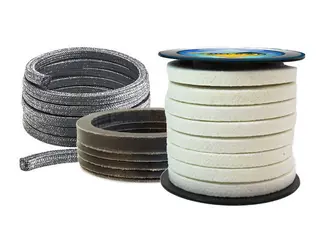
In industrial production, sealing technology plays a vital role in maintaining equipment reliability and preventing fluid leakage. Among the many sealing methods, packing seals are widely used due to their simple structure, low cost, and adaptability to various working conditions. However, as a contact-type sealing method, packing seals are also prone to friction and wear. This article explores the working principle, factors influencing friction and wear, common wear issues, and optimization strategies to improve packing seal performance and service life.
Working Principle of Packing Seal
A packing seal operates by creating tight contact between the packing material and a rotating or reciprocating shaft (or stem). The assembly generally consists of the packing, stuffing box, and gland. When gland pressure is applied, the packing is compressed, forcing it to adhere closely to the shaft surface, thereby preventing fluid leakage. Compared with other sealing types, packing seals rely on surface contact and compression, which makes friction and wear more significant during long-term operation.
Factors Affecting Friction and Wear
Friction and wear directly determine the sealing effectiveness and lifespan of packing seals. Excessive friction increases energy consumption and accelerates the wear of both the packing and shaft, potentially leading to leakage or failure. Key influencing factors include:
-
Gland Pressure – Proper gland pressure ensures tight sealing. Over-compression increases friction and wear, while insufficient pressure leads to leakage.
-
Operating Time – Prolonged use causes packing to lose elasticity and smoothness, increasing friction and wear. The loss of lubricant over time further worsens this effect.
-
Number of Packing Rings – Fewer rings reduce friction but may compromise sealing. The number of rings must be optimized based on the working environment.
-
Shaft Surface Roughness – A smoother shaft surface minimizes friction and wear. Rough or corroded shafts not only reduce sealing quality but also accelerate packing damage.
-
Packing Material Type – Different materials have different friction coefficients. For instance, PTFE against steel has a friction coefficient of about 0.04, while cotton against steel can reach 0.6–0.7, nearly 20 times higher. Material selection must match operating conditions and media properties.
Wear Problems and Solutions
Wear is one of the most common and damaging issues in packing seals. Improper installation or material selection can accelerate wear, affecting sealing performance.
-
Manifestations of Wear: Normally installed packing wears evenly from the gland inward. Improper installation causes excessive wear near the gland. Corrosion between graphite-lubricated packing and stainless-steel shafts may occur due to electrochemical reactions, resulting in rough surfaces and accelerated wear.
-
Solutions:
-
Optimize Installation: Install each ring step by step, ensuring uniform compression. Spacer rings can also be used for lubricant injection and leakage monitoring.
-
Select Proper Materials: Carbon fiber packing provides the best wear resistance, while PTFE-impregnated asbestos approaches similar performance. Choose materials and impregnating agents suited to specific media.
-
Enhance Lubrication and Cooling: Lubricants reduce friction and dissipate heat. Under high-temperature or high-speed conditions, forced lubrication and external cooling should be applied. Springs or washers may also be used for automatic compression compensation.
-
Lubrication and Cooling of Packing Seals
Lubrication and cooling are critical to ensuring efficient operation and preventing premature failure. Proper lubrication lowers friction, while effective cooling removes frictional heat, preventing packing hardening or deformation.
-
Lubrication Importance: Most braided packings are pre-impregnated with lubricants, though external lubrication may also be necessary under extreme conditions. Adequate lubrication prevents overheating and extends service life.
-
Lubricant Selection: Lubricants should be chemically stable, non-corrosive, and have good impregnating properties. Common lubricants include graphite, molybdenum disulfide, mica, and PTFE—all offering excellent self-lubricating and high-temperature resistance.
-
Applications:
-
Animal fat: Suitable for cold-water fiber packing, but fatty acids may corrode shafts.
-
Castor oil: Suitable for water and acid-salt media, though soluble in mineral oils.
-
Glycerin: Works well in petroleum-based systems and for steam applications.
-
Graphite: Excellent solid lubricant but may cause electrochemical corrosion.
-
PTFE: Functions as both filler and lubricant; non-conductive and chemically resistant, ideal for a wide temperature range (-200°C to 250°C).
-
Conclusion
As a widely applied contact sealing technology, packing seals are indispensable in industrial processes. Yet, due to challenges such as friction, wear, and thermal effects, optimization measures must be implemented. By selecting suitable materials, using proper installation methods, ensuring effective lubrication and cooling, and applying automatic compensation systems, packing wear can be minimized, sealing reliability improved, and maintenance costs reduced. These measures collectively contribute to safer, more efficient, and longer-lasting industrial sealing performance.
It's important to know about Google SEO to help your website rank higher in search results.

 English
 Arabic
 Français
 Español
 Português
 Deutsch
 Dutch
Dutch
 Italiano
 Russian
 Romaian