


Valve Packing Rings: Manufacturing, Installation & Maintenance
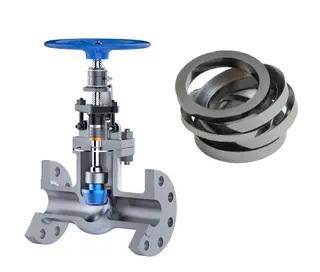
In industrial operations, valve sealing performance is crucial for ensuring process safety, efficiency, and environmental compliance. Among the various sealing components, the packing ring plays an essential role in maintaining valve integrity and preventing leakage. This article provides an in-depth overview of packing ring manufacturing methods, installation procedures, material selection, and maintenance practices, emphasizing how proper installation and care can extend service life and ensure long-term sealing reliability.
Manufacturing Methods of Packing Rings
Packing rings are commonly produced using either the braiding or molding method.
-
Braided Packing: Braided packing is cut into rings according to the valve stem circumference, typically at a 45° bevel or 90° perpendicular angle. The beveled cut is preferred for its superior end-face contact under axial load. Each ring must completely encircle the stem, ensuring tight contact with the stuffing box wall. Improper cutting that leads to overlapping or gaps can cause uneven density and potential leakage paths.
-
Molded Packing: Molded packing rings are preformed under controlled pressure and temperature, ensuring uniform density and dimensional accuracy. These are ideal for high-performance applications requiring precision and consistent sealing. Molded rings eliminate the need for on-site cutting, simplifying installation and improving reliability.
Installation Procedures of Packing Rings
Correct installation directly impacts valve sealing effectiveness and packing longevity. Follow these steps for optimal performance:
-
Preparation
Conduct a safety and hazard assessment before installation. Isolate the valve and ensure operators wear appropriate protective gear. Remove all old packing using cleaning tools and inspect the valve stem for scratches or pitting. Measure the outer diameter (OD) of the stem, the inner diameter (ID) of the stuffing box, and the depth of the stuffing box to determine accurate packing dimensions. -
Calculating Ring Size
Use the formula:
Packing cross-section = (OD − ID) / 2
Determine the number of rings required based on the stuffing box depth. When cutting braided packing, avoid stretching or compressing the material to prevent deformation. Ensure that the cut surface is clean, smooth, and free of debris or impurities. -
Forming Individual Rings
Never wind packing directly into the stuffing box. Instead, cut the braided packing into individual rings with a 45° bevel for optimal load distribution. Each ring must fit snugly into the stuffing box without distortion or stretching.
For preformed rings, inspect bolts, nuts, and gaskets for wear and apply a light lubricant. Use a torque wrench during installation to ensure uniform compression according to manufacturer specifications. -
Installing Rings
-
Insert the first ring carefully into the stuffing box, positioning the joint first.
-
For flexible graphite rings, expand each ring slightly into a spiral before installation to prevent cracking.
-
Compress each ring before installing the next, ensuring proper seating.
-
Offset the joints of adjacent rings by 90° or 180° to minimize leakage paths.
-
After all rings are installed, operate the valve stem 3–10 times to allow the packing to seat evenly, then retighten per manufacturer instructions. Repeat tightening once more after the valve begins normal operation.
-
Material Selection for Packing Rings
Selecting the right material is vital for reliable sealing performance.
-
PTFE (Polytetrafluoroethylene): Suitable for -101°C to 232°C. Beyond this range, PTFE may decompose, releasing toxic fumes and losing mechanical strength, leading to leakage.
-
Flexible Graphite: Applicable between -196°C and 450°C in oxidizing atmospheres and up to 650°C in non-oxidizing (steam) environments. Graphite offers excellent chemical resistance (pH 0–14) and fire-safe sealing characteristics.
Material choice should consider temperature, pressure, chemical compatibility, and emission control requirements.
Maintenance and Inspection of Packing Rings
Regular maintenance ensures reliable valve sealing and prevents leaks:
-
Routine Inspection: Check for wear, deformation, or damage. Replace packing promptly if abnormalities are found.
-
Tightening and Adjustment: Use a torque wrench to tighten according to manufacturer recommendations, compensating for relaxation and wear.
-
Replacement: When sealing efficiency declines, replace packing using the correct procedure to ensure uniform compression and effective sealing.
Installation Precautions
-
Avoid Over-Compression: Install each ring individually to distribute axial stress evenly. Over-compression increases friction and uneven loading, shortening service life.
-
Avoid Excessive Load: Excess torque on the gland can cause high friction and packing damage. Apply load according to specifications.
-
Maintain Cleanliness: The stuffing box and stem must be free from contaminants and old lubricant before installation.
Benefits of Proper Installation
Correctly installed packing ensures even stress distribution, reduces friction, and maintains reliable sealing over time. It minimizes fugitive emissions, enhances operational safety, and improves production efficiency.
Conclusion
As a key component in valve sealing systems, proper manufacturing, installation, and maintenance of packing rings are essential for achieving long-term sealing reliability. By selecting suitable materials, following precise installation techniques, and adhering to maintenance best practices, operators can significantly extend packing life, reduce leakage risks, and improve overall process safety and efficiency.
It's important to know about Google SEO to help your website rank higher in search results.

 English
 Français
 Español
 Português
 Deutsch
 Türkçe
 Dutch
Dutch
 Italiano
 Russian
 Romaian