


Revolutionizing Modern Manufacturing with Advanced Welding Automation for Industrial Precision
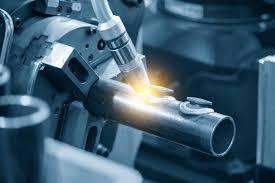
In today’s rapidly evolving industrial landscape, welding automation has become a cornerstone of modern production. As industries expand and the demand for precision, efficiency, and consistency grows, automated welding systems have emerged as the ultimate solution to meet these expectations. This advanced technology seamlessly integrates mechanical systems, sensors, and control software to deliver unparalleled accuracy and productivity in welding operations. From small fabrication shops to large-scale industrial facilities, welding automation is redefining how metal structures and components are created.
The Rise of Welding Automation in Modern Industry
The history of welding dates back centuries, but automation has taken it to a completely new level. Initially, welding was a labor-intensive process relying on the skill and steadiness of human welders. However, the growing need for speed, reliability, and uniform quality in mass production created a demand for automated solutions. Over time, welding automation evolved through the integration of robotics, programmable logic controllers (PLCs), and computer vision technologies, transforming it from a manual craft into a sophisticated engineering process.
Today, welding automation plays a crucial role across multiple sectors, including automotive, aerospace, shipbuilding, oil and gas, and construction. Its ability to perform complex welds with minimal human intervention ensures that manufacturers achieve not only higher productivity but also improved safety standards and reduced material waste.
The Core of Automated Welding Systems
At its heart, welding automation integrates various components that work in harmony to execute precise welding tasks. The system typically includes robotic arms, motion control units, sensors, power supplies, and specialized welding torches. These machines are programmed to follow specific weld paths and parameters, ensuring that every joint meets strict quality standards.
There are two main types of welding automation:
-
Fixed Automation: Designed for repetitive tasks and high-volume production lines, where the equipment performs the same operation continuously.
-
Flexible Automation: Equipped with robotic systems that can adapt to various weld types and configurations, suitable for small-batch or customized production.
These systems can perform various welding processes such as MIG, TIG, spot welding, and laser welding with incredible accuracy, ensuring that the final product meets both structural and aesthetic requirements.
The Impact on Manufacturing Efficiency
One of the defining aspects of welding automation is its ability to streamline production. Automated systems can operate continuously without fatigue, ensuring consistent output around the clock. This continuous workflow drastically reduces downtime and increases throughput. Furthermore, welding automation minimizes human error, resulting in higher-quality welds that meet strict industry standards.
Manufacturers can also benefit from improved resource management. By optimizing weld parameters, automated systems use materials more efficiently, minimizing waste and maximizing cost savings. This approach not only enhances production economics but also supports sustainability initiatives by reducing energy consumption and excess material usage.
Precision and Consistency in Every Weld
Precision is the essence of welding automation. Unlike manual welding, which can vary depending on the welder’s skill, automated systems deliver uniform welds that maintain exact specifications every time. Advanced sensors and feedback mechanisms monitor each weld, adjusting the process in real-time to compensate for material inconsistencies or environmental factors.
This high level of precision ensures that the final products meet stringent quality and safety standards, making welding automation a critical component in industries where reliability is paramount. From aerospace parts that endure extreme conditions to automotive components requiring flawless joints, automation ensures consistency at every stage.
Integration with Smart Manufacturing
The modern era of manufacturing is defined by digital transformation, and welding automation fits perfectly within this framework. When integrated into smart manufacturing systems, automated welders communicate with other production equipment through connected networks. This enables seamless data sharing, process monitoring, and predictive maintenance, allowing for proactive management of production lines.
This integration also enables real-time tracking and optimization. Manufacturers can analyze performance data, identify bottlenecks, and continuously refine processes to achieve maximum output. As a result, welding automation is not just about replacing manual work—it’s about creating a connected ecosystem that drives innovation and operational excellence.
Applications Across Industries
Welding automation’s versatility makes it indispensable across a broad range of industries:
-
Automotive Manufacturing: Automated welding ensures the precision and durability required for vehicle frames, exhaust systems, and structural components.
-
Aerospace: The need for lightweight, high-strength materials in aircraft construction is met with precision welding systems that guarantee flawless results.
-
Shipbuilding: Large-scale metal structures are welded efficiently, ensuring consistency and reducing project timelines.
-
Oil and Gas: Pipelines and offshore structures rely on the accuracy of automated welding for strength and safety.
-
Construction and Infrastructure: Automated systems enhance the fabrication of steel frameworks and large assemblies with speed and reliability.
Each industry benefits from the reliability, scalability, and adaptability of welding automation, making it a central force in modern production.
Training and Workforce Transformation
While welding automation reduces the need for manual welding labor, it simultaneously creates new opportunities in programming, operation, and maintenance of automated systems. The workforce is shifting toward more technical roles that involve controlling robotic systems, analyzing data, and optimizing production processes.
Training programs and vocational institutions are evolving to meet these new demands, preparing professionals to work alongside automated systems and ensure smooth operations. This transformation not only enhances productivity but also creates a safer and more skill-oriented work environment.
Environmental and Safety Considerations
Safety and sustainability are core aspects of modern manufacturing, and welding automation contributes to both. Automated systems limit direct human exposure to harmful fumes, radiation, and high-temperature operations, creating safer workspaces. Moreover, with optimized energy use and reduced material waste, these systems support greener manufacturing practices.
As industries worldwide push toward sustainable development goals, the role of welding automation in promoting eco-friendly production processes continues to grow.
The Future of Welding Automation
The future of welding automation is full of possibilities. Advancements in machine learning, sensor technology, and system integration will continue to enhance precision, adaptability, and performance. As manufacturing evolves toward more customized and flexible production systems, automated welding solutions will play an even greater role in shaping industrial innovation.
Emerging trends such as collaborative robots (cobots) are also gaining traction. These machines work safely alongside human operators, combining the precision of automation with the flexibility of human oversight. The fusion of robotics and digital intelligence will continue to push the boundaries of what welding automation can achieve.
Final Thoughts
Welding automation stands as a transformative force that is reshaping the future of global manufacturing. It represents the perfect harmony of technology, engineering, and innovation—delivering precision, efficiency, and reliability at every stage of production. From enhancing product quality to fostering safer workplaces and sustainable operations, this technology continues to redefine the standards of industrial excellence.
The continued evolution of welding automation will not only drive efficiency but also empower industries to achieve greater heights of productivity and creativity, ensuring a future where precision engineering becomes the universal standard for manufacturing success.

 English
 Arabic
 Français
 Español
 Português
 Deutsch
 Dutch
Dutch
 Italiano
 Russian
 Romaian