


Zero Knowledge Proof Blockchain: Advancing Privacy and Security in Crypto
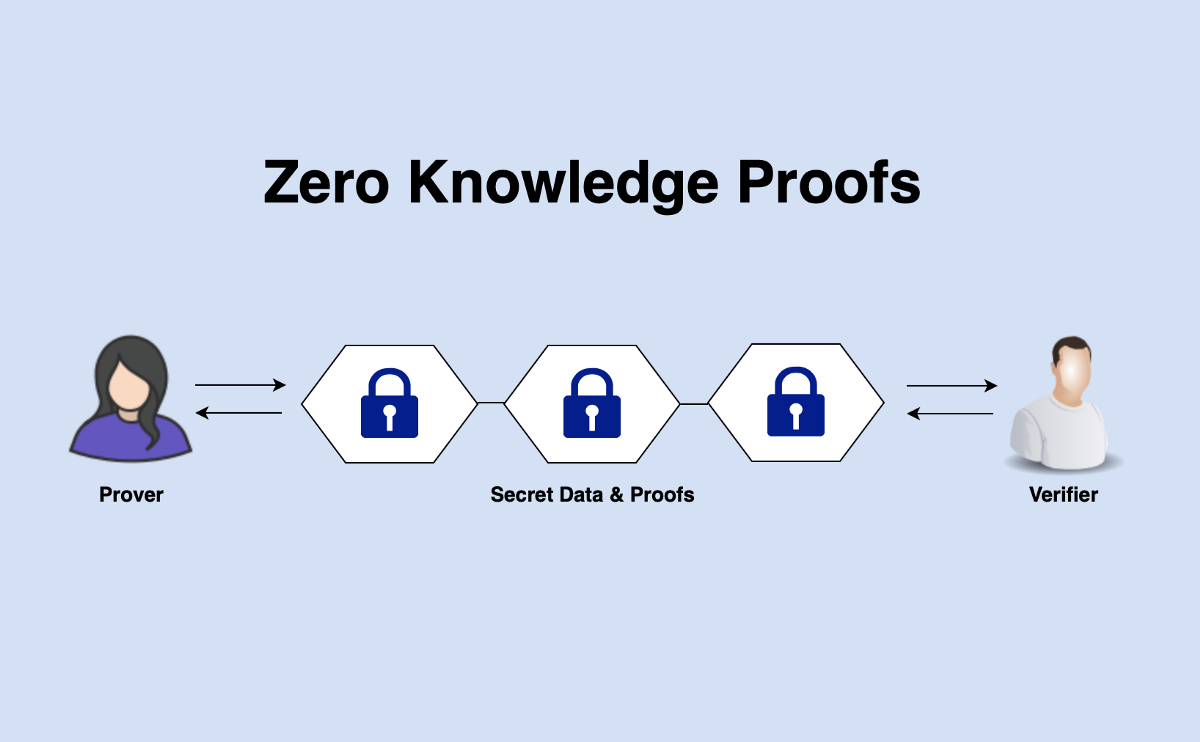
Blockchain technology has transformed the digital landscape, offering decentralized, transparent, and secure systems for data and financial transactions. However, one of the ongoing challenges in blockchain networks is balancing transparency with privacy. Zero knowledge proof blockchain technology addresses this issue by enabling data verification without revealing the underlying information, providing a new standard for privacy, security, and efficiency. In this article, we explore how zero knowledge proof blockchains work, their core features, tokenomics, practical applications, potential challenges, and long-term growth prospects.
Understanding Zero Knowledge Proof Blockchains
A zero knowledge proof (ZKP) blockchain uses cryptographic protocols that allow one party (the prover) to prove to another party (the verifier) that a certain statement is true without disclosing the actual data. In simpler terms, it allows verification of information without exposing sensitive details. For blockchain networks, this means transactions, smart contracts, or identity verifications can be validated while maintaining user privacy.
ZKP blockchains are particularly useful in privacy-focused cryptocurrencies, decentralized finance (DeFi) platforms, and enterprise applications where data confidentiality is essential. They provide a secure and verifiable environment without compromising transparency or decentralization.
How Zero Knowledge Proof Blockchain Works
Zero knowledge proof blockchains rely on advanced mathematical algorithms. The two main types of ZKP implementations are:
-
Interactive ZKPs: Require multiple rounds of communication between the prover and verifier to confirm the accuracy of a claim.
-
Non-interactive ZKPs (NIZK): Allow a proof to be generated and verified independently, making them highly scalable and ideal for blockchain applications.
Two prominent ZKP protocols widely used in blockchain networks are zk-SNARKs (Zero-Knowledge Succinct Non-Interactive Arguments of Knowledge) and zk-STARKs (Zero-Knowledge Scalable Transparent Arguments of Knowledge). zk-SNARKs are known for efficient proof verification with minimal data, while zk-STARKs provide improved scalability and transparency without relying on trusted setups. Both protocols enable secure and private validation of blockchain data.
Key Features and Advantages
Zero knowledge proof blockchain projects provide several advantages for users and developers:
-
Enhanced Privacy: Users can complete transactions without exposing amounts, addresses, or other sensitive information.
-
Security: Sensitive data remains encrypted, reducing the risk of hacks and unauthorized access.
-
Scalability: Certain ZKP protocols minimize the size of proofs, enabling faster transaction processing.
-
Compliance Options: Selective disclosure allows platforms to meet regulatory requirements without compromising privacy.
These features make ZKP blockchains highly suitable for applications like confidential DeFi transactions, private smart contracts, secure identity verification, and enterprise data management.
Tokenomics in Zero Knowledge Proof Blockchain Projects
Many ZKP blockchain projects integrate specialized tokenomics to support network growth and incentivize participation. Typical structures include:
-
Utility Tokens: Used to pay transaction fees, access privacy-enhanced services, or interact with smart contracts.
-
Governance Tokens: Enable holders to vote on protocol upgrades, privacy rules, and scalability solutions.
-
Incentive Mechanisms: Reward validators and participants who contribute to proof generation or network security.
For example, a ZKP blockchain project could issue a total supply of 1 billion tokens, with 40% allocated to community incentives, 30% to the development team, 20% for early investors, and 10% reserved for strategic partnerships. Transparent tokenomics foster trust among users and ensure long-term sustainability.
Practical Use Cases
Zero knowledge proof blockchains are actively applied in various real-world scenarios:
-
Privacy-Focused Cryptocurrencies: Coins like Zcash use zk-SNARKs to enable fully private transactions.
-
DeFi Platforms: Transactions can be verified without revealing financial details, increasing security and trust.
-
Identity Verification: Users can prove credentials without exposing personal data, aiding secure logins and KYC compliance.
-
Enterprise Applications: Supply chain verification, healthcare data management, and confidential business operations benefit from ZKP-enabled verification without public exposure.
These examples illustrate how zero knowledge proof blockchains are not just theoretical but offer practical solutions for privacy, security, and compliance in the digital economy.
Challenges and Considerations
While zero knowledge proof blockchains provide significant benefits, they also face challenges:
-
High Computational Requirements: Proof generation and verification can be resource-intensive.
-
Technical Complexity: Integrating ZKP protocols into existing systems requires expertise in cryptography and blockchain architecture.
-
Regulatory Ambiguity: Privacy-centric features may face scrutiny in certain jurisdictions, requiring careful compliance strategies.
Despite these challenges, continuous research and development are improving ZKP efficiency, scalability, and accessibility, making them increasingly viable for widespread adoption.
Roadmap and Future Outlook
The roadmap for ZKP blockchain projects typically includes:
-
Protocol Optimization: Implementing zk-STARKs and other advanced ZKP solutions to improve scalability and efficiency.
-
Ecosystem Growth: Expanding partnerships with DeFi platforms, enterprise applications, and identity verification systems.
-
Mainstream Adoption: Bringing privacy-focused blockchain solutions to industries like finance, healthcare, and supply chain management.
As blockchain adoption continues to grow, zero knowledge proof blockchains are expected to become a core component of secure, private, and scalable decentralized networks.
Conclusion
Zero knowledge proof blockchain technology is revolutionizing the way privacy and security coexist in decentralized systems. By enabling verification without exposing sensitive information, ZKPs enhance transparency, protect user data, and enable scalable solutions for blockchain networks. With practical applications in finance, identity verification, and enterprise systems, alongside transparent tokenomics and a roadmap for innovation, ZKP blockchains offer a powerful solution for the next generation of decentralized technology.
For developers, investors, and users, embracing zero knowledge proof blockchains means engaging with cutting-edge technology that balances privacy, security, and usability while driving the future of blockchain innovation.

 Arabic
 Français
 Español
 Português
 Deutsch
 Türkçe
 Dutch
Dutch
 Italiano
 Russian
 Romaian