


Rooftop Solar Power Forecasting Platforms Compared
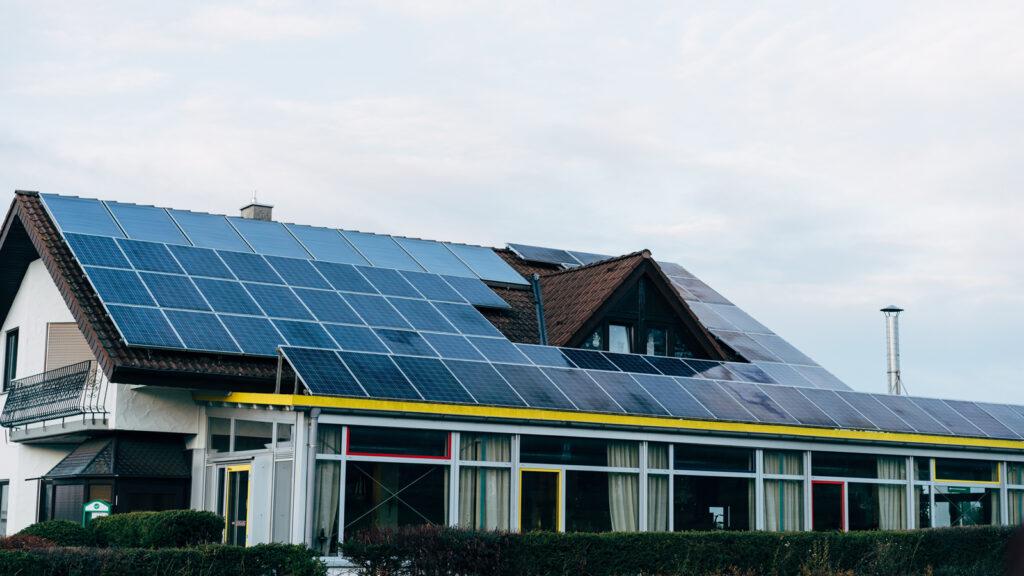
As Solar Energy Adoption accelerates throughout the globe, accurate solar power forecasting has become a critical requirement for energy companies, grid operators, and advanced energy applications. Several platforms now offer solar forecasting data and APIs, each with different strengths, methodologies, and target users.
In this article, I tried to provide a practical comparison of three solar forecasting solutions - Solar Forecast, Solcast, and SolarAnywhere. I would be focusing on their forecasting approach, data inputs, flexibility, and typical use cases.
Why Product Choice Matters in Solar Forecasting
Solar forecasting is not a one-size-fits-all problem. The accuracy and usefulness of a forecast depend on factors such as system size, geographic location, data availability, forecast horizon, and how the forecast is used (grid operations, storage optimization, EMS, or analytics).
Choosing the right forecasting platform affects Operational efficiency, Grid and energy management decisions, Storage and load optimization, Forecast accuracy at different time resolutions etc
Understanding how different platforms approach forecasting helps organizations align technology with their operational needs.
Overview of the Platforms
Solar Forecast
Solar Forecast is designed as a flexible rooftop solar forecast platform and API that focuses on system-level accuracy. It combines weather data, air quality, shading, and historical production data to generate forecasts tailored to individual solar installations. The platform emphasizes adaptability across residential, commercial, and advanced energy use cases such as EMS, VPP, and V2G solutions.
Solcast
Solcast is known for its global solar irradiance datasets and satellite-based forecasting. It provides solar radiation estimates and PV power forecasts across a wide geographic scale, serving both small installations and utility-scale solar plants. Solcast is widely used for regional and global-level solar resource assessment.
SolarAnywhere
SolarAnywhere focuses on long-term and operational solar resource data, often used for project development, performance assessment, and financial modeling. It provides historical, real-time, and forecast solar irradiance data and is commonly used by utilities, developers, and asset managers.
Forecasting Methodology & Data Inputs
For all the services mentioned earlier, I have tried to compile their methodology and data input sources.
Solar Forecast
- Uses weather data combined with system-specific inputs
- Incorporates air quality, temporary shading, and environmental losses
- Learns from actual production data using AI/ML-based model tuning
- Designed to improve accuracy at the individual system level
Solcast
- Primarily satellite-based solar irradiance modeling
- Strong coverage for global and regional forecasting
- Less dependent on site-specific production data
- Well-suited for large-area or portfolio-level analysis
SolarAnywhere
- Relies on satellite, ground measurements, and numerical weather models
- Strong historical datasets for long-term planning
- Commonly used for feasibility studies and performance benchmarking
- Focused more on resource assessment than adaptive system learning
Typical Use Cases
Solar Forecast is commonly used in scenarios where accurate, system-level forecasting is required for day-to-day operations. It supports residential and commercial solar installations that need frequent, high-resolution forecasts for energy management. The platform is also applied in advanced energy use cases such as Energy Management Systems, Virtual Power Plants, and Vehicle-to-Grid applications, where aligning solar generation with consumption, storage, and grid signals is critical. Real-time monitoring and production-versus-forecast analysis make it suitable for operational optimization rather than only long-term planning.
Solcast is typically used for regional or portfolio-level solar forecasting, where broad geographic coverage and consistent irradiance modeling are important. Utilities, energy traders, and large solar asset operators often rely on Solcast data to understand expected solar output across multiple sites. It is also widely used in research and academic environments, where standardized and globally consistent solar radiation datasets are required.
SolarAnywhere is most often applied in long-term planning and assessment workflows. Developers and asset managers use it for project feasibility studies, long-term energy yield estimation, and performance benchmarking. Its historical datasets and modeling approach make it particularly useful for financial analysis, risk assessment, and evaluating solar resource potential over extended time horizons.
Final Thoughts
Solar forecasting is becoming increasingly central to modern energy systems. As solar penetration grows, the value of accurate, flexible, and application-specific forecasts continues to rise.
While Solcast and SolarAnywhere offer strong solutions for global modeling and long-term assessment, platforms like Solar Forecast focus on bridging forecasting with real operational needs, enabling smarter energy decisions at the system level.
The right choice ultimately depends on how forecasts are used — not just how they are generated. Thank You my readers.

 Arabic
 Français
 Español
 Português
 Deutsch
 Türkçe
 Dutch
Dutch
 Italiano
 Russian
 Romaian