


Preparing Data for Annotation: Preprocessing Tips to Reduce Cost
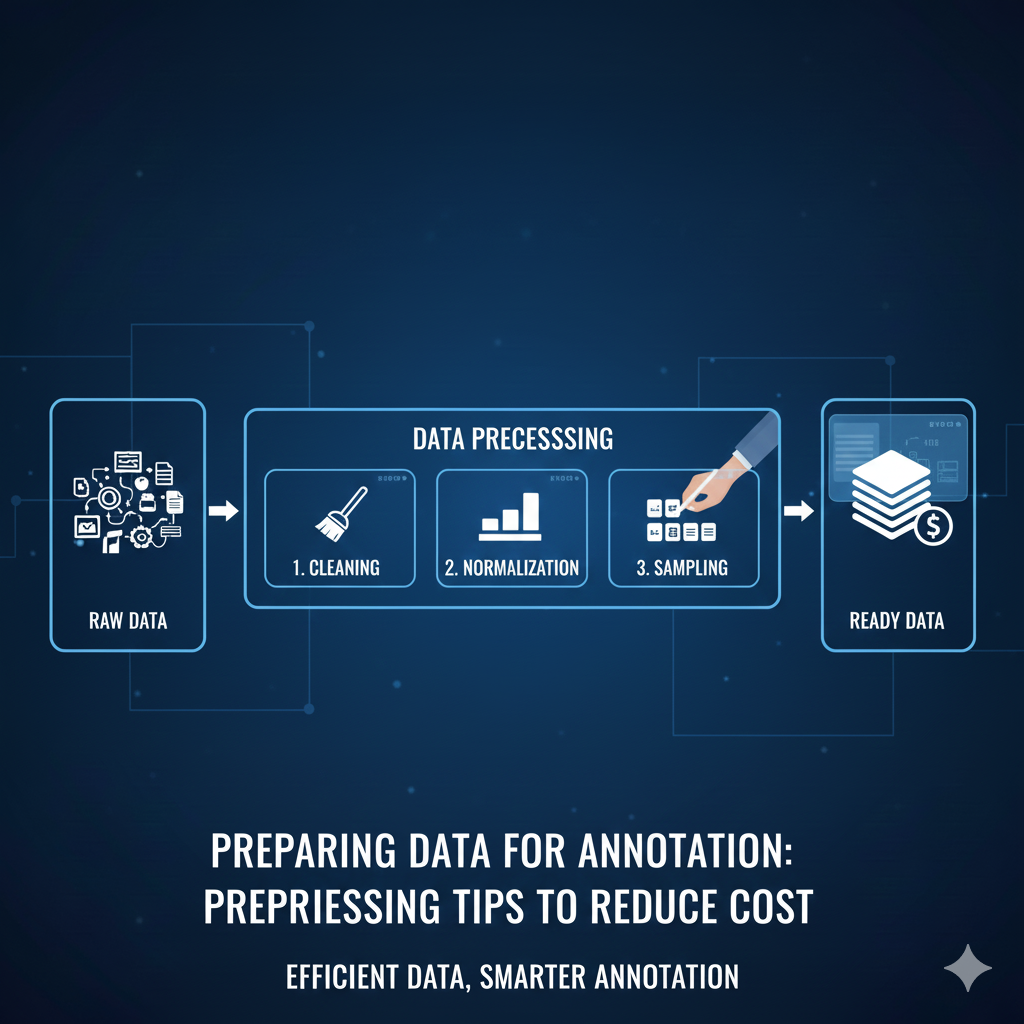
High-quality AI models are built on high-quality data—but the cost of creating that data often escalates long before annotation even begins. Many organizations underestimate how much inefficient, unstructured, or noisy data inflates annotation timelines and budgets. In reality, data preparation is one of the most effective levers for reducing data annotation costs without compromising accuracy or scalability.
For enterprises and AI teams working with a data annotation company or pursuing data annotation outsourcing, thoughtful preprocessing ensures that human effort is focused where it matters most. This article outlines practical, proven preprocessing strategies that help reduce annotation costs while improving downstream model performance.
Why Data Preparation Matters in Annotation Economics
Annotation costs are largely driven by volume, complexity, and ambiguity. When raw datasets contain duplicates, irrelevant samples, inconsistent formats, or unclear labels, annotators spend more time resolving issues that add no value to model learning.
From an outsourcing perspective, poor data readiness translates directly into:
-
Higher annotation hours
-
Increased quality assurance cycles
-
Rework due to inconsistent outputs
-
Longer project timelines
Leading AI teams recognize that preprocessing is not overhead—it is cost optimization. A disciplined data preparation pipeline can reduce total annotation effort by 20–40%, depending on the use case.
Step 1: Define Clear Annotation Objectives Before Preprocessing
Effective preprocessing starts with clarity. Before cleaning or transforming data, define:
-
The model’s learning objective
-
Target use cases and edge conditions
-
Required label granularity
-
Acceptable error thresholds
Without this alignment, teams risk over-preparing data or retaining samples that are irrelevant to the final task. Experienced data annotation outsourcing partners like Annotera work closely with clients to align preprocessing decisions with annotation guidelines and model objectives, ensuring no wasted effort.
Step 2: Remove Redundant and Low-Value Data
One of the fastest ways to reduce annotation cost is eliminating unnecessary data upfront.
Deduplication
Large datasets—especially from web scraping, sensors, or logs—often contain duplicates or near-duplicates. Annotating identical samples adds cost without increasing model performance.
Apply:
-
Hash-based deduplication for text and images
-
Similarity thresholds for embeddings
-
Frame sampling for video datasets
Relevance Filtering
Remove samples that do not contribute to the target task:
-
Off-topic text documents
-
Blurry or corrupted images
-
Videos with no actionable frames
By shrinking the dataset to only high-signal data, a data annotation company can focus human effort on meaningful labeling rather than noise.
Step 3: Standardize Formats and Structures
Inconsistent data formats slow annotation and increase error rates. Before outsourcing annotation, ensure that datasets are normalized and structured consistently.
Key preprocessing actions include:
-
Converting all files to uniform formats (e.g., JPEG, JSON, MP4)
-
Standardizing naming conventions and metadata fields
-
Normalizing text encodings and language formats
For data annotation outsourcing projects, standardized inputs significantly reduce onboarding time for annotators and improve throughput across distributed teams.
Step 4: Segment and Chunk Data for Efficient Labeling
Large, unsegmented data forces annotators to perform unnecessary context-switching. Pre-segmentation makes tasks faster and more accurate.
Examples:
-
Splitting long documents into sentence- or paragraph-level units
-
Extracting key frames from long videos
-
Cropping images around regions of interest using automated heuristics
This approach ensures that annotators are not spending time navigating irrelevant sections, which directly reduces annotation hours and cost.
Step 5: Use Automated Pre-Labeling—Strategically
Automation can reduce cost, but only when used correctly. Lightweight models, rules, or heuristics can generate pre-labels that human annotators then validate or correct.
Effective use cases include:
-
Named entity suggestions in text
-
Bounding box proposals for common objects
-
Sentiment polarity hints for reviews
The key is restraint. Overconfident or low-quality pre-labels increase correction time and frustration. A mature data annotation company applies pre-labeling only where model confidence is high and annotation guidelines are clear.
Step 6: Balance Dataset Distribution Before Annotation
Skewed datasets create inefficiencies and downstream bias. Preprocessing should ensure balanced representation across:
-
Classes and categories
-
Geographies and languages
-
Lighting, angles, and environments
For example, overrepresentation of a single class forces annotators to repeatedly label similar samples, while rare edge cases remain under-labeled and require later rework.
By balancing datasets upfront, data annotation outsourcing projects achieve better coverage with fewer total samples.
Step 7: Enrich Data with Contextual Metadata
Annotators perform best when context is available. Metadata reduces ambiguity and speeds decision-making.
Useful metadata includes:
-
Source information
-
Timestamps and locations
-
Sensor parameters
-
Domain-specific tags
Providing structured metadata allows annotators to make confident labeling decisions quickly, reducing clarification cycles and quality checks.
Step 8: Validate Data Readiness Before Annotation Begins
Before handing datasets to a data annotation company, conduct a data readiness audit:
-
Spot-check samples for clarity and consistency
-
Validate schema compliance
-
Test annotation guidelines on a small pilot set
This step identifies issues early, when fixes are inexpensive. Skipping readiness validation often leads to mid-project changes that disrupt workflows and inflate costs.
Step 9: Align Preprocessing with Annotation Guidelines
Preprocessing and annotation guidelines must be designed together. For example:
-
Text normalization should not remove sentiment cues
-
Image cropping should not exclude contextual objects
-
Audio cleaning should preserve accents and tone
At Annotera, preprocessing pipelines are built in parallel with annotation playbooks, ensuring that cleaning and transformation support—not undermine—labeling accuracy.
Step 10: Partner with an Annotation Provider That Understands Cost Engineering
Not all vendors approach annotation with cost efficiency in mind. A strategic data annotation outsourcing partner evaluates:
-
Which preprocessing steps should be done client-side
-
Which can be handled internally at scale
-
Where automation provides ROI versus risk
Annotera combines preprocessing expertise, domain-aware annotation workflows, and enterprise-grade quality assurance to help clients control costs without sacrificing model performance.
Conclusion: Preprocessing Is the First Cost-Control Lever
Preparing data for annotation is not a technical afterthought—it is a strategic decision that directly impacts budget, timelines, and model outcomes. By removing noise, standardizing inputs, segmenting intelligently, and aligning preprocessing with annotation goals, organizations can significantly reduce annotation effort while improving quality.
For enterprises working with a trusted data annotation company, disciplined data preparation transforms annotation from a cost center into a scalable advantage. With the right preprocessing strategy and the right data annotation outsourcing partner, teams can build better AI—faster, cleaner, and more cost-effectively.
Looking to reduce annotation costs without compromising quality?
Annotera helps AI teams design preprocessing and annotation pipelines that scale efficiently, deliver accuracy, and maximize ROI across complex datasets.

 Arabic
 Français
 Español
 Português
 Deutsch
 Türkçe
 Dutch
Dutch
 Italiano
 Russian
 Romaian