


Real-Estate Photo Editing for Auction Sites: Fast 2-Hour Turnaround Workflow
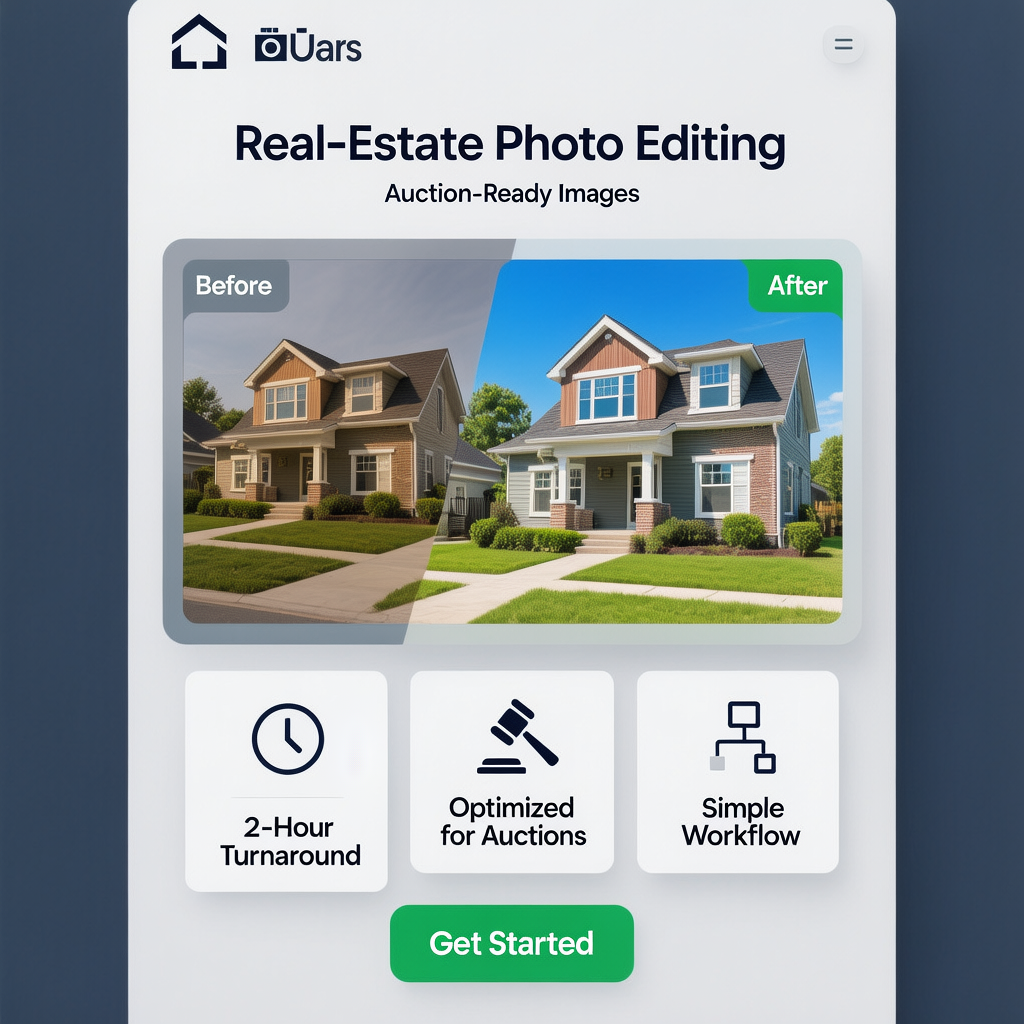
Speed is everything in real-estate auctions. Unlike traditional listings, auction properties often have tight timelines, limited marketing windows, and high buyer competition. In this fast-paced environment, professional visuals must be delivered quickly—without sacrificing accuracy or quality. This is where a 2-hour real-estate photo editing workflow becomes essential.
From property editing to architecture retouching, auction-focused photo editing requires efficiency, consistency, and precision. In this blog, we’ll break down a proven fast-turnaround workflow and explain how professional techniques like Hotel photo editing, manual blending, and single exposure editing are adapted for auction listings.
Why Photo Editing Matters for Auction Listings
Auction buyers rely heavily on photos to make fast decisions. Clean, accurate visuals help:
-
Build trust
-
Highlight property condition
-
Increase click-through rates
-
Encourage competitive bidding
Unlike luxury listings, auction imagery must prioritize clarity over creativity. This makes streamlined property retouching critical.
Unique Challenges of Auction Property Editing
Auction properties often come with challenges such as:
-
Limited prep time
-
Minimal staging
-
Inconsistent lighting
-
Unoccupied or distressed interiors
A fast and effective editing workflow must handle these issues while delivering professional results suitable for online auction platforms.
Step 1: Image Selection & File Preparation (0–15 Minutes)
Speed starts with smart preparation.
Editors begin by:
-
Sorting images
-
Removing duplicates
-
Selecting best angles
Images are prepared in RAW format for flexible single exposure editing or quick HDR editing when needed. This stage sets the foundation for efficient property editing.
Step 2: Exposure Correction & White Balance (15–35 Minutes)
At this stage, editors focus on:
-
Global exposure balance
-
Neutral white balance
-
Basic contrast correction
For auction listings, single exposure editing is often preferred to save time—provided the lighting is usable. When dynamic range is extreme, quick HDR editing is applied to maintain detail.
Step 3: Architecture Editing & Retouching (35–60 Minutes)
Architecture Editing
Clean architectural lines are critical for credibility. Architecture editing includes:
-
Vertical correction
-
Perspective alignment
-
Lens distortion fixes
These adjustments ensure properties look structurally accurate.
Architecture Retouching
Light architecture retouching removes:
-
Sensor dust
-
Minor distractions
-
Edge inconsistencies
This is especially important for commercial architecture editing, where professionalism matters.
Step 4: Property Retouching for Auction Clarity (60–85 Minutes)
Auction listings require honest representation. Property retouching focuses on:
-
Removing clutter
-
Cleaning surfaces
-
Enhancing visibility
Over-editing is avoided to maintain trust. The goal is clarity, not luxury.
Step 5: Manual Blending for Problem Areas (85–105 Minutes)
When windows or bright skies overpower interiors, manual blending is selectively applied. This technique:
-
Restores window detail
-
Balances exposure
-
Keeps edits natural
Manual blending is faster than full composite work but delivers cleaner results than automated HDR.
HDR Editing vs Speed Constraints
While HDR editing helps manage difficult lighting, it must be used carefully in fast workflows. Editors often:
-
Limit HDR to 2–3 exposures
-
Apply quick tone correction
-
Avoid over-processing
This ensures speed without compromising quality.
Flambient Editing: When Is It Used?
Flambient editing is rarely used in auction workflows due to time constraints. However, it may be applied selectively for:
-
High-value auction properties
-
Model homes
-
Mixed-use developments
Even limited flambient adjustments can improve clarity when time allows.
Commercial & High-End Auction Properties
Commercial Real Estate Editing
Auction platforms often feature offices, warehouses, and retail spaces. Commercial real estate editing prioritizes:
-
Space clarity
-
Structural accuracy
-
Neutral color balance
This helps investors evaluate properties quickly.
High End Commercial Editing
For premium auction assets, high end commercial editing may include:
-
Enhanced tonal balance
-
Cleaner window views
-
Polished architectural details
High End Real Estate Retouching
Luxury auction properties require careful handling. High end real estate retouching maintains elegance while respecting time limits.
Hotel & Resort Auction Listings
Hotel Photo Editing & Hotel Retouching
Auctioned hotels benefit from fast hotel photo editing that highlights:
-
Room layout
-
Public spaces
-
Exterior appeal
Hotel retouching remains subtle to ensure authenticity.
Resort Photo Editing & Resort Retouching
For resort auctions, editors focus on:
-
Clear outdoor views
-
Balanced skies
-
Clean interiors
Efficient resort photo editing supports faster buyer evaluation.
Virtual Staging in Auction Photography
Virtual staging is used sparingly for auctions. When applied, it:
-
Helps buyers visualize space
-
Supports vacant properties
-
Must be clearly disclosed
Quick staging presets allow editors to include staging without delaying delivery.
Quality Control & Final Export (105–120 Minutes)
Before delivery, images undergo:
-
Color consistency checks
-
Sharpness review
-
Platform-specific sizing
Files are optimized for auction portals, ensuring fast load times and clean presentation.
Why a 2-Hour Workflow Works
A fast editing process benefits auction sellers by:
-
Meeting strict deadlines
-
Improving listing quality
-
Reducing time-to-market
By combining single exposure editing, selective HDR editing, and targeted manual blending, editors deliver reliable results under pressure.
Best Practices for Auction Photo Editing
-
Prioritize clarity over style
-
Avoid heavy color grading
-
Maintain ethical editing standards
-
Focus on accuracy and speed
These principles ensure trust and compliance.
Final Thoughts
Real-estate auction listings demand speed, accuracy, and professionalism. A structured 2-hour photo editing workflow makes it possible to deliver clean, market-ready visuals without cutting corners.
From architecture editing and property retouching to commercial real estate editing, hotel photo editing, and resort retouching, efficient workflows help auction properties stand out while staying honest and compliant. When combined with selective HDR editing, manual blending, and limited virtual staging, auction imagery becomes a powerful tool for faster bidding and better results.
In auctions, time is money—and smart photo editing makes every minute count.

 Arabic
 Français
 Español
 Português
 Deutsch
 Türkçe
 Dutch
Dutch
 Italiano
 Russian
 Romaian