


PVC vs TPO vs EPDM RV Roof
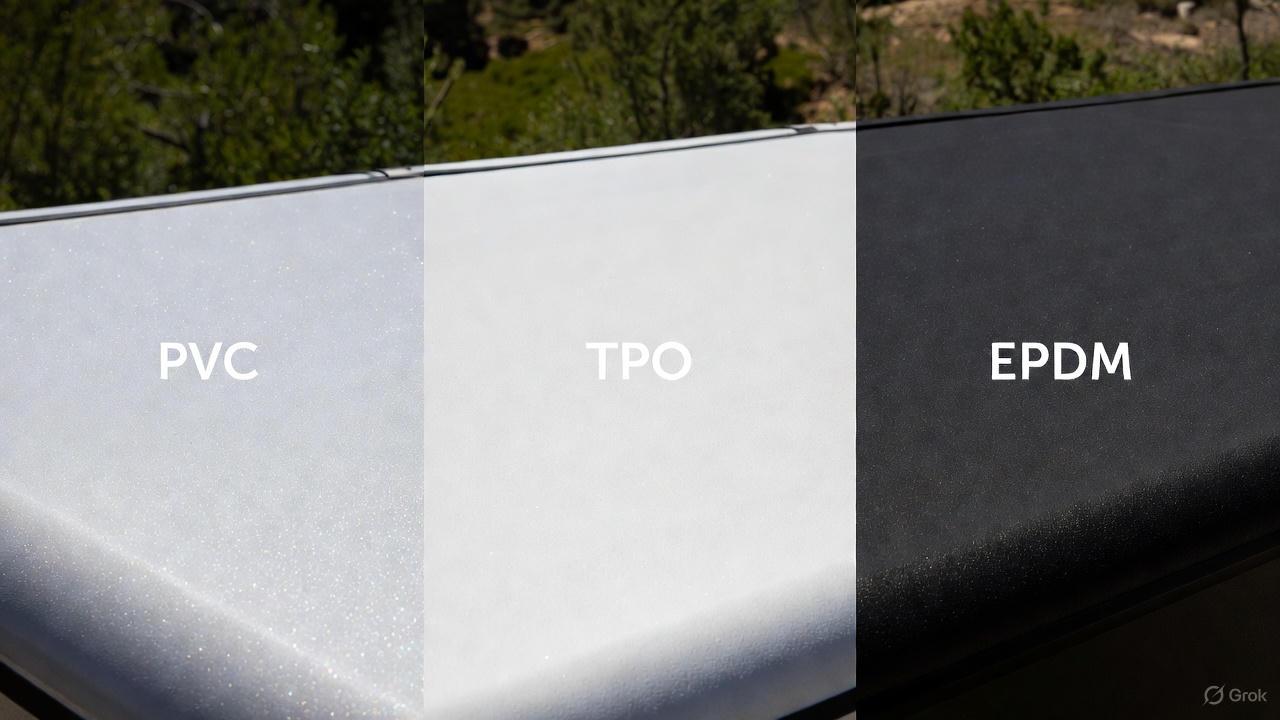
PVC vs TPO vs EPDM RV Roof: Comparison, Costs, and Best Choice for RVs
I’ve worked on RV roofs in campgrounds, storage yards, and roadside repair bays for years.
Sunburned membranes. Soft spots. Mystery leaks that only show up at 2 a.m. in a thunderstorm.
The pvc vs tpo vs epdm rv roof decision matters more than most RV owners realize.
Why RV Roofs Are a Different Animal
RV roofs aren’t like house roofs.
They flex while driving.
They bake under constant UV.
They get walked on, ignored, and then blamed.
That’s why choosing between materials isn’t about trends.
It’s about survival.
Understanding Rubber Roof Types on RVs
When people talk about RV rubber roofs, they usually mean three materials.
These are the main rubber roof types you’ll actually encounter:
-
EPDM
-
TPO
-
PVC
They all look similar from ground level.
They behave very differently up close.
Types of Rubber Roofing Used on RVs
In the broader roofing world, there are many types of rubber roofing.
But for RVs, manufacturers stick to membranes that are lightweight and flexible.
That’s why EPDM, TPO, and PVC dominate the conversation.
EPDM RV Roofs: The Old Reliable
EPDM is the most common RV roof I’ve repaired.
It’s a true rubber membrane.
Black underneath, usually white on top.
From experience, EPDM is forgiving.
It stretches instead of cracking.
Why RV Manufacturers Still Use EPDM
EPDM works because it’s simple.
-
Easy to install
-
Easy to patch
-
Flexible in cold weather
I’ve patched EPDM roofs in campground parking lots with basic tools.
That’s a real advantage on the road.
Where EPDM Falls Short
EPDM absorbs heat.
In desert climates, I’ve measured interior temps noticeably higher under EPDM.
It also chalks over time, leaving white residue down the sides of RVs.
Not dangerous—but annoying.
TPO RV Roofs: The Middle Option
TPO sits between EPDM and PVC in performance and price.
It’s often marketed as rubber, though technically it’s a thermoplastic.
In practice, it behaves like a hybrid.
Real-World TPO Performance on RVs
TPO reflects heat better than EPDM.
I’ve had RV owners report cooler interiors after switching.
That said, early TPO formulas had issues.
I’ve replaced brittle TPO roofs that cracked far too soon.
What to Watch for With TPO
Modern TPO is better—but quality varies by manufacturer.
Cheaper TPO tends to shrink and split at seams.
Good TPO holds up well if seams are welded correctly.
Installation quality matters more here than brand names.
PVC RV Roofs: The Premium Choice
PVC is the least common RV roof—but often the best.
It’s flexible, heat-welded, and chemically resistant.
When clients ask for “the longest-lasting option,” PVC is usually my answer.
Why PVC Excels on RVs
From firsthand repairs and installs, PVC handles:
-
UV exposure
-
Standing water
-
Tree sap and road grime
I’ve serviced PVC roofs over 15 years old that still had perfect seams.
That’s rare in RVs.
Downsides of PVC on RVs
PVC costs more.
Repairs require heat welding, which limits roadside fixes.
If you’re a full-time RVer who boondocks often, that’s worth considering.
PVC vs EPDM Roofing: RV Perspective
The pvc vs epdm roofing debate usually comes down to use style.
EPDM is easier to repair anywhere.
PVC lasts longer with less maintenance.
Weekend campers lean EPDM.
Full-timers lean PVC.
TPO vs EPDM vs PVC: Side-by-Side Reality
The tpo vs epdm vs pvc comparison has no universal winner.
Each shines in different conditions.
From my repair logs, most failures come from poor installation—not material choice.
PVC vs Rubber Roofing: Clearing Up Confusion
People often ask about pvc vs rubber roofing.
PVC isn’t rubber in the traditional sense.
It’s a plastic membrane with rubber-like flexibility.
That distinction explains why PVC welds instead of glues—and why seams are stronger.
Cost Comparison for RV Roof Materials
Prices fluctuate, but here’s what I see consistently:
-
EPDM: Lowest upfront cost
-
TPO: Mid-range pricing
-
PVC: Highest initial investment
Over time, PVC often costs less due to fewer repairs.
EPDM costs less to fix but needs it more often.
Installation Matters More Than Material
I can’t stress this enough.
A poorly installed PVC roof will fail faster than a well-installed EPDM roof.
Seams, flashing, and edge termination make or break RV roofs.
Case Study From the Road
I repaired two identical RVs last year.
One had EPDM, one had PVC.
Both were ten years old.
The EPDM needed seam work and patches.
The PVC needed nothing but cleaning.
Same age.
Very different outcomes.
Climate Plays a Huge Role
Cold climates favor EPDM because it stays flexible.
Hot, sunny regions favor TPO or PVC for heat reflection.
If you chase weather seasonally, durability matters more than reflectivity.
Maintenance Expectations You Should Have
No RV roof is maintenance-free.
You should:
-
Inspect seams twice a year
-
Clean the membrane regularly
-
Reseal penetrations as needed
Most roof failures I see started as ignored small issues.
Which RV Roof Is Best for You?
Ask yourself:
-
Do you travel full-time or occasionally?
-
Do you need easy roadside repairs?
-
Are you parked in high UV areas?
Those answers matter more than brand brochures.
Final Thoughts From an RV Roof Tech
The pvc vs tpo vs epdm rv roof decision isn’t about what’s “best.”
It’s about what fits your travel style, climate, and tolerance for maintenance.
Understanding rubber roof types, comparing pvc vs epdm roofing, and knowing where pvc vs rubber roofing truly differs will save you money—and leaks—down the road.
From years of hands-on repairs, I can say this confidently:
Choose the right material, install it properly, and your RV roof will quietly do its job while you enjoy the ride.

 English
 Arabic
 Français
 Español
 Português
 Deutsch
 Dutch
Dutch
 Italiano
 Russian
 Romaian