In the interconnected world of retail supply chains, the humble gondola rack is a globally traded commodity. For manufacturers, exporters, importers, and logistics professionals, accurately classifying this essential store furniture under the Harmonized System (HS) is a critical step that determines customs duties, impacts trade compliance, and affects the total landed cost. Misclassification can lead to costly delays, penalties, and supply chain disruptions. This guide demystifies the HS code for gondola racks, providing clarity for seamless international trade.
Understanding the Harmonized System (HS)
The Harmonized System is a standardized numerical method, administered by the World Customs Organization (WCO), for classifying traded products. It is used by over 200 countries as the basis for their customs tariffs and for collecting international trade statistics. An HS code is typically a 6-digit number, with countries adding additional digits for further national specificity (e.g., a 8-digit code in the United States, a 10-digit code in India).
The primary principle of classification is based on a product's material composition, form, and function. For gondola racks, this means asking: Is it metal or wood? Is it movable furniture? Is it designed for commercial use?
The Primary HS Code for Gondola Racks: 9403.20
The vast majority of metal gondola racks used in retail fall under one clear classification:
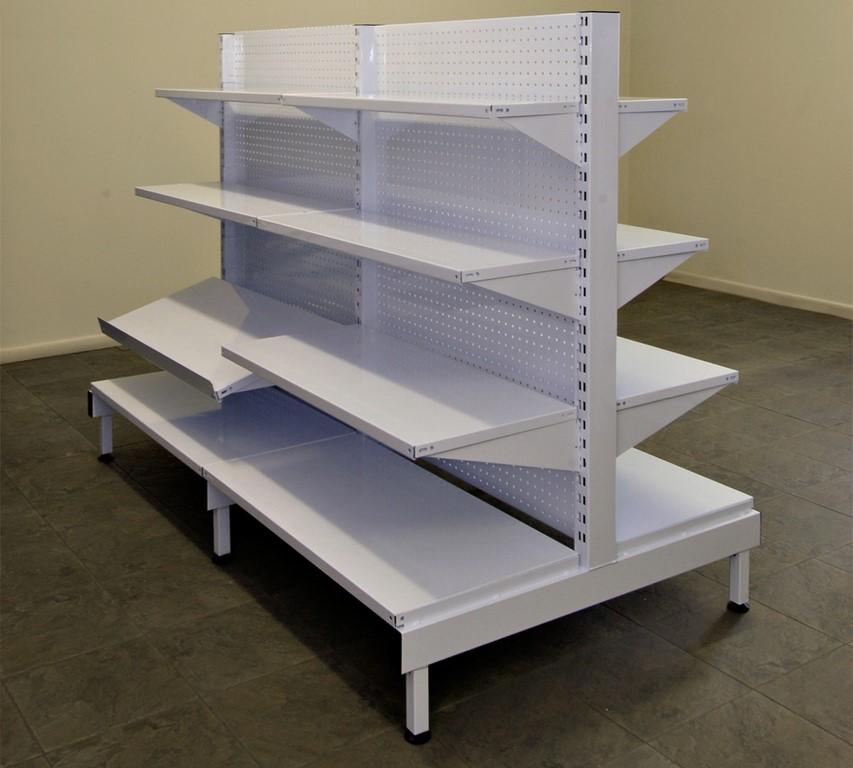
HS Code 9403.20 - "Other metal furniture" of a kind used in offices or for commercial purposes.
Let's break down this code:
-
Chapter 94: "Furniture; bedding, mattresses, mattress supports, cushions and similar stuffed furnishings; lamps and lighting fittings, not elsewhere specified or included; illuminated signs, illuminated nameplates and the like; prefabricated buildings." This chapter is home to all types of furniture.
-
Heading 9403: "Other furniture and parts thereof." This covers furniture not specified in preceding headings (like medical or barber chairs).
-
Subheading 9403.20: "Other metal furniture." This specifies furniture made primarily of metal.
The critical explanatory notes from the WCO clarify that heading 9403 includes furniture "for general use" in sectors like commerce (shops, stores). Therefore, a freestanding, modular metal shelving system designed for product display in a retail environment is unequivocally "metal furniture of a kind used for commercial purposes."
Key Considerations for Accurate Classification
-
Material is Paramount: The "metal furniture" designation applies to units where the primary structural frame (uprights, braces) is made of steel, aluminum, or other metal. Even if the shelves are particle board, the overall character is defined by the metal skeleton.
-
State of Import: Gondola racks are almost always imported fully assembled or knocked-down (KD) in sets. Both states generally fall under the same 9403.20 code. Parts imported separately (e.g., a shipment of only upright posts) may be classified under 9403.90 - "Parts of furniture," though they may also be classified under a code for steel structures.
-
Exceptions and Variations:
-
Wooden Gondolas: If a display unit is constructed primarily of wood, it would typically fall under 9403.30 - "Other wood furniture."
-
Wire Mesh Racks: Units made entirely of wire mesh (with no structural laminate or wood shelves) still have a metal framework and are classified under 9403.20.
-
Highly Specialized Systems: Extremely heavy-duty industrial racking designed more for warehouse storage than in-store merchandising might be argued to fall under HS Code 7308.90 as "Structures and parts of structures, of iron or steel." However, the standard retail gondola is firmly in the furniture category.
Why Getting the HS Code Right Matters
The financial and operational implications of correct HS code application are significant:
-
Duty Rates: The assigned code determines the tariff rate applied by the importing country. An incorrect code could result in paying higher duties or triggering anti-dumping taxes.
-
Trade Compliance: Errors can lead to customs audits, seizures, fines, and loss of trusted trader status (e.g., AEO - Authorized Economic Operator).
-
Shipping & Logistics: The HS code is required on commercial invoices, packing lists, and the bill of lading. Inaccuracies cause documentation mismatches, leading to port holds and delays.
-
Trade Statistics & Policy: Governments use this data to track imports/exports. Misclassification distorts market intelligence for businesses and policymakers.
Best Practices for Importers and Exporters
-
Consult the Official Text: Always refer to the latest customs tariff schedules of the specific country you are importing into or exporting from.
-
Leverage Binding Rulings: For high-value or recurring shipments, apply for an Advanced Ruling or Binding Tariff Information (BTI) from the destination country's customs authority. This provides a legally binding classification decision.
-
Provide Detailed Product Descriptions: Assist your customs broker with precise information: technical drawings, materials breakdown (e.g., "cold-rolled steel uprights with laminate shelves"), photos, and clear statements of commercial use.
-
Work with a Licensed Customs Broker: A professional broker is an invaluable partner. They navigate national subheadings, understand regional trade agreements, and ensure documentation is flawless.
Conclusion
For businesses trading gondola racks internationally, the HS code 9403.20 - "Other metal furniture" is the essential passport for these goods. Treating classification not as an administrative afterthought but as a fundamental component of your trade strategy ensures compliance, optimizes costs, and keeps your retail infrastructure moving smoothly across borders. In the precise language of global trade, a gondola rack is not merely shelving; it is commercial metal furniture, and its code is the key to its journey.
FAQ: Gondola Rack HS Codes
1. Is the HS code 9403.20 the same in every country?
The first 6 digits (9403.20) are universal under the WCO's Harmonized System. However, individual countries add extra digits (often 2, 4, or more) for further national detail. For example, the code in the USA might be 9403.20.0010, while in the EU it might be 9403.20.00. The core classification is the same, but you must always use the full, nationally specified code for your shipment's destination.
2. How do I classify a gondola rack that is shipped disassembled (Knocked-Down)?
Knocked-down (KD) gondola racks shipped in sets intended for assembly into a complete unit are still classified as furniture under 9403.20. The condition (assembled or not) does not generally change its essential character. However, a shipment of loose, non-set spare parts (like only replacement shelves) might be classified under 9403.90 (Parts). It's crucial to describe the shipment accurately.
3. What about gondolas with integrated lighting or electronic price tag systems?
The primary function remains display furniture. Integrated lighting or simple electronic components do not typically change the classification from 9403.20. However, if the unit incorporates a complex, integrated digital display system where the primary function could be argued to be electronic signage, consult closely with a customs broker. The general rule is to classify by the product's primary material and essential character.
4. What are the consequences of using an incorrect HS code?
The risks are serious and include:
-
Financial: Payment of back duties with interest, or penalties/fines.
-
Operational: Customs holds, cargo seizures, and significant supply chain delays.
-
Compliance: Increased scrutiny on future shipments, potential loss of bonding privileges, and damage to your business's reputation with customs authorities.
5. Who is ultimately responsible for the correct HS code on a shipment?
The legal responsibility lies with the importer of record (the entity filing the customs entry in the destination country). While exporters should provide an accurate code on commercial documents, the importer and their authorized customs broker must verify and use the code that complies with their country's tariff laws. Due diligence is legally required.




 Arabic
 Français
 Español
 Português
 Deutsch
 Türkçe
 Dutch
Dutch
 Italiano
 Russian
 Romaian