


Real World Asset Tokenization Boom: How It’s Reshaping Financial Markets
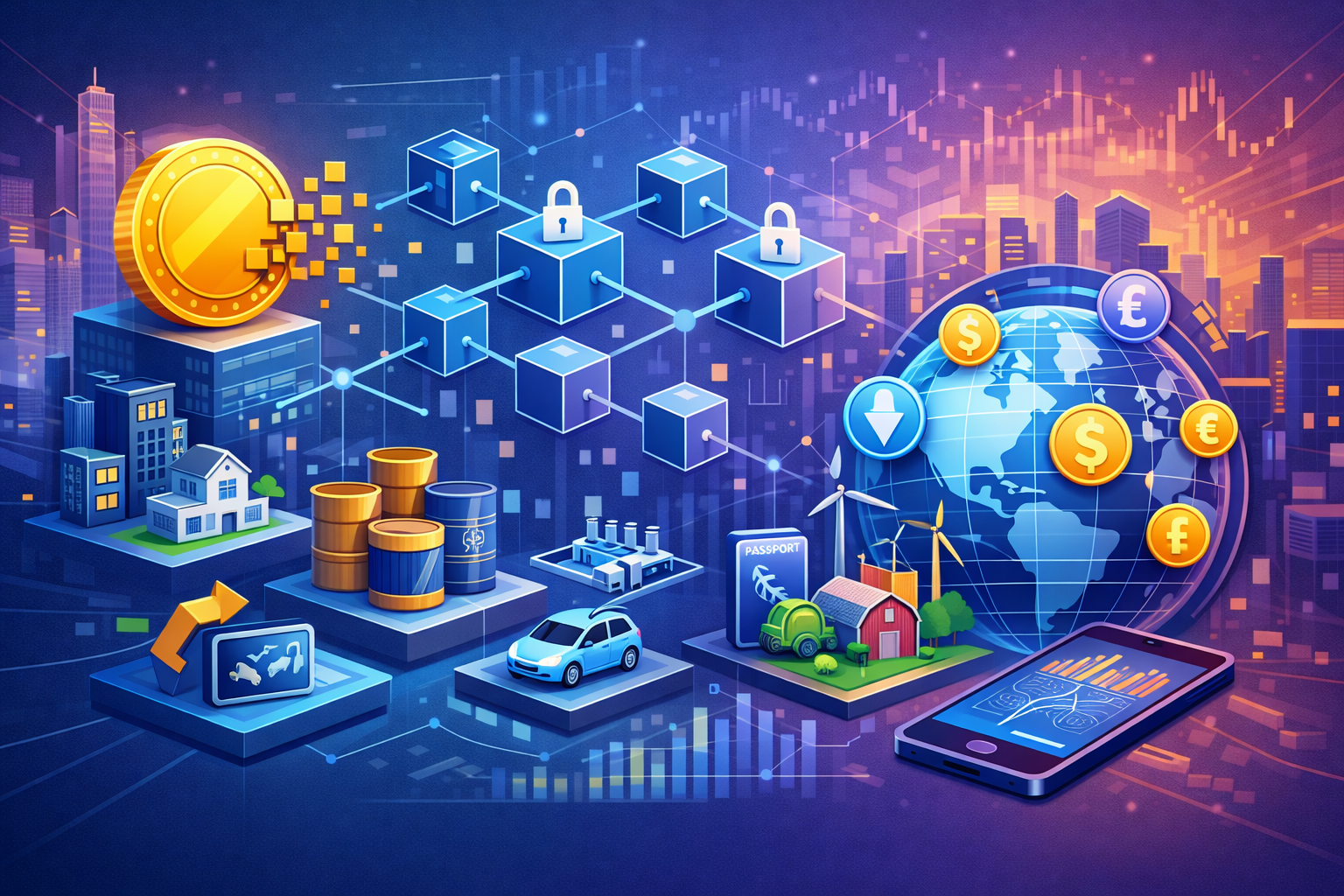
The global financial system is undergoing a structural transformation that is quietly redefining how assets are owned, traded, and valued. At the center of this shift is Real World Asset tokenization, a model that converts physical and traditionally illiquid assets into blockchain based digital tokens. This approach is no longer experimental. It is rapidly moving into the core of modern finance, reshaping capital markets, investment access, and institutional strategies worldwide.
Real World Asset tokenization represents a convergence of blockchain infrastructure, financial engineering, and regulatory innovation. By allowing tangible and income generating assets to exist as programmable digital representations, tokenization is addressing long standing inefficiencies in financial markets. From real estate and commodities to private credit and infrastructure, assets that once required large capital commitments and long settlement cycles are becoming more liquid, transparent, and globally accessible.
This boom is not driven by hype alone. It is being fueled by real economic demand, institutional participation, and a growing need for alternative investment models that can scale across borders. As traditional finance collides with decentralized technologies, Real World Asset tokenization is emerging as one of the most impactful evolutions of the financial system in decades.
Understanding Real World Asset Tokenization
At its core, Real World Asset tokenization is the process of converting ownership rights of a physical or off chain financial asset into a digital token on a blockchain. Each token represents a verifiable claim on the underlying asset and is governed by smart contracts that define ownership, transferability, and compliance rules.
Unlike purely digital assets, Real World Assets derive their value from tangible or legally enforceable instruments. These can include property, bonds, invoices, commodities, royalties, carbon credits, and even fine art. Tokenization does not change the nature of the asset itself. Instead, it modernizes how the asset is represented, traded, and managed.
Key characteristics of tokenized Real World Assets include:
• Fractional ownership that allows assets to be divided into smaller investment units
• On chain settlement that reduces delays and intermediaries
• Programmable compliance embedded directly into asset transactions
• Transparent ownership records that are immutable and auditable
These features are redefining how financial markets operate by removing friction that has existed for decades.
Why the Tokenization Boom Is Happening Now
The surge in Real World Asset tokenization is not accidental. It is the result of several converging forces reshaping global finance.
First, financial markets are facing a liquidity paradox. While trillions of dollars exist globally, access to high quality assets remains limited for most investors. Tokenization unlocks trapped capital by enabling fractional participation in assets that were previously reserved for institutions or high net worth individuals.
Second, blockchain infrastructure has matured. Scalability, security, and interoperability have improved significantly, making it feasible to handle real world financial transactions at scale. Custody solutions, identity layers, and smart contract standards have evolved to meet enterprise requirements.
Third, regulatory frameworks are becoming clearer. Jurisdictions across the world are defining how tokenized assets can operate within existing legal structures. This regulatory clarity is giving institutions the confidence to participate in tokenization initiatives.
Finally, investor behavior is changing. There is growing demand for alternative assets, yield generating instruments, and transparent investment structures. Real World Asset tokenization aligns perfectly with these preferences by offering diversification, efficiency, and global reach.
How Tokenization Is Reshaping Market Structure
Traditional financial markets rely heavily on intermediaries such as brokers, custodians, clearing houses, and registrars. Each layer adds cost, time, and complexity. Tokenization compresses this stack by embedding many of these functions directly into blockchain based systems.
Settlement cycles that once took days can now occur in near real time. Ownership transfers that required manual reconciliation are now executed through smart contracts. Corporate actions such as interest payments or revenue distribution can be automated with precision.
This shift is leading to structural changes in how markets function:
• Reduced operational costs for issuers and investors
• Faster capital formation and asset deployment
• Greater transparency in pricing and ownership
• Increased competition among financial service providers
As tokenized markets grow, they are beginning to operate parallel to traditional systems, with the potential to eventually merge into a unified digital financial infrastructure.
Democratizing Access to High Value Assets
One of the most profound impacts of Real World Asset tokenization is its ability to democratize investment access. Historically, assets like commercial real estate, private equity, and infrastructure projects were accessible only to a narrow group of investors due to high minimum investment thresholds and complex legal structures.
Tokenization changes this dynamic by enabling fractional ownership. A single asset can be divided into thousands or even millions of tokens, each representing a proportional share of ownership or cash flow rights. This allows smaller investors to participate in opportunities that were once out of reach.
Democratization also extends beyond capital size. Geographic barriers are reduced as tokenized assets can be accessed globally, subject to compliance rules. This opens financial markets to a broader investor base and creates more inclusive capital ecosystems.
Liquidity Transformation in Traditionally Illiquid Markets
Illiquidity has long been a defining characteristic of Real World Assets. Selling a property, private loan, or infrastructure stake often involves lengthy processes, high transaction costs, and limited buyer pools. Tokenization introduces new liquidity mechanisms by enabling secondary market trading of asset tokens.
While tokenization does not eliminate all liquidity constraints, it significantly improves flexibility. Investors can exit positions partially rather than selling entire assets. Market pricing becomes more dynamic as supply and demand are reflected in token trades.
Over time, this liquidity transformation is expected to:
• Reduce risk premiums associated with illiquid assets
• Improve capital efficiency for asset owners
• Enable more accurate asset valuation
• Attract new classes of investors seeking tradable alternatives
As liquidity deepens, tokenized markets may begin to rival traditional exchanges in terms of activity and participation.
Institutional Adoption and Strategic Shifts
The Real World Asset tokenization boom is being reinforced by increasing institutional involvement. Asset managers, banks, and financial infrastructure providers are exploring tokenization not as a disruption but as a strategic evolution.
Institutions see tokenization as a way to modernize legacy systems, reduce operational risk, and unlock new revenue streams. By issuing tokenized versions of traditional products, they can reach new investors while maintaining regulatory compliance.
Tokenized funds, bonds, and credit instruments are already gaining traction in institutional portfolios. These assets offer programmable features such as automated compliance checks and real time reporting, which align with institutional governance requirements.
This institutional momentum is critical. It signals that tokenization is moving beyond niche use cases and becoming a foundational layer of future financial markets.
Risk Management and Transparency Improvements
Another transformative aspect of Real World Asset tokenization is enhanced transparency. Blockchain based records provide a single source of truth for ownership, transaction history, and asset performance. This reduces information asymmetry and strengthens trust among market participants.
Risk management also benefits from tokenization. Smart contracts can enforce rules around collateralization, margin requirements, and cash flow distribution. This reduces human error and improves consistency in asset management.
Additionally, real time data availability enables better monitoring of portfolio risk and market conditions. Investors can make more informed decisions based on accurate and up to date information.
Regulatory Evolution and Compliance Integration
Regulation is often seen as a barrier to innovation, but in the case of Real World Asset tokenization, it is becoming an enabler. Regulators are recognizing the potential of tokenization to improve transparency, reduce fraud, and enhance market integrity.
Modern tokenization platforms are designed with compliance in mind. Identity verification, transaction monitoring, and jurisdictional restrictions can be built directly into smart contracts. This allows assets to move freely within defined regulatory boundaries.
As regulatory frameworks continue to evolve, tokenized markets are likely to benefit from clearer standards and broader acceptance. This will further accelerate adoption and integration with traditional financial systems.
The Impact on Global Capital Flows
Real World Asset tokenization is also reshaping how capital moves across borders. By lowering barriers to entry and reducing friction in asset transfer, tokenization enables more efficient global capital allocation.
Investors can diversify across regions and asset classes without navigating complex cross border processes. Issuers can tap into international capital pools with greater ease and speed.
This globalization of investment has the potential to balance capital distribution, support emerging markets, and create more resilient financial ecosystems.
Challenges That Will Shape the Next Phase
Despite its momentum, Real World Asset tokenization is not without challenges. Legal enforceability, asset custody, valuation standards, and interoperability remain areas that require continued development.
Market education is also critical. Investors and issuers must understand how tokenized assets function, how risks are managed, and how value is generated over time.
Infrastructure fragmentation poses another challenge. As multiple platforms and standards emerge, ensuring seamless interaction between systems will be essential for scalability.
However, these challenges are part of any transformative shift. The pace of innovation suggests that solutions will continue to emerge as adoption grows.
The Future of Financial Markets in a Tokenized World
The Real World Asset tokenization boom is not a temporary trend. It represents a fundamental rethinking of how financial markets operate. By bridging physical assets with digital infrastructure, tokenization is creating a more efficient, inclusive, and transparent financial system.
In the coming years, tokenized assets are expected to coexist with traditional instruments, gradually becoming the preferred format for issuance and trading. Financial markets will become more programmable, more global, and more accessible.
As this transformation unfolds, participants who understand and embrace Real World Asset tokenization will be better positioned to navigate the future of finance. The boom we are witnessing today is only the beginning of a broader shift that will redefine asset ownership and capital markets for generations to come.
 Deutsch
 English
 Arabic
 Français
 Español
 Português
 Türkçe
 Dutch
Dutch
 Italiano
 Russian
 Romaian