


Food Delivery App Development Trends for 2026
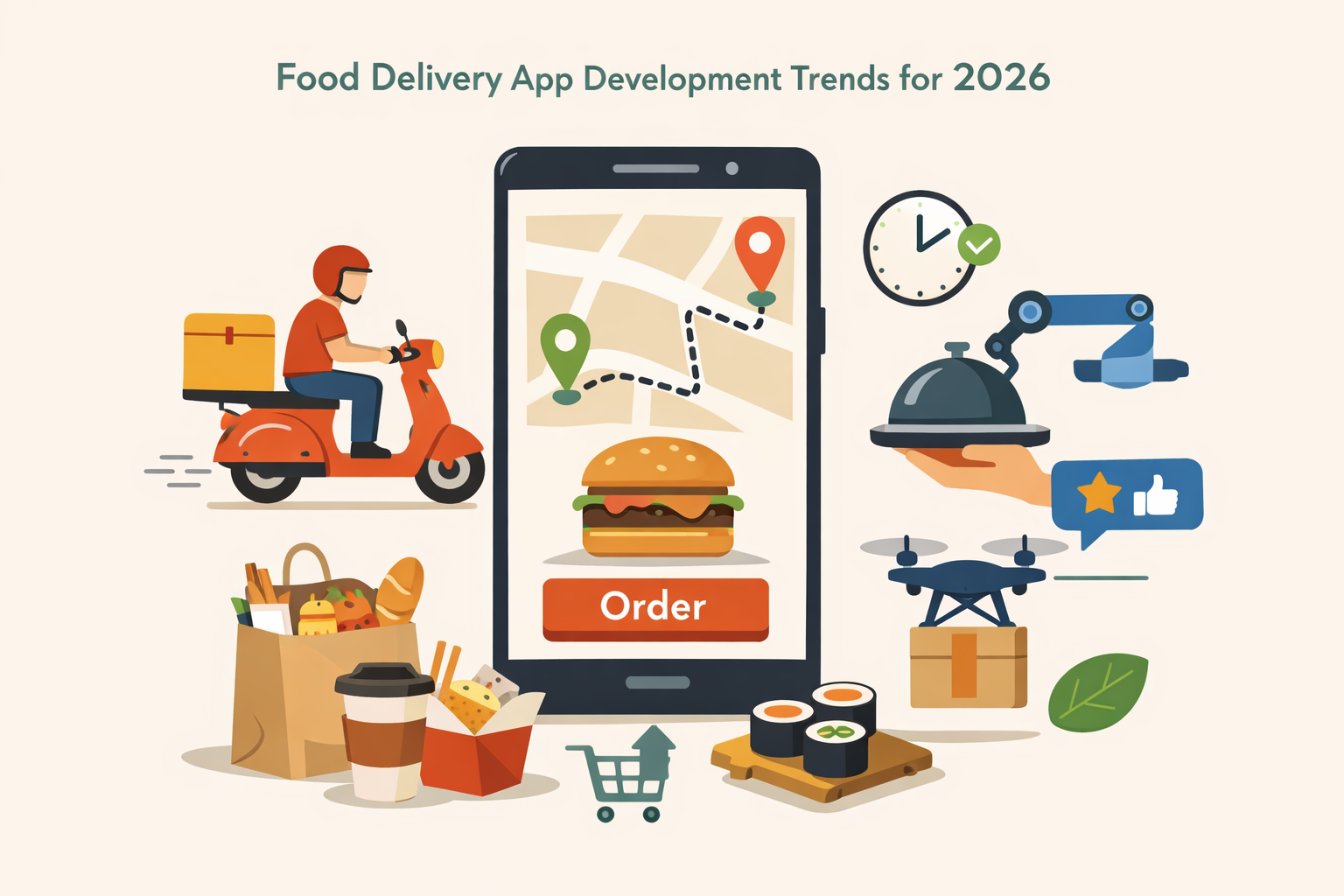
The food delivery industry has witnessed explosive growth over the past decade, evolving from simple online ordering systems to complex on-demand digital ecosystems. As we move into 2026, the expectations of users, restaurants, and delivery partners continue to shift, spurring new food delivery app development services and innovative strategies. With competition intensifying among market leaders and startups alike, understanding the emerging trends is essential for businesses aiming to build the next Food Delivery App Like Uber Eats or cater to evolving customer needs.
In 2026, the food delivery app landscape will be shaped by advanced technologies, customer personalization, sustainability initiatives, and a deeper integration with local businesses. Below, we explore the most impactful trends that will define the future of food delivery solutions.
1. Hyper-Personalized Customer Experiences
Personalization has already become a baseline expectation for users, but in 2026 it will transform into hyper-personalized app interactions. Instead of generic recommendations, food delivery platforms will use AI and machine learning to analyze individual preferences with greater sophistication. This includes understanding dietary restrictions, frequently ordered items, preferred cuisines at specific times of day, and even mood-based suggestions.
For instance, after a user orders vegetarian meals for several weeks, the app may proactively suggest new vegetarian restaurants or special offers tailored just for those preferences. Additionally, predictive analytics will help platforms anticipate user needs — like suggesting breakfast options before a user typically places an order.
This level of personalization enhances user satisfaction, customer retention, and overall engagement, making it a core focus of modern food delivery app development services.
2. Voice Ordering and Conversational AI
Voice interfaces are becoming mainstream, and in 2026 they will play a pivotal role in food ordering. Conversational AI and voice assistants will allow users to place orders hands-free, making the process faster and more intuitive.
Integrations with smart speakers, wearable devices, and in-car assistants will make food ordering as simple as saying, “Order my usual lunch.” Beyond convenience, these integrations can boost accessibility for users with visual impairments or mobility challenges, expanding the user base.
For food delivery platforms aiming to mirror the success of a Food Delivery App Like Uber Eats, incorporating voice technology will no longer be optional — it’ll be expected.
3. Contactless and Autonomous Deliveries
The pandemic first introduced contactless delivery as a safety measure, but in 2026 its value goes beyond health considerations. Users now demand minimal human contact and faster, more efficient deliveries.
Autonomous delivery technologies — including delivery drones, sidewalk robots, and self-navigating vehicles — are advancing rapidly. While regulatory frameworks are still catching up, pilot programs across global cities have shown promising results. These technologies reduce delivery times, lower operational costs, and improve last-mile delivery experiences.
From a development perspective, integrating real-time tracking, route optimization, and autonomous fleet management tools will be key offerings within food delivery app development services moving forward.
4. Sustainable and Eco-Friendly Platforms
Sustainability isn't just a buzzword — it’s a growing priority for customers and businesses alike. In 2026, eco-friendly food delivery solutions will be mainstream:
-
Green Packaging Integration: Apps will offer options for sustainable packaging at checkout.
-
Carbon Footprint Tracking: Users will see the estimated environmental impact of their orders.
-
Electric Fleet Options: Delivery fleets powered by electric vehicles or bicycles will gain popularity.
These initiatives not only appeal to eco-conscious consumers but also help companies align with global sustainability goals. Apps that fail to incorporate eco-friendly features may find themselves losing ground to competitors that emphasize environmental responsibility.
5. Increased Focus on Safety and Trust
With digital adoption comes concerns about data security and platform reliability. In 2026, food delivery apps will double down on:
-
Secure Payment Gateways: Utilizing advanced encryption, biometrics, and multi-factor authentication to safeguard transactions.
-
Verification of Delivery Personnel: Enhanced background checks and digital ID verification to reassure users.
-
Transparent Review Systems: Honest, authenticated reviews from verified customers and delivery partners.
These trust-building features will become indispensable for companies that want to compete with established names like Uber Eats or DoorDash. Integrating robust cybersecurity measures will be a staple component of future food delivery app development services.
6. Integrated Loyalty and Reward Ecosystems
Customer retention is cheaper than customer acquisition, and loyalty programs are central to that strategy. In 2026, food delivery apps will use more nuanced reward systems that go beyond simple points and discounts.
Expect to see features like:
-
Tiered Loyalty Programs: Users unlock benefits and perks as they engage more with the platform.
-
Partnership Rewards: Collaborative deals with financial apps, grocery platforms, or entertainment services.
-
Gamified Challenges: Order streaks, referral bonuses, and seasonal quests to boost interaction.
By gamifying the experience and adding cross-brand incentives, apps can significantly increase user lifetime value and strengthen brand loyalty.
7. Super Apps and Ecosystem Expansion
The concept of the super app — one platform that handles multiple daily needs — is expanding beyond Asian markets. In 2026, food delivery services will consider branching into related verticals such as:
-
Grocery and Essentials Delivery
-
Restaurant Reservations
-
Meal Kits and Recipe Subscriptions
-
Connected Fitness & Nutrition Tracking
Companies that successfully build holistic ecosystems will enjoy higher engagement, more frequent transactions, and an edge over competitors who focus solely on traditional food delivery.
This trend offers a compelling direction for businesses considering food delivery app development services that extend beyond conventional ordering functions.
8. Augmented Reality (AR) Menu Previews
Augmented Reality isn’t just for games — it’s becoming a powerful tool for online dining experiences. AR menu previews allow users to visualize meals before ordering, helping bridge the gap between digital browsing and real-world appearance.
Imagine scanning a menu item and seeing it on your table at full scale through your phone screen — users will make more confident choices, potentially increasing order values and reducing dissatisfaction.
As AR hardware and software continue to improve and become more accessible, these immersive features will distinguish premium food delivery apps from the competition.
9. Dynamic Pricing and Smart Discounts
In 2026, pricing strategy will evolve from static menus to dynamic models that optimize revenue and demand:
-
Time-Based Discounts: Offering lower prices during off-peak hours to balance workflow.
-
Demand-Aware Pricing: Adjusting fees in real-time based on user interest, order volume, or delivery capacity.
-
Personalized Offers: AI-driven deals based on user behavior and order history.
Dynamic pricing, while common in travel and ride-hailing sectors, will become more prevalent in food delivery as data analytics and AI models advance.
10. Blockchain for Transparency and Rewards
Blockchain technology has matured beyond cryptocurrencies and is now finding practical use cases in food delivery:
-
Transparent Order Tracking: Immutable tracking of order status, delivery times, and invoice history.
-
Decentralized Loyalty Points: Universal reward tokens that users can redeem across platforms or partner networks.
-
Secure Contracting: Smart contracts that automate payouts to restaurants and delivery partners.
Blockchain integration can enhance trust and transparency while enabling innovative monetization and reward frameworks.
Conclusion
The food delivery market of 2026 is poised for remarkable transformation. With customer expectations rising and technology evolving at a breakneck pace, businesses must stay ahead of trends to build competitive and sustainable platforms. Whether you’re a startup planning to enter the market or an established brand looking to upgrade your digital infrastructure, understanding these emerging trends is essential.
From AI-enabled personalization and voice ordering to AR features and sustainable delivery models, each trend highlights a unique opportunity to enhance user engagement and operational efficiency.
If your goal is to create the next big Food Delivery App Like Uber Eats, investing in innovative food delivery app development services that embrace these trends will be the key to success. The future of food delivery is not just about delivering meals — it’s about delivering smarter, faster, and more delightful experiences.

 Arabic
 Français
 Español
 Português
 Deutsch
 Türkçe
 Dutch
Dutch
 Italiano
 Russian
 Romaian