


Understanding How Modern Infrastructure Manages Ground Challenges Before Construction Begins
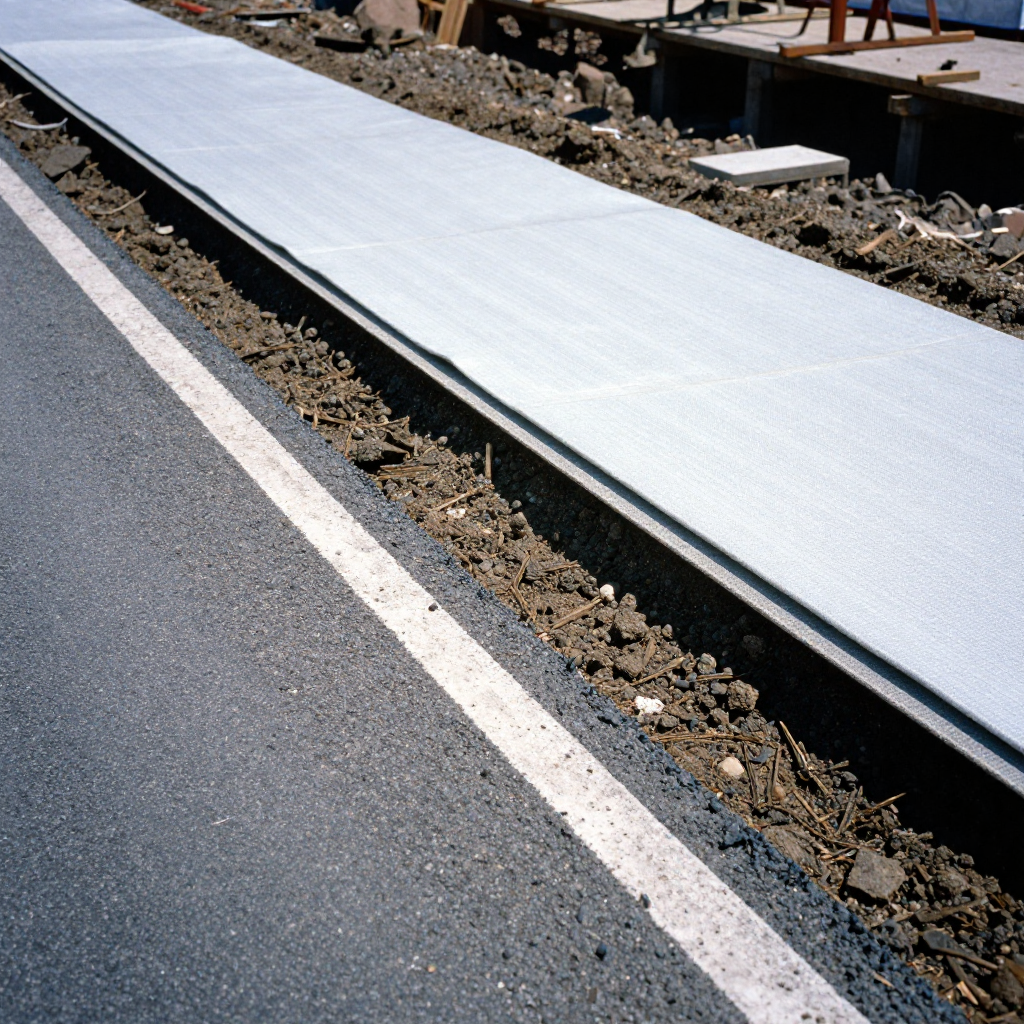
Large infrastructure projects rarely fail because of what’s visible on the surface. More often, problems start below ground level, long before concrete is poured or asphalt is laid. Soil behavior, water movement, and long-term load response shape the success or failure of roads, embankments, retaining structures, and industrial platforms.
Engineers working in transportation, energy, and urban development have learned that managing these factors early saves years of maintenance and costly repairs later. The focus today is not on heavier materials or thicker layers, but on smarter ground interaction.
Why Ground Conditions Dictate Infrastructure Performance
Every site tells a different story. Some soils compress under load. Others lose strength when saturated. Some shift laterally on slopes. Ignoring these behaviors can turn a well-designed structure into a maintenance burden.
Common ground-related challenges include:
-
Uneven settlement under repeated traffic loads
-
Poor drainage causing water retention and erosion
-
Weak subgrades unable to distribute stress
-
Soil migration leading to voids and surface deformation
Traditional approaches often relied on soil replacement or excessive material use. These methods increased costs, construction time, and environmental impact. Over time, the industry shifted toward solutions that work with existing soil rather than against it.
The Role of Engineered Layers in Subsurface Design
Modern infrastructure design treats the ground as a system, not a single layer. Each component has a role: load distribution, separation, filtration, reinforcement, or drainage control.
Instead of overbuilding the surface, engineers introduce engineered layers within the soil profile to guide how forces and water move through the structure. These layers are selected based on soil type, loading conditions, climate, and service life expectations.
This systems-based approach is now standard in projects such as:
-
Highways and access roads
-
Rail corridors and yards
-
Port pavements and container terminals
-
Landfills and containment zones
-
Industrial foundations and storage yards
The aim is predictability. When soil behavior is controlled, surface performance follows.
How Soil Reinforcement Reduces Long-Term Maintenance
One of the biggest cost drivers in infrastructure is not construction, but maintenance. Rutting, cracking, and settlement demand ongoing repairs that disrupt operations and budgets.
Reinforcement strategies reduce these risks by improving load transfer within the soil mass. Instead of stress concentrating at weak points, loads spread across a wider area. This reduces deformation and slows material fatigue.
Engineers often look to geosynthetics materials when designing reinforcement layers because they allow strength to be added without increasing thickness. When used correctly, they help subgrades perform beyond their natural limits, especially in areas with soft or variable soils.
These materials are not a replacement for good design. They are tools that extend the effectiveness of design decisions when conditions are less than ideal.
Drainage Control as a Structural Priority
Water is one of the most underestimated threats to infrastructure. It weakens soil, accelerates erosion, and amplifies freeze–thaw damage in colder regions. Even in warm climates, trapped moisture reduces bearing capacity and increases settlement.
Effective drainage is not only about surface runoff. Subsurface water movement matters just as much. Poor internal drainage allows water pressure to build up within the soil, pushing particles apart and reducing friction.
Engineered drainage layers channel water away while keeping soil particles in place. This balance between permeability and retention is critical. When filtration fails, fine particles migrate, leading to voids and loss of support.
Designers increasingly rely on integrated systems that manage both water flow and soil stability without relying solely on gravel or thick drainage blankets.
Separation Layers and Material Integrity
Another often overlooked issue in construction is material mixing. When base aggregates blend with soft subgrade soils, performance drops quickly. What begins as a stable platform turns into a compromised layer that no longer meets design assumptions.
Separation layers prevent this intermixing. They preserve the integrity of both materials, allowing each to perform its intended function. Over time, this reduces deformation and preserves load-bearing capacity.
In large-scale projects where thousands of square meters are involved, maintaining material boundaries becomes essential. Small failures multiply when repeated across an entire site.
Sustainability and Material Efficiency in Modern Projects
Infrastructure sustainability is no longer limited to surface materials or emissions during construction. Subsurface efficiency plays a major role in reducing environmental impact.
When ground improvement allows thinner structural layers or reuse of in-situ soil, projects consume fewer natural resources. Fewer truck movements, reduced excavation, and lower material volumes translate into measurable environmental benefits.
Many project owners now expect designers to justify material choices not only in technical terms, but also through lifecycle and sustainability metrics. Solutions that extend service life while reducing raw material use are increasingly favored.
This shift has pushed engineers to explore engineered systems that deliver performance without excess.
Choosing the Right Solution for the Right Condition
There is no universal solution for ground challenges. Clay behaves differently from sand. Static loads differ from dynamic traffic loads. Coastal environments present risks that inland sites do not.
Experienced engineers begin with soil investigation, not product selection. Once behavior is understood, suitable systems are introduced to manage that behavior. In some cases, reinforcement is key. In others, drainage or separation matters more.
Resources that explain how different geosynthetics products are applied across various infrastructure scenarios can help project teams understand what options exist without dictating design choices. These references serve as technical context rather than prescriptions.
Risk Reduction Through Early Ground Planning
Many infrastructure failures trace back to decisions made early, often under time pressure or budget constraints. Skipping proper ground treatment might save money initially, but it almost always increases long-term risk.
Early planning that accounts for soil variability, water movement, and load repetition reduces uncertainty. When systems are designed to manage these factors, structures behave predictably even under stress.
This mindset shift—from reactive repair to proactive ground management—is reshaping how infrastructure is planned worldwide.
Industry Experience Over Theoretical Design
Textbook solutions rarely match real-world conditions perfectly. Field experience fills the gap between theory and practice. Engineers who have seen projects fail understand the value of designing for worst-case scenarios rather than ideal ones.
Practical knowledge influences decisions such as:
-
Where reinforcement provides real value versus unnecessary cost
-
When drainage layers are critical rather than optional
-
How construction sequencing affects long-term performance
Sharing this experience through industry publications and technical discussions helps raise standards across the sector.
Looking Ahead: Infrastructure Built from the Ground Up
As urban areas expand and infrastructure loads increase, ground conditions will only become more challenging. Heavier traffic, climate variability, and tighter project timelines demand smarter subsurface strategies.
The future of infrastructure does not lie in thicker pavements or stronger concrete alone. It depends on how well engineers understand and manage the ground beneath. When subsurface systems are treated as integral components rather than afterthoughts, performance follows.
Projects that invest in proper ground planning tend to outlast expectations. Those that don’t often become case studies in what went wrong underground.

 English
 Arabic
 Français
 Español
 Português
 Deutsch
 Türkçe
 Dutch
Dutch
 Russian
 Romaian