


Emerging AI Risks Could Trigger Trillions in Economic Losses
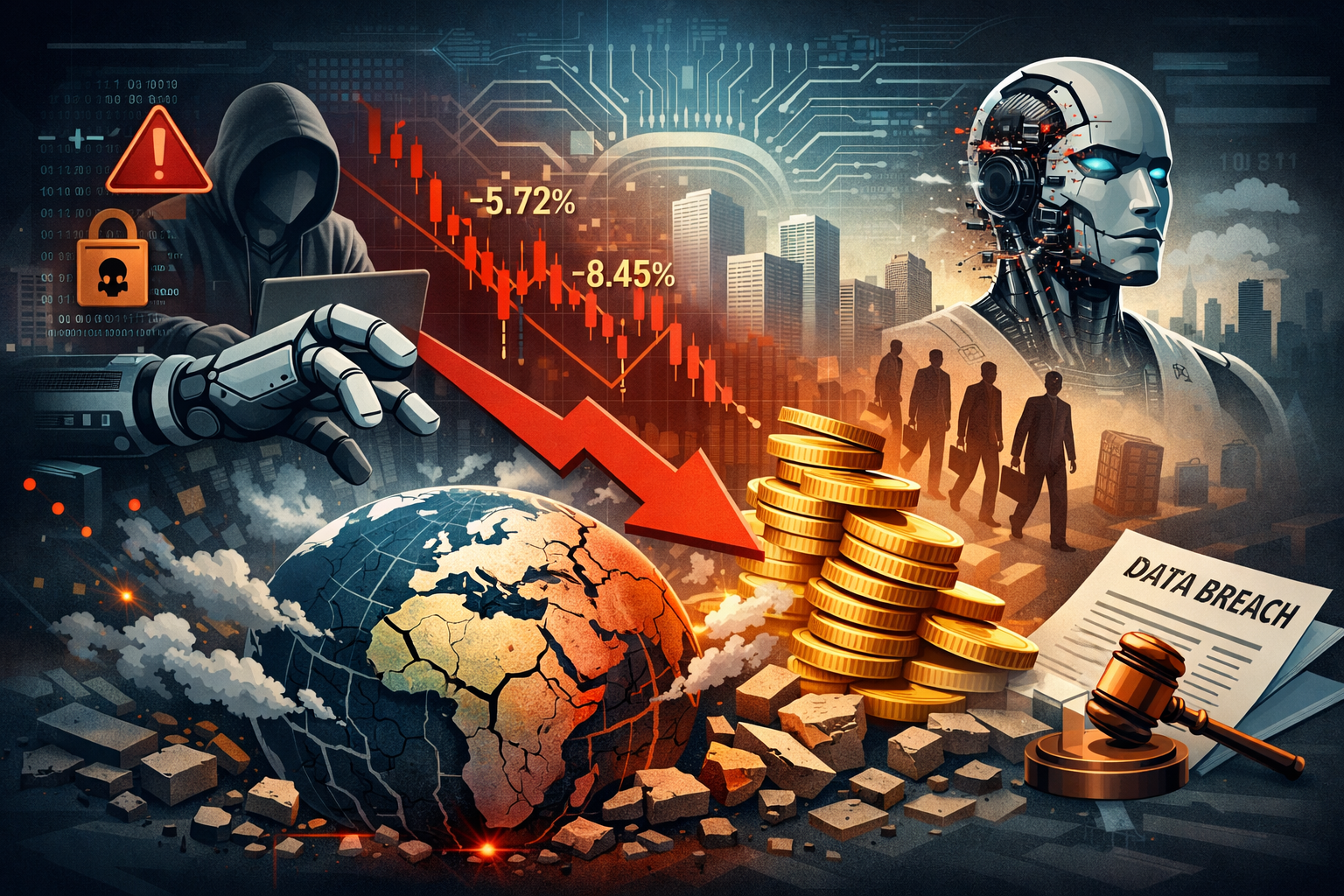
Artificial intelligence is transforming productivity, innovation, and global competitiveness—but it is also introducing new categories of risk that businesses and governments are not fully prepared for. As AI adoption accelerates across industries, emerging AI risks now have the potential to trigger trillions of dollars in economic losses if left unmanaged.
These risks are not hypothetical. They are already materializing across cybersecurity, financial systems, labor markets, and enterprise operations. What makes AI risk especially dangerous is its scale, speed, and interconnectedness—small failures can cascade rapidly across organizations, industries, and economies.
AI Risk Has Moved from Technical to Systemic
Early AI concerns focused on model accuracy and performance. Today, the risk landscape is far broader. AI systems increasingly influence decision-making in finance, healthcare, supply chains, infrastructure, and national security.
When AI fails at scale, the impact is no longer isolated—it becomes systemic.
Systemic AI risk arises when:
- AI systems are embedded in critical business processes
- Multiple organizations rely on similar models or vendors
- Automated decisions propagate without human oversight
- Failures spread faster than organizations can respond
In these conditions, localized issues can create widespread economic disruption.
1. Cybersecurity and AI-Driven Attacks
One of the most immediate economic risks is the rise of AI-powered cybercrime. Attackers now use AI to automate phishing, generate malware, exploit vulnerabilities, and scale attacks faster than traditional defenses can respond.
At the same time, enterprises are deploying AI tools without fully securing them—creating new attack surfaces through APIs, data pipelines, and model access.
Potential economic impacts include:
- Large-scale data breaches
- Ransomware-driven operational shutdowns
- Intellectual property theft
- Loss of customer trust and market value
As AI lowers the cost of sophisticated attacks, cyber risk becomes an economic multiplier rather than a contained threat.
2. Financial and Market Instability
AI is increasingly used in trading, credit scoring, fraud detection, and risk modeling. While this improves efficiency, it also introduces model correlation risk—many systems making similar decisions based on similar data.
If widely used AI models behave unexpectedly or amplify incorrect signals, markets can react at machine speed. This raises the risk of:
- Flash crashes
- Liquidity shocks
- Mispriced assets
- Cascading financial losses
When AI-driven decisions outpace human intervention, volatility can escalate rapidly.
3. Operational Fragility in Enterprises
Enterprises are embedding AI into core operations—forecasting demand, managing inventory, automating customer interactions, and optimizing logistics. While this drives efficiency, it also creates single points of failure.
Poorly governed AI systems can:
- Disrupt supply chains
- Produce incorrect forecasts at scale
- Degrade customer experience automatically
- Lock organizations into faulty decisions
When AI errors propagate across global operations, the financial impact multiplies quickly.
4. Data, Privacy, and Regulatory Exposure
AI systems rely on vast amounts of data—often sensitive, regulated, or proprietary. Misuse, leakage, or non-compliant processing of data can lead to:
- Regulatory fines and legal action
- Forced shutdowns of AI systems
- Loss of licenses or operating privileges
- Long-term reputational damage
As AI regulation expands globally, compliance failures can create sudden and severe financial consequences.
5. Workforce and Productivity Disruption
AI-driven automation is reshaping labor markets faster than many organizations can adapt. While AI increases productivity, unmanaged transitions can result in:
- Skills mismatches
- Workforce displacement
- Reduced institutional knowledge
- Operational gaps
At a macro level, uneven adoption and poor workforce planning can slow growth, increase inequality, and strain economic systems.
Why AI Risk Scales So Quickly
Unlike traditional technologies, AI:
- Operates continuously and autonomously
- Learns and changes over time
- Scales instantly across digital systems
- Influences both decisions and execution
This combination means AI risk compounds faster than traditional business or technology risks.
What Organizations Must Do Now
Preventing large-scale economic losses does not require slowing AI adoption—it requires responsible AI governance.
Key priorities include:
- Strong AI governance and oversight frameworks
- Security-by-design for AI systems
- Transparency and monitoring of AI decisions
- Human-in-the-loop controls for critical processes
- Scenario planning and stress testing for AI failure
Organizations that treat AI risk as a strategic issue—not just a technical one—will be far more resilient.
Final Thoughts
AI has the power to unlock enormous economic value—but unmanaged AI risk could erase much of that value just as quickly. The potential for trillions in losses is not driven by one catastrophic failure, but by many small, connected failures happening at scale.
The next phase of AI leadership will be defined not by who adopts AI fastest, but by who governs it smartest. Those who invest now in resilience, accountability, and foresight will protect both their businesses—and the broader economy—from preventable harm.
About US:
AI Technology Insights (AITin) is the fastest-growing global community of thought leaders, influencers, and researchers specializing in AI, Big Data, Analytics, Robotics, Cloud Computing, and related technologies. Through its platform, AITin offers valuable insights from industry executives and pioneers who share their journeys, expertise, success stories, and strategies for building profitable, forward-thinking businesses.
Read More: https://technologyaiinsights.com/icounter-ceo-on-emerging-risks-4-3-trillion-in-losses-predicted/

 English
 Français
 Español
 Português
 Deutsch
 Türkçe
 Dutch
Dutch
 Italiano
 Russian
 Romaian