


Professional Hat Digitizing: Ensuring Precision in Embroidery
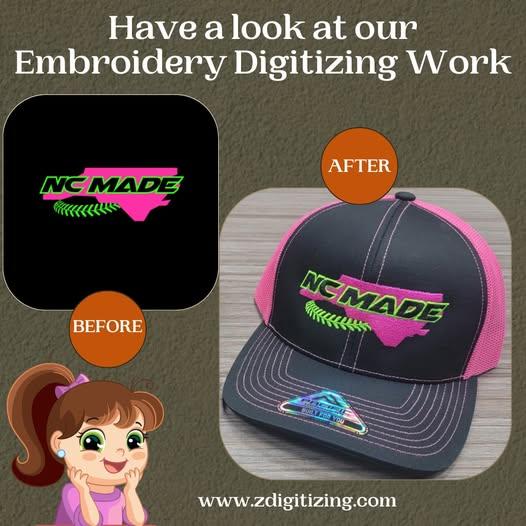
In custom embroidery, the quality of the final product heavily relies on the digitizing process. For hats, caps, and other headwear, digitizing requires specific expertise due to their curved structure and variable fabric tension. Professional hat digitizing converts artwork into a precise stitch file that embroidery machines can interpret accurately, ensuring designs are consistent, durable, and visually precise.
What Makes Hat Digitizing Different
Hat embroidery is more complex than standard garment embroidery. Hats have curved surfaces, varying tension, and limited embroidery space, which can affect how a design appears. Without proper digitizing techniques, embroidery may look distorted, misaligned, or puckered.
A professional digitizer evaluates several key factors:
- Material: Fabrics such as cotton, wool, polyester, and blends require different stitch densities and underlay methods to prevent fabric distortion.
- Hat Structure: Structured and unstructured hats, front panels, and visors influence how stitches lie and whether a design maintains its proportions.
- Design Size: Curved surfaces limit embroidery areas, so scaling must be done carefully to maintain detail.
- Stitch Angles and Density: Correct angles and stitch density prevent fabric stretching and ensure clean, smooth contours.
Advantages of Professional Hat Digitizing
Choosing an experienced digitizer provides tangible benefits for both businesses and individuals:
- Accuracy: Every detail of the artwork is translated into stitches, ensuring the final design closely matches the original concept.
- Durability: Properly digitized hats retain their shape and quality after frequent wear and washing.
- Efficiency: Skilled digitizers produce machine-ready files faster, reducing time spent on revisions or test runs.
- Cost-Effectiveness: Avoids mistakes and wasted materials by getting the design right on the first attempt.
- Consistent Results: Essential for bulk orders where uniformity across multiple items is crucial.
Techniques Used in Hat Digitizing
Professional digitizers apply specialized techniques to address the challenges of hat embroidery. Some of these include:
- Underlay Stitching: Establishing a base layer to stabilize the fabric before the main design is embroidered.
- Offsetting: Adjusting stitch placement to account for fabric curvature and tension.
- Density Adjustments: Fine-tuning stitch density to prevent puckering or gaps.
- Tie-Offs and Pull Compensation: Reducing thread pulling and distortion during machine embroidery.
- Strategic Stitch Selection: Choosing satin, fill, or run stitches based on design requirements and fabric type.
Common Challenges in Hat Embroidery
Even with advanced embroidery machines, improper digitizing can lead to issues:
- Misaligned designs caused by curved surfaces.
- Puckering from excessive stitch density or insufficient underlay.
- Thread breakage due to improper tension or incorrect stitch type.
- Distorted designs resulting from scaling without adjusting stitch angles.
Professional digitizers mitigate these problems through experience and precise planning, ensuring embroidery is smooth, durable, and accurate.
Choosing the Right Digitizing Service
Selecting the right digitizer is critical to achieving high-quality results. Consider these factors:
- Experience: Specialists in hat digitizing understand the unique challenges of headwear.
- Portfolio: Reviewing previous projects demonstrates capability with various fabrics, designs, and hat types.
- Communication: Clear discussions about design expectations and deadlines help avoid costly errors.
- Technology: Advanced software ensures designs are optimized for modern embroidery machines.
- Support: Ongoing assistance is essential if adjustments or refinements are needed.
Why Businesses Invest in Professional Hat Digitizing
For companies, hats serve as mobile branding tools, and poorly executed designs can impact reputation. Professional digitizing guarantees that logos, mascots, and promotional graphics are embroidered consistently and professionally. Businesses benefit in several ways:
- Brand Consistency: Maintains uniformity across multiple items.
- Bulk Production Efficiency: Supports high-volume embroidery without sacrificing quality.
- Enhanced Product Value: Well-embroidered hats are perceived as premium merchandise.
- Customer Satisfaction: A polished final product strengthens brand credibility and encourages repeat business.
Conclusion
Hat digitizing is a specialized skill that combines technical expertise with precise execution. Whether for personal projects or corporate branding, professional digitizing ensures designs are accurately translated into embroidery while maintaining durability and visual clarity. Investing in an experienced digitizer reduces errors, saves time and materials, and produces a high-quality final product that truly reflects the original design.
FAQs
1. What is hat digitizing in embroidery?
Hat digitizing is the process of converting a design or logo into a stitch file that an embroidery machine can follow, specifically optimized for the curved surfaces and unique materials of hats and caps.
2. Why is hat digitizing different from regular garment digitizing?
Hats have curved surfaces, variable tension, and smaller embroidery areas. This requires specialized stitch placement, density adjustments, and underlay techniques to prevent distortion or puckering.
3. How can professional digitizing improve embroidery quality?
Professional digitizers use precise techniques to ensure design accuracy, durability, and consistency. This reduces errors, prevents fabric distortion, and ensures the final product maintains its quality after repeated use.
4. Can a standard embroidery file be used for hats?
Not usually. Standard files for flat garments often cause misalignment or distortion on hats. A file specifically digitized for hats accounts for curvature, stitch angles, and fabric tension.

 English
 Arabic
 Français
 Español
 Deutsch
 Türkçe
 Dutch
Dutch
 Italiano
 Russian
 Romaian