


How Professionals Digitise Image For Embroidery with Accuracy
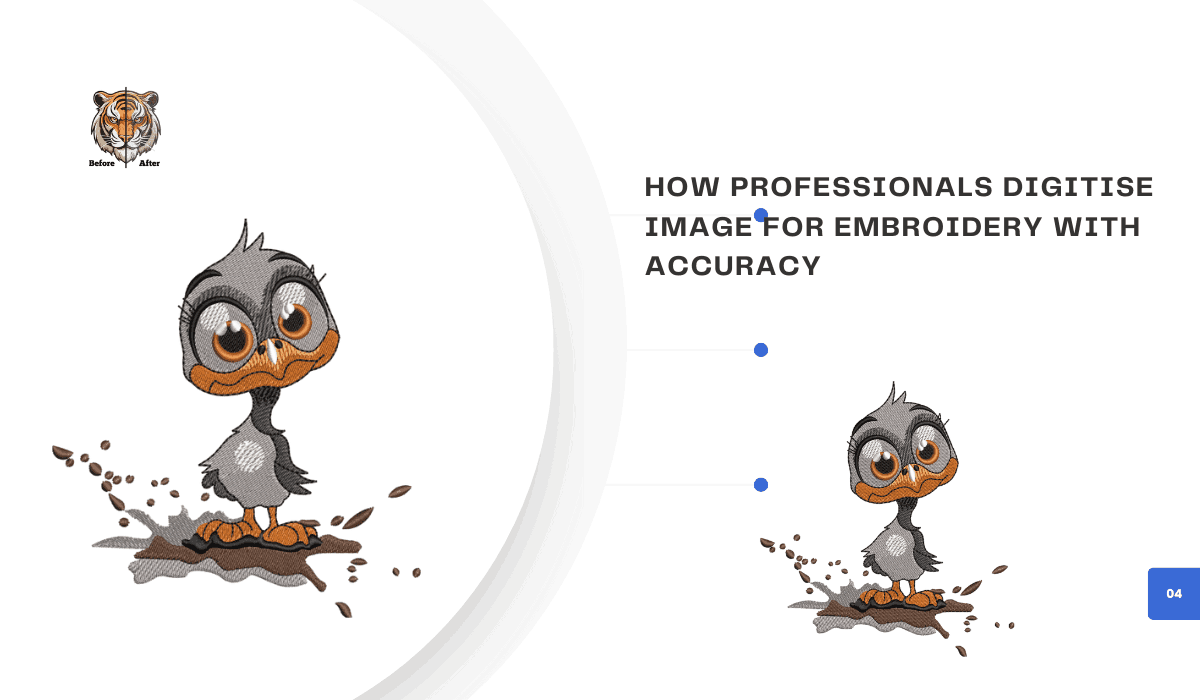
Accuracy is the most critical factor in embroidery digitizing because embroidery machines follow stitch instructions exactly as programmed. When professionals digitise image for embroidery, they apply technical planning that converts artwork into stable, machine-readable stitch files. This process ensures designs stitch cleanly, maintain shape, and perform consistently across different fabrics and production environments.
Unlike automated tools, professional digitizing focuses on how stitches interact with fabric, thread, and machine mechanics. Every decision made during digitizing directly impacts embroidery quality
Understanding Accuracy in Embroidery Digitizing
Accuracy in embroidery digitizing does not simply mean matching the artwork visually. It also involves stitch balance, fabric stability, and production reliability.
Professionals evaluate how the design will behave during stitching. They anticipate fabric pull, thread tension, and stitch overlap to prevent distortion, gaps, or thread breaks. This forward planning is what separates professional digitizing from basic conversion.
Artwork Analysis Before Digitizing
The first step professionals take is analyzing the artwork. This includes reviewing resolution, line thickness, color separation, and design complexity.
If the artwork contains unnecessary details that cannot stitch properly, professionals simplify them without affecting the overall appearance. This ensures the final embroidery remains clear and production-friendly.
Manual Stitch Path Creation
Professional digitizers do not rely on automatic stitch generation. Instead, they manually define stitch paths for each design element.
This manual approach allows precise control over stitch length, spacing, and direction. It ensures smooth transitions between design areas and prevents excessive thread buildup or weak stitch points.
Stitch Direction Planning for Shape Control
Stitch direction directly affects how embroidery reflects light and holds shape. Poor stitch direction can cause distortion, especially on stretchy or curved surfaces.
Professionals carefully plan stitch angles to support fabric structure and design flow. This improves visual consistency and prevents embroidery from shifting or warping during stitching.
Underlay Selection for Fabric Stability
Underlay stitches act as a foundation that stabilizes fabric before top stitches are applied. Different fabrics require different underlay strategies.
When professionals digitise image for embroidery, they adjust underlay based on fabric thickness, stretch, and texture. Proper underlay improves stitch definition and reduces puckering.
Density Control for Balanced Stitching
Stitch density must be carefully balanced. High density can damage fabric and cause stiffness, while low density can expose the fabric beneath.
Professional digitizers calculate density based on fabric type, thread size, and design complexity. This balance ensures smooth coverage without stressing the machine or garment.
Handling Small Text and Fine Details
Small text and fine details require special attention during digitizing. Incorrect spacing or density can cause letters to merge or lose clarity.
Professionals adjust stitch length and spacing to maintain readability. In some cases, they modify letter shapes slightly to improve stitch performance without altering visual meaning.
Sequencing and Machine Efficiency
Accurate digitizing also involves efficient stitch sequencing. Poor sequencing leads to excessive trims, jump stitches, and machine stops.
Professionals optimize stitch order to maintain smooth machine operation. This reduces production time and minimizes the risk of thread breaks or misalignment.
Testing and Quality Review
Before final delivery, professional digitizers review stitch simulations and test files. This step helps identify potential issues that may not be visible in the artwork.
Corrections are made before production begins, ensuring the file performs reliably on embroidery machines.
Why Accuracy Matters in Commercial Embroidery
In commercial embroidery, even small digitizing errors can multiply across large orders. Inaccurate files lead to wasted materials, time delays, and inconsistent branding.
Professional digitizing protects production efficiency and ensures embroidery meets quality expectations across repeat orders.
Conclusion
Professionals digitise image for embroidery with accuracy by combining technical knowledge, manual stitch planning, and fabric-aware adjustments. Every stage of the process, from artwork analysis to stitch sequencing, contributes to reliable embroidery performance.
This level of accuracy ensures designs stitch consistently, maintain clarity, and support efficient production. For businesses that depend on quality embroidery, professional digitizing is essential.
FAQs
What makes professional digitizing more accurate than auto tools?
Professionals manually control stitch paths, density, and direction based on fabric and machine behavior.
Does accurate digitizing improve machine performance?
Yes, optimized stitch files reduce thread breaks, trims, and machine stops.
Can professionals digitise complex artwork accurately?
Yes, they simplify and adjust designs to ensure proper stitching without losing clarity.
Is fabric type considered during accurate digitizing?
Always. Fabric behavior directly affects stitch structure and design stability.
Why is accuracy important for repeat orders?
Accurate digitizing ensures consistent results across multiple production runs.

 English
 Arabic
 Français
 Español
 Português
 Deutsch
 Türkçe
 Dutch
Dutch
 Russian
 Romaian