


Why AI-Powered Regulatory Intelligence Matters More as Regulatory Complexity Grows
Regulatory complexity in life sciences is not slowing down. New therapeutic modalities, evolving safety expectations, digital health frameworks, and increased global oversight have fundamentally changed the regulatory environment. In this landscape, AI-powered regulatory intelligence has become essential for maintaining clarity and control.
As regulatory scope expands, so does the challenge of staying informed. Regulatory updates are no longer limited to a handful of agencies or annual guidance revisions. Instead, changes occur continuously across multiple jurisdictions, often with overlapping or interconnected implications. Manual tracking struggles to keep pace with this level of activity.
AI-powered regulatory intelligence addresses this challenge by providing continuous, automated monitoring of global regulatory sources. Updates are captured in real time and filtered based on relevance, reducing the risk of missed information. This ensures regulatory teams maintain a complete and current view of the regulatory landscape.
Beyond monitoring, AI enables structured analysis. Machine learning can identify patterns across updates, flag potential risks, and highlight areas requiring immediate attention. This capability helps teams prioritize effectively instead of reacting to every regulatory change equally.
As organizations grow, regulatory intelligence must scale accordingly. Expansion into new regions or product categories increases regulatory workload exponentially. AI-powered regulatory intelligence allows teams to manage this growth without proportionally increasing resources, supporting operational efficiency and strategic focus.
Another critical advantage is consistency. When regulatory intelligence is gathered manually, interpretations can vary between individuals or regions. AI-powered platforms provide a centralized intelligence framework, promoting uniform understanding and application across teams.
Despite these efficiencies, AI does not replace regulatory judgment. Regulatory professionals remain responsible for assessing impact, determining strategy, and communicating requirements. AI enhances these activities by providing timely, accurate information and reducing administrative burden.
Leadership teams increasingly recognize that regulatory intelligence is a strategic asset rather than a support function. AI-powered regulatory intelligence elevates the role of regulatory teams by enabling proactive engagement and informed guidance.
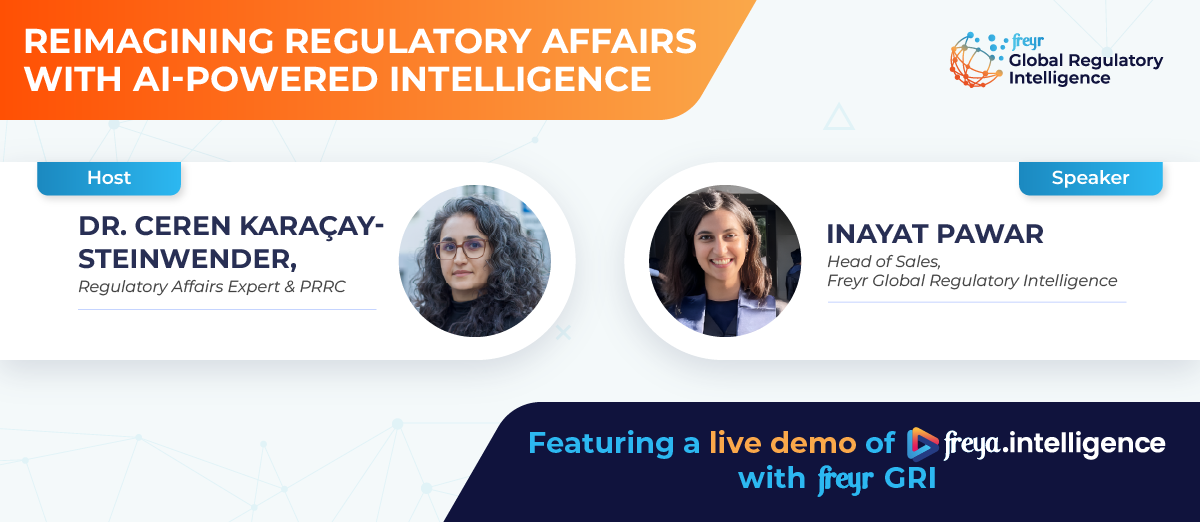
These dynamics are explored in Reimagining Regulatory Affairs with AI-Powered Intelligence, which illustrates how AI helps organizations navigate complexity while preserving regulatory expertise.
As regulatory expectations continue to rise, organizations that invest in AI-powered regulatory intelligence position themselves to operate with confidence, agility, and resilience.

 Arabic
 Français
 Español
 Português
 Deutsch
 Türkçe
 Dutch
Dutch
 Italiano
 Russian
 Romaian