


The Definitive Guide to the Manuscript Library in India | VRI Bharat
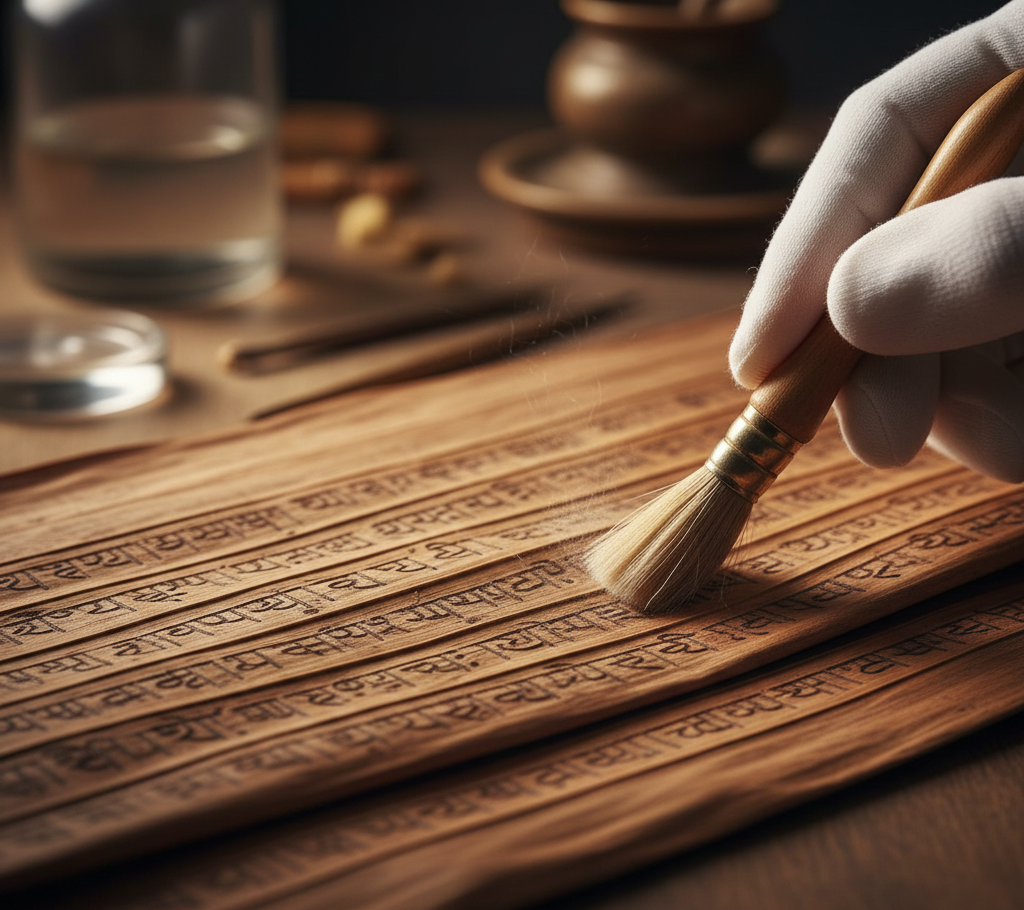
The Great Archives of Wisdom: A Deep Dive into the Manuscript Library in India
Introduction: The Living Memory of a Civilization
India is often called the "Land of Knowledge," but that knowledge was not always stored in the cloud or printed on industrial presses. For millennia, the intellectual and spiritual life of the Indian subcontinent was recorded by hand. Today, these records are housed in specialized institutions, and among them, the Manuscript Library at the Vrindavan Research Institute (VRI) stands as a monument to human preservation.
When one searches for a manuscript library in India, they are usually looking for more than just a storage room. They are looking for a connection to the past. At vribharat.org/manuscript-library/, this connection is made tangible through a collection of over 30,000 manuscripts that span the breadth of Indian thought.
In this 2,500-word guide, we will explore why manuscript libraries are the backbones of our cultural identity, the unique treasures held at VRI Bharat, and the Herculean efforts required to maintain these archives in the modern age.
Part I: The Genesis of the VRI Manuscript Library
The story of the Vrindavan Research Institute begins with a vision to save the disappearing literary treasures of the Braj region. Founded in 1968 by Dr. Ramdas Gupta, the library was established at a time when countless rare documents were being lost to neglect, dampness, and ignorance.
1.1 The Braj Connection
Vrindavan has been a center of scholarly activity since the 16th century. When the "Six Goswamis" arrived under the direction of Chaitanya Mahaprabhu, they didn't just build temples; they built a literary tradition. They wrote extensively on:
-
Theology and Bhakti: Defining the nuances of divine love.
-
Rasa Shastra: The science of aesthetics and emotion.
-
Logic and Philosophy: Engaging with the great minds of their era.
The Manuscript Library in India that VRI represents is the direct heir to this 500-year-old tradition.
Part II: Inside the Collection – What Makes VRI Unique?
What sets a world-class manuscript library apart is the diversity and rarity of its folios. At VRI Bharat, the collection is categorized into several vital streams.
2.1 The Linguistic Tapestry
A common misconception is that all ancient Indian manuscripts are in Sanskrit. While Sanskrit is the "Language of the Gods," the VRI library showcases a vibrant linguistic diversity:
-
Brajbhasha: The vernacular soul of Northern India.
-
Bengali: Due to the historical ties between Bengal and Vrindavan.
-
Odia and Gurmukhi: Evidence of the diverse pilgrims and scholars who flocked to the region.
-
Persian and Urdu: Reflecting the administrative and cultural overlap during the Mughal era.
2.2 Materiality: From Trees to Paper
Before the invention of the printing press, the choice of material was determined by geography and tradition.
-
Palm Leaf (Tala-patra): Predominantly used in Southern and Eastern India, these are etched with a stylus and blackened with soot.
-
Birch Bark (Bhurja-patra): The "original paper" of the Himalayas, used for the oldest known Buddhist and Hindu texts.
-
Handmade Paper: From the 14th century onwards, paper became the primary medium. VRI houses some of the finest examples of early Indian papermaking, which has proven remarkably durable compared to modern acidic paper.
Part III: The "Jewels" of the Library
Every manuscript library in India has its crown jewels. At VRI, these include:
3.1 The Autograph Manuscripts
The term "autograph" in manuscriptology refers to a text written by the author themselves. VRI is home to the original hand-written works of the Six Goswamis. Seeing the actual ink strokes of a 16th-century saint provides an emotional and historical weight that no printed book can replicate.
3.2 Illustrated Manuscripts and Miniature Art
Many of the texts in the library are accompanied by breathtaking illustrations. These miniatures, often using natural pigments and gold leaf, provide a visual record of:
-
Temple architecture of the period.
-
Traditional costumes and musical instruments.
-
Botany and fauna of the ancient Braj forest.
Part IV: The Role of a Manuscript Library in Modern Research
A library is not a cemetery; it is a laboratory. The Vrindavan Research Institute serves as a global hub for "Indology"—the study of Indian history, languages, and culture.
4.1 Decoding the Past (Paleography)
Scripts evolve over time. Many manuscripts in the library are written in old forms of Devanagari or regional scripts that modern readers cannot decipher. VRI employs paleography experts who "translate" these scripts, unlocking secrets that have been hidden for centuries.
4.2 Critical Editions
When a famous text (like the Bhagavata Purana) exists in thousands of copies, scholars must compare them to find the "original" or most accurate version. The VRI Manuscript Library provides the primary sources for creating these "Critical Editions," which are used by universities worldwide.
Part V: Challenges of the 21st Century
Running a manuscript library in India is a constant battle against the elements.
5.1 The Climate Crisis
High humidity in the Yamuna belt leads to fungal growth. VRI utilizes:
-
Dehumidifiers: To keep the air dry.
-
Acid-free Storage: Replacing old cardboard with archival-grade materials.
5.2 The Digital Frontier
To protect the physical manuscripts from excessive handling, VRI is digitizing its entire collection. This creates a "Digital Manuscript Library" accessible via vribharat.org, allowing a scholar in California to study a text without it ever leaving its temperature-controlled vault in Vrindavan.
Part VI: How to Visit and Use the Library
The VRI Manuscript Library is open to bona fide researchers and curious visitors alike.
6.1 For Researchers
-
Membership: Scholars can apply for research memberships.
-
Catalogs: VRI has published several volumes of descriptive catalogs, which are essential tools for identifying relevant texts.
-
Facilities: The institute provides reading rooms and microfilm viewers.
6.2 For the General Public
The attached Braj Heritage Museum displays selected folios, giving the public a glimpse into the beauty of ancient Indian calligraphy and art.
Part VII: Conclusion – Why Every Manuscript Matters
Every time a manuscript is lost to fire, flood, or neglect, a piece of human history dies. The work of the Manuscript Library at VRI Bharat is a defiant act against this loss. By preserving these 30,000 documents, the institute ensures that the wisdom of the past remains a light for the future.
If you are a student of history, a devotee, or simply an admirer of human achievement, explore the treasures of the Vrindavan Research Institute Manuscript Library.

 English
 Arabic
 Français
 Español
 Português
 Deutsch
 Türkçe
 Dutch
Dutch
 Russian
 Romaian