


AI Chatbot Development: Tools, Frameworks, and Integration Methods
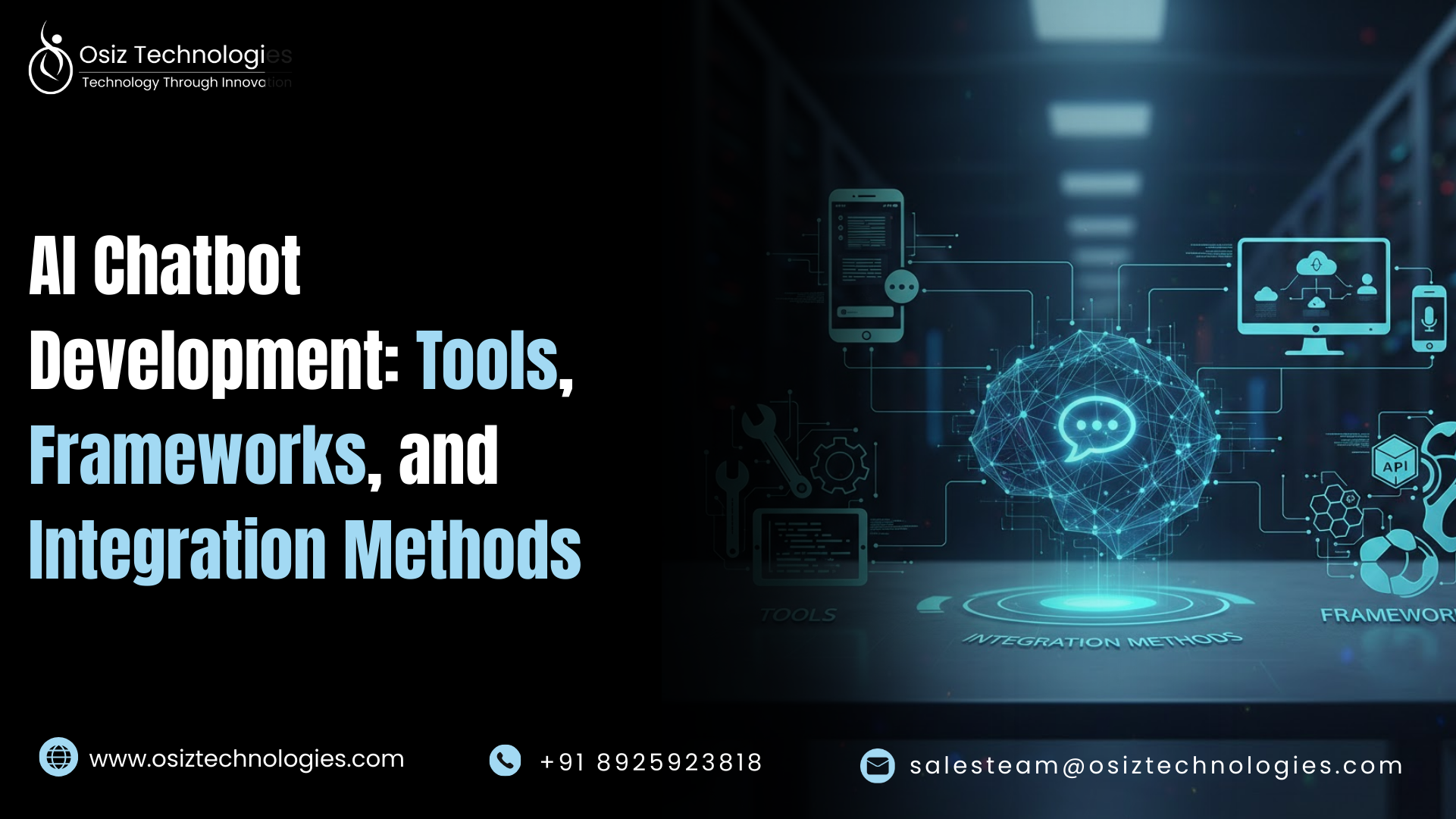
The way businesses communicate with customers has undergone significant changes over the past decade. What began as simple automated responses has evolved into intelligent, context-aware systems capable of handling complex conversations. From basic rule-based bots to AI-powered virtual assistants, chatbots have become a strategic asset for modern enterprises.
Today, AI Chatbot Development plays a critical role in enhancing customer engagement, automating repetitive tasks, and improving operational efficiency. Businesses across industries, including healthcare, retail, finance, and education, are investing in chatbot solutions to provide 24/7 support, reduce response time, and deliver personalized experiences.
Selecting the right tools, frameworks, and integration methods determines how scalable and effective a chatbot will be. A well-developed chatbot is not just a messaging tool; it is a smart digital assistant that integrates seamlessly with business systems and workflows.
What Is AI Chatbot Development?
AI Chatbot Development refers to the process of designing, building, training, and deploying intelligent conversational systems that can simulate human-like interactions. Unlike traditional rule-based bots that follow predefined scripts, AI-powered chatbots leverage advanced technologies to understand context, intent, and user behavior.
At its core, AI chatbot development involves Natural Language Processing (NLP), Machine Learning (ML), and sometimes Generative AI models to create dynamic conversations. Rule-based chatbots work with structured decision trees, while AI-driven bots continuously learn from user interactions and improve over time.
This combination of learning capabilities and automation makes AI chatbots more adaptive, scalable, and capable of handling complex queries with higher accuracy.
Core Components of an AI Chatbot
Natural Language Processing (NLP) Engine
The NLP engine enables the chatbot to understand human language. It processes user inputs, identifies intent, extracts relevant entities, and converts unstructured text into actionable data. This component is essential for making conversations feel natural and meaningful.
Machine Learning Models
Machine learning models help chatbots improve over time. By analyzing historical conversations and user behavior, these models refine responses and predict user intent more accurately. Continuous training enhances performance and personalization.
Dialogue Management System
The dialogue manager controls the flow of conversation. It determines what the chatbot should say next based on context, previous messages, and defined business logic. A strong dialogue system ensures smooth, coherent interactions.
Backend Infrastructure and Databases
Behind every chatbot lies a robust backend system. Databases store conversation logs, user data, and training datasets. The backend ensures data processing, storage, and system reliability.
API and Integration Layers
APIs connect the chatbot to external systems such as CRM platforms, payment gateways, or inventory systems. Integration layers enable real-time data exchange and automation of workflows.
Popular Tools for AI Chatbot Development
No-code & Low-code Chatbot Builders
These platforms allow businesses to create chatbots without extensive programming knowledge. They provide drag-and-drop interfaces and pre-built templates for faster deployment.
AI Model Training Tools
Model training tools help developers build and fine-tune NLP and ML models. These tools enable data annotation, intent classification, and performance optimization.
Conversational Design Tools
Conversational design platforms help map user journeys and structure dialogue flows. They ensure that chatbot interactions are intuitive and user-friendly.
Testing and Analytics Tools
Testing tools evaluate chatbot performance, identify errors, and analyze user interactions. Analytics provide insights into engagement rates, response accuracy, and conversation drop-offs.
Monitoring and Performance Tools
Ongoing monitoring ensures chatbot stability and uptime. Performance tools track system health, latency, and usage metrics to maintain optimal functionality.
Leading Frameworks for AI Chatbot Development
Open-source Chatbot Frameworks
Open-source frameworks offer flexibility and customization. Developers can modify the codebase to suit specific business requirements while maintaining full control over the chatbot architecture.
Cloud-based AI Frameworks
Cloud platforms provide scalable infrastructure, built-in AI services, and seamless deployment options. They reduce infrastructure costs and allow quick scaling as user demand increases.
Enterprise Chatbot Platforms
Enterprise-grade platforms offer advanced features such as multi-language support, omnichannel integration, and compliance capabilities. These platforms are ideal for large-scale implementations requiring security and scalability.
Programming Languages and Technology Stack
Python
Python is widely used due to its strong AI and ML libraries. It simplifies NLP integration and accelerates chatbot development.
JavaScript (Node.js)
Node.js enables real-time communication and efficient backend handling. It is commonly used for web-based chatbot applications.
Java
Java provides stability, scalability, and enterprise-level security. It is often chosen for large-scale chatbot deployments.
Backend Systems and Databases
Databases such as SQL and NoSQL store user data and conversation history. Backend systems manage server operations and ensure seamless functionality.
API Architecture
API architecture ensures structured communication between the chatbot and external systems. RESTful APIs are commonly used for integration and data exchange.
Integration and Deployment Methods
Website and Mobile App Integration
Chatbots can be embedded into websites and mobile applications to provide instant support and assistance to users.
CRM and ERP System Integration
Integrating chatbots with CRM and ERP systems allows automated data retrieval, lead management, and workflow execution.
API-based Integration
API integration connects chatbots to third-party tools, payment systems, and business software for enhanced functionality.
Messaging and Social Media Platforms
Chatbots can operate on platforms like WhatsApp, Facebook Messenger, and other messaging channels, expanding customer reach.
Voice Assistant Integration
Voice-enabled chatbots integrate with smart assistants, enabling hands-free interactions.
Cloud, On-premise, and Hybrid Deployment
Deployment options vary based on business needs. Cloud deployment offers scalability, on-premise ensures data control, and hybrid models combine both advantages.
Why Choose Osiz for AI Chatbot Development?
Osiz is a trusted AI Chatbot Development Company delivering intelligent, scalable, and secure chatbot solutions for businesses worldwide. With deep expertise in AI technologies, seamless integration capabilities, and enterprise-grade deployment strategies, we build custom chatbot systems tailored to unique business goals. From strategy to support, Osiz ensures reliable performance, continuous optimization, and measurable results.

 English
 Arabic
 Français
 Español
 Português
 Deutsch
 Türkçe
 Dutch
Dutch
 Russian
 Romaian