


How a Power Quality Analyzer Works: Explained Simply
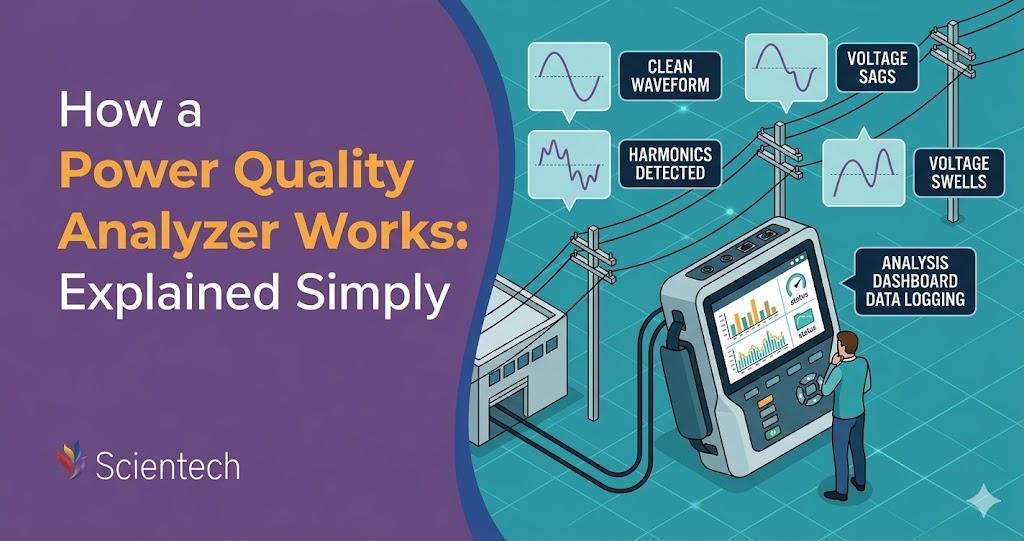
In modern electrical systems, maintaining stable and reliable power is essential. Industries, laboratories, educational institutions, and commercial facilities depend on high-quality electricity to ensure equipment operates efficiently and safely. However, power disturbances such as voltage fluctuations, harmonic distortion, and frequency variations can disrupt operations and damage sensitive devices.
To monitor and diagnose these issues, engineers and technicians use a specialized instrument known as a power quality analyzer. This device plays a critical role in identifying electrical problems, optimizing energy usage, and ensuring the reliability of electrical infrastructure.
What Is a Power Quality Analyzer?
A power quality analyzer is an advanced electrical diagnostic instrument used to measure, monitor, and analyze various parameters of electrical power systems. It helps identify issues related to voltage stability, current flow, harmonic distortion, and overall power performance.
Unlike simple multimeters or power meters, a power quality analyzer provides detailed insights into the behavior of electrical systems over time. By capturing real-time data and recording disturbances, the analyzer allows engineers to understand the root causes of electrical problems.
Power quality analyzers are commonly used in:
-
Industrial plants
-
Manufacturing facilities
-
Electrical maintenance departments
-
Research laboratories
-
Educational institutions
-
Power utilities
-
Commercial buildings
These devices help professionals maintain efficient electrical systems and prevent costly failures.
Why Power Quality Matters in Electrical Systems
Electric power is expected to maintain consistent voltage, frequency, and waveform characteristics. When deviations occur, the result is known as poor power quality.
Poor power quality can lead to several operational challenges.
Equipment Malfunction
Sensitive electronics and automation systems may malfunction due to voltage fluctuations or harmonic distortion.
Reduced Equipment Lifespan
Electrical disturbances increase stress on motors, transformers, and electronic components.
Increased Energy Loss
Power inefficiencies result in wasted energy and higher electricity costs.
Unexpected Downtime
Voltage dips or surges can cause equipment shutdowns, leading to production losses.
Safety Risks
Severe power disturbances can create overheating or electrical hazards.
A power quality analyzer helps engineers detect these issues early and take corrective action before they become major problems.
Benefits of Using a Power Quality Analyzer
Using a power quality analyzer provides several important advantages.
Improved Electrical Reliability
Continuous monitoring ensures stable power supply.
Reduced Maintenance Costs
Early detection of issues prevents expensive repairs.
Energy Efficiency Improvements
Analyzers help identify areas where energy is being wasted.
Better Equipment Protection
Monitoring helps protect sensitive equipment from power disturbances.
Compliance with Electrical Standards
Many industries must comply with power quality regulations.
These benefits make power quality analyzers essential for modern electrical management.
How to Choose the Best Power Quality Analyzer
Selecting the best power quality analyzer depends on several factors.
Measurement Requirements
Ensure the analyzer measures all necessary parameters such as voltage, current, harmonics, and energy.
Ease of Use
User-friendly controls and displays improve efficiency during field work.
Data Analysis Software
Software tools should provide clear graphs, logs, and reports.
Connectivity Options
Wireless connectivity simplifies data transfer and remote monitoring.
Safety Ratings
High safety ratings ensure safe operation in high-voltage environments.
Evaluating these factors helps organizations select the right analyzer for their specific applications.
Conclusion
A power quality analyzer is a critical tool for monitoring and maintaining the health of electrical systems. By measuring voltage, current, frequency, harmonics, and other parameters, the analyzer helps engineers identify power disturbances and improve system performance.
Understanding how a power quality analyzer works allows organizations to optimize energy usage, prevent equipment damage, and ensure reliable power supply.
When choosing the best power quality analyzer, it is important to consider measurement capabilities, usability, safety features, and data analysis tools.
As industries continue to rely on advanced electrical systems, power quality monitoring will remain essential for ensuring efficiency, reliability, and operational success.
Learn how a power quality analyzer works, what it measures, and how to choose the best power quality analyzer for monitoring voltage, harmonics, and electrical performance.

 English
 Arabic
 Français
 Español
 Deutsch
 Türkçe
 Dutch
Dutch
 Italiano
 Russian
 Romaian