


How Interactive Learning Transforms Course Engagement
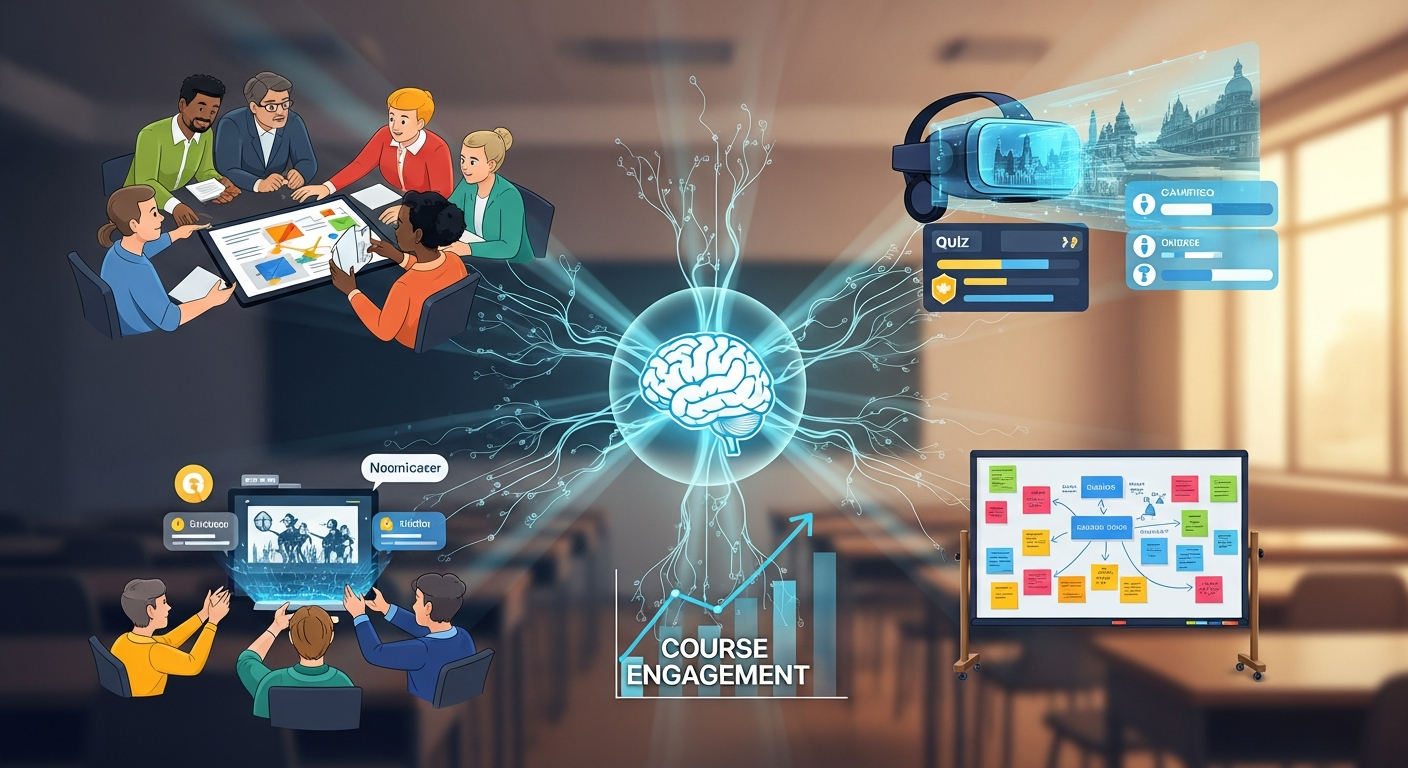
Passive learning has a retention problem. Students sit through lectures, take notes, and then forget most of what they heard within days. Research suggests people retain only 10% of what they read, but up to 75% of what they learn through hands-on practice. That gap is exactly why interactive learning has become one of the most significant shifts in modern education.
Whether you're building an online course, teaching in a classroom, or running corporate training, the way learners engage with material directly affects how much they absorb—and how long it sticks.
What Makes Learning "Interactive"?
Interactive learning is any approach that actively involves learners in the educational process rather than positioning them as passive recipients of information. Think quizzes, simulations, scenario-based exercises, group discussions, and real-time feedback.
The key distinction is participation. Students aren't just consuming content—they're responding to it, applying it, and making decisions based on it.
How Engagement Changes the Learning Outcome
It creates a feedback loop
One of the biggest advantages of interactive formats is immediate feedback. When a learner answers a quiz question incorrectly and receives an explanation right away, the correction happens while the concept is still fresh. This reinforces accurate understanding and helps prevent misconceptions from taking root.
Traditional assessments—like end-of-module tests—often come too late to change how information was initially processed.
It increases time-on-task
Courses built around interactive elements consistently see higher completion rates. The reason is straightforward: when learners feel involved, they're less likely to check out. A well-placed drag-and-drop exercise or branching scenario creates a sense of progress and momentum that passive video content simply can't replicate.
It mirrors real-world application
Scenario-based learning puts concepts into context. Instead of telling learners about a challenging customer conversation, you simulate one—complete with choices and consequences. That experiential quality makes the lesson feel relevant, which is a powerful motivator for adults in particular.
Practical Ways to Add Interactivity to Your Course
You don't need a large budget or a development team to make your course more interactive. A few targeted changes can make a meaningful difference:
- Add knowledge checks throughout, not just at the end. Short, low-stakes quizzes after each section reinforce learning and maintain focus.
- Use discussion prompts to encourage learners to connect material to their own experience. Even in async formats, this builds a sense of community.
- Replace passive video with branching scenarios where possible. Tools like Articulate Storyline and Adobe Captivate make this more accessible than ever.
- Incorporate real-world tasks so learners practice applying skills, not just recalling facts.
The Engagement-Retention Connection
Engagement isn't just a feel-good metric. It's a direct predictor of knowledge retention and behavioral change—which is ultimately what any course is trying to achieve.
A learner who completes a course passively might finish it. A learner who engages with it actively is far more likely to remember, apply, and benefit from what they learned. That distinction matters whether you're teaching a technical skill, onboarding new employees, or helping students meet academic goals.
Make Engagement the Design Priority
The most effective courses are built with engagement as a design principle from the start, not something added after the fact. That means asking, at every stage of development: how does the learner interact here? What do they do next? How will they know if they understood this?
Start small if you're revising an existing course. Swap one passive section for an interactive exercise and measure the difference in completion or assessment scores. The results often speak for themselves.
Interactive learning doesn't just make courses more enjoyable—it makes them work better.
Read more about this topic: Interactive Learning

 English
 Arabic
 Français
 Español
 Português
 Deutsch
 Türkçe
 Italiano
 Russian
 Romaian