


Honeycomb Aluminum Foil: Core Design Variables, Process Compatibility, and Application Engineering
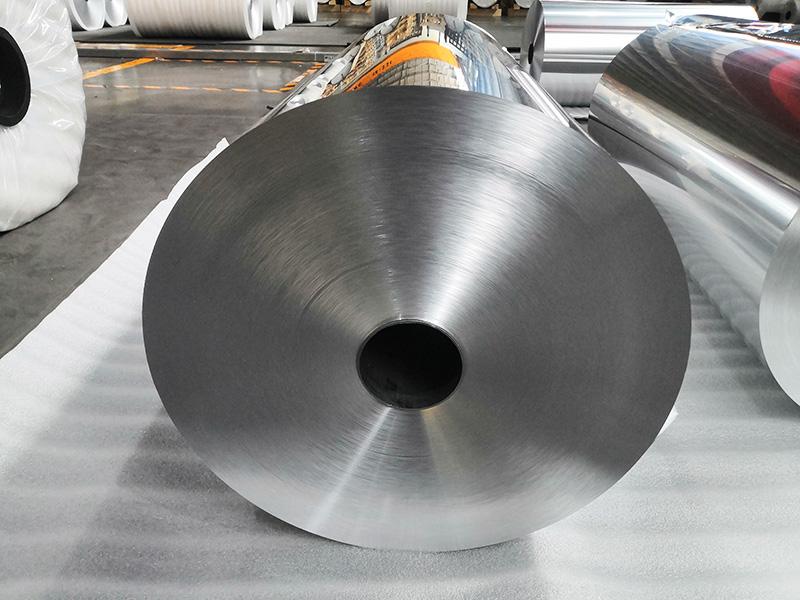
Honeycomb aluminum foil is an engineered cellular core produced by stacking, bonding, and expanding aluminum foil into a regular hexagonal lattice. Unlike solid plates that gain stiffness primarily through thickness and mass, honeycomb cores achieve stiffness through geometry. When used inside a sandwich panel, the honeycomb core increases the distance between face sheets and resists shear deformation, enabling large, rigid panels with excellent dimensional stability and reduced overall weight.
A key advantage of Honeycomb aluminum foil is its design flexibility. Core properties can be tuned by adjusting cell size, foil gauge, core height, and density. Smaller cells and thicker foils generally improve compressive strength and shear properties, while larger cells reduce weight and can improve airflow or acoustic behavior in certain configurations. Additional variables—such as node bonding pattern, core orientation (ribbon direction), and tolerance control—directly influence panel flatness, machinability, and mechanical anisotropy, which are important considerations in transportation and aerospace interior structures.
From a processing perspective, honeycomb aluminum foil cores are compatible with a wide range of panel constructions and fabrication methods. They can be bonded to metal or composite skins using film adhesives, pastes, or structural epoxies, with process parameters selected to ensure full wet-out, controlled bond-line thickness, and durable adhesion. Cores can be supplied in blocks or sheets, and can be cut, machined, perforated, or formed into complex shapes for ducts, fairings, bulkheads, door panels, and architectural components. For moisture-prone or corrosive environments, edge sealing and proper drainage design are essential to prevent fluid entrapment and preserve long-term performance.
Quality assurance typically focuses on cell uniformity, bond integrity, density consistency, and surface condition to ensure reliable bonding and predictable mechanical response. Standard evaluations may include compressive strength, shear strength, flatwise tensile (core-to-skin bond) testing, and dimensional inspections. When properly engineered within a sandwich structure, honeycomb aluminum foil provides a high-efficiency solution that balances stiffness, strength, fire performance, and weight reduction across demanding industrial and transportation applications.

 Arabic
 Français
 Español
 Português
 Deutsch
 Türkçe
 Dutch
Dutch
 Italiano
 Russian
 Romaian