


Everest 2 PM Rule Explained — Why It Exists, How It Saves Lives & What Climbers Need to Know
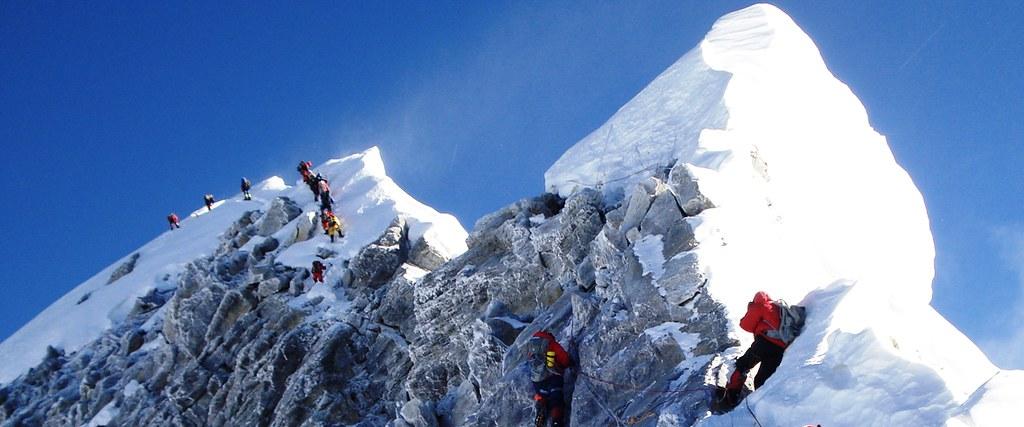
Mount Everest — known in Nepali as Sagarmāthā and in Tibetan as Chomolungma — is the tallest mountain on Earth, standing at 8,848.86 meters (29,031.7 feet). Every spring, climbers from around the world journey to Nepal with one goal: reaching the summit of Everest. But although the summit is the iconic destination, the real challenge lies in descending safely. That’s where the Everest 2 PM Rule comes in — a safety guideline that has become an essential part of every serious Everest expedition.
In this full‑length guide, you’ll learn:
- What the Everest 2 PM Rule really means
- How it developed and why it matters
- How it affects summit day strategy
- Common misconceptions
- Risks of ignoring it
- How climbers prepare to meet it
- Its relevance to trekkers and Everest Base Camp visitors
- Final takeaways for anyone interested in peak climbing
Let’s dive in.
What Is the Everest 2 PM Rule?
The Everest 2 PM Rule — sometimes referred to as the summit turnaround time — is a decision threshold used on Mount Everest. Simply put:
If climbers attempting the summit have not reached the top by 2:00 PM (local time), they must immediately turn around and start descending — even if they are only a short distance from the summit.
This rule applies to serious mountaineering expeditions on the standard Nepal routes (like the South Col route via the Southeast Ridge). It is not a bureaucratic rule written in law, but a widely accepted safety standard used by experienced guides, Sherpas, and reputable expedition teams.
The purpose is clear: to reduce risk and increase the chance that climbers return alive.
Why 2 PM? The Logic Behind the Turnaround Time
Choosing 2 PM as the cutoff for summit attempts might seem arbitrary at first glance. But when you understand how Everest climbing works, the logic becomes clear. There are several key reasons for this specific timing:
1. Weather Conditions Change in the Afternoon
Mountain weather is notoriously unpredictable, but it follows patterns. On Everest, winds tend to pick up significantly in the afternoon, and temperature drops sharply. Higher winds and colder conditions can overwhelm even experienced climbers, especially on the descent when bodies are already fatigued.
This means that a late summit attempt often means fighting against worsening weather — one of the most dangerous situations in high‑altitude mountaineering.
2. Daylight Hours Are Critical
Most Everest summits occur in May, when daylight hours are long. But even then, sunset can come early in the high mountains. Climbers plan to summit early in the morning so they can descend back to safer camps before dusk. If a team lingers above a key threshold — like the South Col or the summit — past 2 PM, they risk being caught in darkness.
Descending in darkness at extreme altitude is dangerous because of:
- Reduced visibility
- Cold risk (hypothermia, frostbite)
- Increased chance of slips and missteps
3. Oxygen Supply Runs Low
Above ~8,000 m, climbers enter what mountaineers call the “death zone.” At these heights, oxygen levels are so low that the human body cannot recover properly. Many climbers use supplemental oxygen to sustain energy and cognition during the summit push.
Supplemental oxygen is limited — teams estimate exactly how much they need for the ascent and descent. If a climber stays too long above key points because they try to summit late, they can run out of oxygen before reaching lower camps, creating a life‑threatening situation.
4. Human Physiology Changes at Altitude
The body behaves differently at extreme height. Above 7,000 meters, fatigue accumulates faster, decision‑making is weaker, and dehydration and hypoxia (lack of oxygen in tissues) set in quickly. All of this makes late‑day descent far riskier than an early descent.
Climbing guides and expedition planners know this well — and build the turn‑around buffer to keep climbers in stronger physical condition during descent.
How Summit Day Is Planned Around the 2 PM Rule
Summit day on Everest is not spontaneous; it is a carefully orchestrated sequence of events that spans nearly 18 hours, often starting just after midnight.
Here’s a typical timeline for a safe summit attempt:
| Time | Activity |
|---|---|
| 10:00 PM — Midnight | Climbers depart Camp IV (South Col) with oxygen and gear |
| Early Morning (2–6 AM) | Climbers ascend through fixed ropes and obstacles |
| Sunrise — Mid‑Morning | Most climbers reach highest technical sections |
| Late Morning (8–11 AM) | Summit attempts continue, weather still favorable |
| 2:00 PM | Turnaround time — climbers must descend if not at summit |
| Afternoon | Descending to lower camps |
| Evening | Back in Camp IV or Camp III for rest |
This is a generalized plan and can change based on weather windows, team pace, and conditions on the mountain. But the core idea remains: summit early and descend before conditions worsen.
The Origins of the Everest 2 PM Cutoff
The 2 PM Rule didn’t suddenly appear on Everest one year like a law. It evolved over decades of high‑altitude climbing experience.
In Everest’s early commercial era (1990s and early 2000s), many climbers reached the summit later in the day due to crowding, poor pacing, or lack of experience. Some of the most tragic days on Everest — when multiple climbers died during descent — involved late summits combined with deteriorating weather.
Experienced leaders and Sherpa guides began to push for set turnaround times to increase safety. Over time, 2 PM became the generally accepted threshold for most guided teams on the Nepal side because it allows:
✔ Summit before winds rise
✔ Enough daylight to descend
✔ Sufficient oxygen reserves for return
Today, reputable expedition companies include this deadline in their summit strategy and will mandate it as part of their safety protocol.
Is the 2 PM Rule a Law or a Suggestion?
Here’s a common misconception:
👉 The 2 PM Rule is not a government law. Nepal’s climbing regulations do not explicitly state “all climbers must stop climbing by 2 PM.”
However:
✔ Most professional expedition operators enforce it strictly.
✔ Many guides refuse to let a client push past the cutoff.
✔ Ignoring it is widely considered unsafe and reckless.
Experienced climbing teams view it as a non‑negotiable safety standard, not a loose suggestion.
Risks of Ignoring the 2 PM Rule
Some climbers struggle with the idea of turning back when the summit feels within reach. But ignoring the cutoff can lead to serious consequences:
☑ Worse Weather on Descent
Afternoon winds and cloud build‑up make the descent especially hazardous. Descending is already harder than ascending — mistakes are more likely when climbers are tired and weather is bad.
☑ Oxygen Depletion
Climbers risk exhausting their supplemental oxygen tanks when they stay too long at extreme altitudes. Running out of oxygen can:
- Increase fatigue
- Impair decision‑making
- Lead to hypoxia and loss of consciousness
☑ Increasing Frostbite Risk
Late afternoons are colder. The longer you stay at high altitude in freezing conditions, the greater the risk of frostbite — especially fingers, toes, and the face.
☑ Greater Exposure to Altitude Illness
High altitude illnesses like High Altitude Pulmonary Edema (HAPE) and High Altitude Cerebral Edema (HACE) become more likely when climbers linger above 8,000 meters. Early descent reduces this risk.
Debunking Common Myths About the 2 PM Rule
Let’s clear up some misunderstandings:
Myth: “Only inexperienced climbers need to follow it.”
Truth: All climbers should. Even elite mountaineers respect the turnaround time because it’s based on safety logic, not ability.
Myth: “You can ignore the rule if you’re a few meters from the summit.”
Truth: Many serious guides enforce no exceptions — proximity doesn’t matter if the clock has passed 2 PM.
Myth: “2 PM is a hard law written by authorities.”
Truth: It’s a widely accepted mountaineering standard, not a government regulation — but climbing teams treat it as critical for survival.
How Climbers Prepare to Meet the 2 PM Rule
Meeting the 2 PM cutoff requires strong planning:
✔ Acclimatization
Climbers spend weeks at progressively higher camps to let their bodies adjust — reducing fatigue on summit day.
✔ Early Starts
Expedition teams plan departures from Camp IV late at night so climbers can reach key sections early.
✔ Weather Monitoring
Leaders and meteorologists track wind, temperature, and storm patterns for the ideal summit window — often weeks in advance.
✔ Pacing and Turning Back
Sherpas and guides monitor progress and may turn back slower climbers early to ensure safety.
Is the 2 PM Rule Used on Other Mountains?
Yes — though the exact time may differ, similar summit turnaround guidelines are used on other high peaks above 8,000 meters. The principle remains the same:
Don’t push for the summit if doing so risks your ability to descend safely.
This concept is increasingly part of modern high‑altitude climbing philosophy worldwide.
For Trekkers and Everest Base Camp Visitors
If you’re trekking to Everest Base Camp (EBC) or enjoying scenic flights, you don’t need to worry about the 2 PM Rule. It only applies to climbers attempting to reach the actual summit.
However, the spirit of the rule — respecting mountain weather and safety limits — is a valuable lesson for all mountain lovers.
Final Thoughts: Summit Smart, Descend Alive
The Everest 2 PM Rule isn’t about limiting ambition — it’s about valuing life. Every experienced Everest guide and high‑altitude climber knows that standing on the summit is only half the journey. The other half is getting down safely.
When someone turns back before the summit, it’s not a failure. It’s a wise decision based on real mountain conditions.
If you hope to climb Everest — or just admire its grandeur — understanding this rule will help you appreciate how mountaineering blends courage with prudence.
Frequently Asked Questions — Everest 2 PM Rule
Q: Does the 2 PM Rule guarantee safety?
A: No guideline can guarantee safety in extreme environments, but the 2 PM Rule greatly reduces risk by prioritizing descent before conditions worsen.
Q: What happens if a climber tries to push past the cutoff?
A: Reputable guides will pull their clients back. Continuing past the deadline is widely viewed as unsafe.
Q: Is the rule enforced by the government?
A: Not officially in law — but professional expeditions incorporate it into their safety planning.
Q: Do trekkers need to follow this rule?
A: No. Trekkers going to Everest Base Camp do not need to worry about the 2 PM Rule.

 Arabic
 Français
 Español
 Português
 Deutsch
 Türkçe
 Dutch
Dutch
 Italiano
 Russian
 Romaian