


How Artificial Intelligence in Education Changes Learning
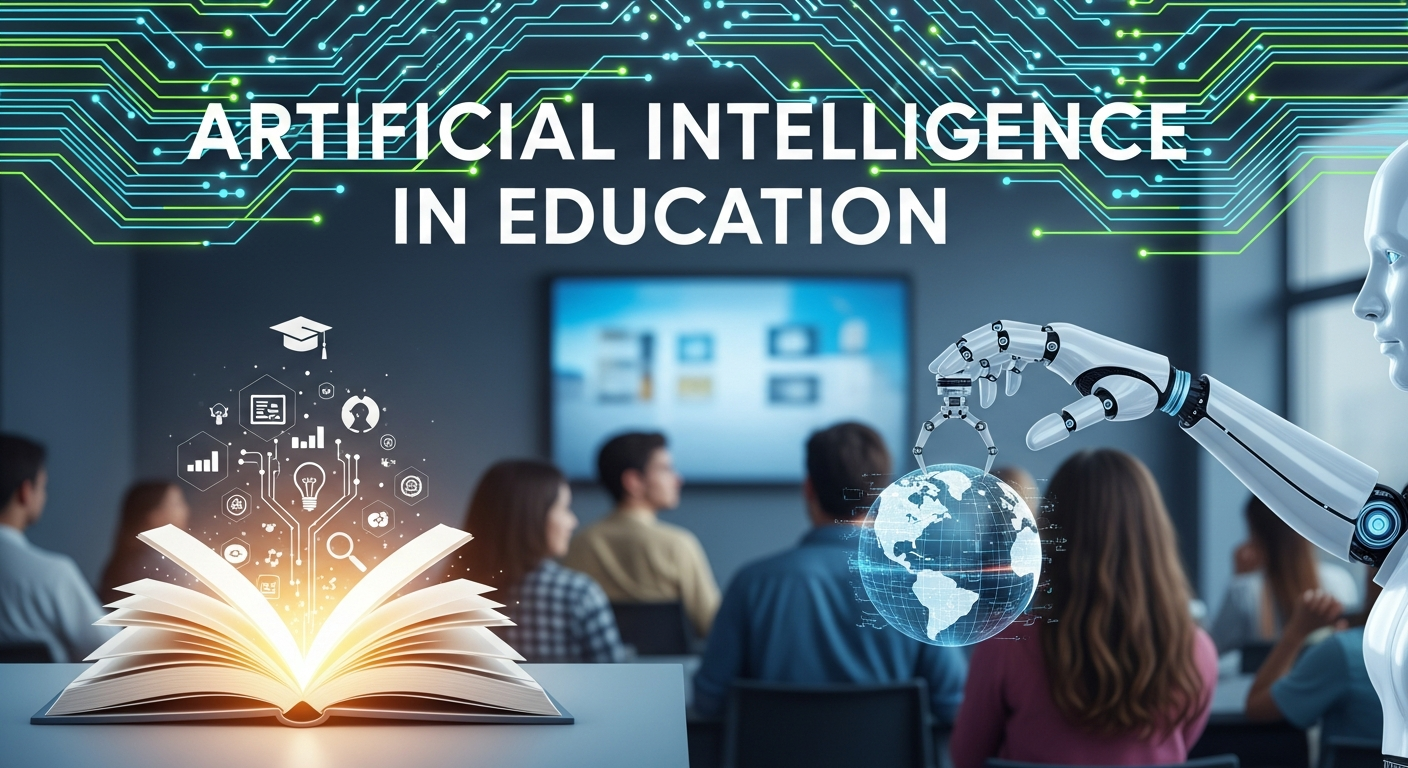
Chalkboards and printed textbooks once defined the boundaries of a student's educational experience. For generations, classrooms operated on a standardized model, expecting every student to absorb information at the exact same pace. This traditional approach left some students bored and others overwhelmed, simply because human learning is inherently diverse and complex.
A profound shift is currently happening across schools and universities worldwide. Educators are moving away from the one-size-fits-all model, recognizing that true comprehension requires a highly individualized approach. The catalyst for this transformation is not just a change in teaching philosophy, but the rapid integration of advanced technology into everyday learning environments.
Artificial Intelligence in Education stands at the forefront of this educational renaissance. By leveraging advanced algorithms, machine learning, and natural language processing, schools can now analyze student data in real-time. This allows educational institutions to tailor curricula, provide instant feedback, and create dynamic learning environments that adapt to the unique needs of every single learner.
Understanding how artificial intelligence in education works is essential for parents, teachers, and students. This fundamental shift reshapes not only how information is delivered, but how cognitive skills are developed, ensuring the next generation is adequately prepared for a highly complex, technology-driven future.
The Core Role of Artificial Intelligence in Education
Artificial intelligence does not replace human teachers. Instead, it serves as a powerful extension of their capabilities. By handling complex data analysis and repetitive tasks, artificial intelligence in education allows human educators to focus on mentorship, emotional intelligence, and complex problem-solving.
Personalized Learning Paths
Historically, a teacher with thirty students could not possibly create thirty distinct lesson plans every single day. Artificial intelligence solves this logistical nightmare through adaptive learning platforms. These systems continuously assess a student's performance, tracking which concepts they grasp quickly and which ones require more review.
If a student struggles with algebraic equations, the AI platform automatically adjusts the upcoming coursework. It might provide additional practice problems, suggest a helpful video tutorial, or break the concept down into smaller, more digestible steps. Conversely, if a student excels in a particular subject, the system introduces more advanced material to keep them engaged and appropriately challenged. This dynamic adjustment ensures that no student is left behind and no student is held back.
Smart Tutoring Systems
Learning does not stop when the school bell rings. Students often encounter their most significant academic hurdles while completing homework late at night, long after their teachers have gone home. Smart tutoring systems provide a reliable, on-demand academic support network.
These AI-driven tutors use natural language processing to understand student queries and provide step-by-step guidance. Rather than simply giving the student the correct answer, effective smart tutors ask prompting questions, encouraging the student to arrive at the solution independently. This method mimics the Socratic teaching style, fostering deep comprehension rather than rote memorization. Students gain confidence and build resilience as they learn to navigate complex problems with the gentle guidance of an intelligent virtual assistant.
Empowering Teachers and Administrators
The impact of artificial intelligence in education extends far beyond the student experience. It offers a lifeline to educators who are chronically overworked and bogged down by administrative burdens.
Automating Administrative Tasks
Grading hundreds of essays, quizzes, and homework assignments consumes a massive portion of a teacher's schedule. AI grading systems can now evaluate multiple-choice tests instantly and are becoming increasingly proficient at assessing written responses. By analyzing grammar, structure, and content, these tools provide objective, immediate feedback to students.
Beyond grading, artificial intelligence can streamline scheduling, track attendance, and manage student enrollment data. When these time-consuming administrative tasks are automated, teachers reclaim hours of their week. They can redirect this valuable time toward one-on-one student interactions, curriculum development, and their own professional growth.
Real-Time Performance Analytics
Data is only useful if it can be interpreted and acted upon. AI dashboards aggregate student performance metrics, transforming raw data into actionable insights for educators. A teacher can open a dashboard and immediately see which specific topics the entire class struggled with during the last assignment.
This macro-level view allows educators to adjust their teaching strategies on the fly. If the analytics show that eighty percent of the class failed a quiz on cellular mitosis, the teacher knows to review that concept thoroughly the next day. Furthermore, predictive analytics can flag students who are at risk of failing or dropping out long before it happens, allowing counselors and teachers to intervene proactively with targeted support.
Breaking Down Barriers to Accessibility
Education should be a universal right, yet systemic barriers frequently prevent marginalized groups from accessing quality learning materials. Artificial Intelligence in education acts as a great equalizer, dismantling many of these traditional obstacles.
Inclusive Learning Environments
Students with learning disabilities often require specialized accommodations that underfunded schools struggle to provide. AI-powered assistive technologies offer customized support for these individuals. Speech-to-text programs help students with dysgraphia write essays by simply speaking their thoughts aloud. Text-to-speech tools assist visually impaired students or those with dyslexia by reading digital text with natural-sounding voices.
Furthermore, artificial intelligence can modify the formatting of educational materials, adjusting font sizes, contrast, and spacing to suit the specific visual or cognitive needs of the user. By building these accommodations directly into learning platforms, artificial intelligence fosters a truly inclusive environment where every student has the tools they need to succeed.
Global Reach and Language Translation
The internet connected the world, but language barriers still limit the exchange of knowledge. AI-driven translation tools are erasing these borders within the educational sector. Real-time translation allows a student in rural Brazil to watch a complex physics lecture delivered by a professor in Tokyo, with perfectly synced subtitles in Portuguese.
This globalized approach to learning broadens perspectives and democratizes access to elite educational resources. Additionally, AI language learning applications provide immersive, conversational practice for students learning a second language. These apps listen to pronunciation, correct grammar instantly, and adapt their vocabulary lists based on the user's specific progress.
Preparing Students for a Tech-Driven Future
The current generation of students will enter a workforce that looks drastically different from today's. Routine jobs are increasingly automated, meaning the economy of the future will heavily prioritize unique human skills.
Skill Development Beyond Textbooks
Memorizing dates and facts is no longer a primary objective of education, because search engines can retrieve that information in milliseconds. Instead, artificial intelligence in education shifts the focus toward skill application. Simulation-based learning environments, powered by AI, allow students to safely practice real-world skills.
Medical students can diagnose virtual patients, making critical decisions and seeing the simulated outcomes of their choices. Engineering students can design and test virtual bridges under various stress conditions. These immersive experiences build practical competence and prepare students for the complex, hands-on challenges they will face in their careers.
Critical Thinking and Problem Solving
Because AI handles information retrieval and basic data processing, students are challenged to develop higher-order cognitive skills. Educators are using AI to present students with complex, open-ended problems that require creativity, critical thinking, and collaboration to solve.
Students must learn to analyze the data generated by AI, question its validity, and use it to form well-reasoned arguments. Learning to work alongside artificial intelligence, rather than competing against it, is perhaps the most crucial skill a modern educational institution can teach. This symbiotic relationship between human intuition and machine efficiency forms the foundation of the modern professional landscape.
Challenges and Ethical Considerations
While the benefits are substantial, integrating artificial intelligence in education introduces significant challenges that society must carefully navigate. Ignoring these issues could inadvertently cause harm or widen existing societal gaps.
Data Privacy and Security
Adaptive learning platforms require massive amounts of student data to function effectively. They track everything from test scores and reading speeds to physical location and behavioral patterns. Protecting this highly sensitive information is a paramount concern.
Schools and technology providers must establish rigorous cybersecurity protocols to prevent data breaches. Furthermore, there must be absolute transparency regarding how student data is collected, stored, and used. Parents and students need clear assurances that educational data will never be sold to third-party advertisers or used to unfairly profile students.
The Digital Divide
Artificial intelligence relies heavily on robust internet infrastructure and access to modern hardware. Unfortunately, a severe digital divide exists both globally and within local communities. Wealthy school districts can afford the latest AI software, tablets, and high-speed internet. Underfunded schools, however, often lack the basic infrastructure required to support these technologies.
If this disparity is not addressed, artificial intelligence in education will only exacerbate existing inequalities. Policymakers and technology companies must work collaboratively to ensure equitable access to educational technology. Funding initiatives, community broadband projects, and subsidized hardware programs are essential to guarantee that all students, regardless of their socioeconomic status, can benefit from AI-enhanced learning.
Frequently Asked Questions (FAQ)
Will AI replace human teachers?
No. Artificial intelligence is a tool designed to support educators, not replace them. AI excels at data analysis and repetitive tasks, while human teachers provide the empathy, mentorship, and moral guidance that machines cannot replicate.
How does AI help students with learning disabilities?
AI provides highly customized assistive technologies. Examples include advanced speech-to-text software for students with writing difficulties, text-to-speech programs for visually impaired individuals, and adaptive interfaces that modify content formatting to suit specific cognitive needs.
Is student data safe when using AI educational platforms?
Data privacy is a major priority. Reputable educational technology companies adhere to strict data protection regulations and use robust encryption. However, it is always recommended that schools and parents carefully review the privacy policies of any AI software before allowing students to use it.
Can AI improve remote or online learning?
Yes. AI significantly enhances remote learning by providing personalized feedback, facilitating smart tutoring sessions outside of school hours, and using analytics to help teachers monitor student engagement and comprehension from a distance.
What is the biggest challenge of implementing AI in schools?
The digital divide remains the most significant challenge. Ensuring equitable access to the necessary hardware and high-speed internet is crucial; otherwise, AI tools will disproportionately benefit wealthy school districts and leave underfunded communities further behind.
Embracing the Next Chapter of Learning
The integration of artificial intelligence in education is an ongoing evolution that requires careful management, thoughtful policy, and a commitment to equity. The goal is not simply to digitize old teaching methods, but to completely reimagine the landscape of learning. By recognizing the unique potential of every student and providing the tailored support they need, educational systems can unlock unprecedented levels of human achievement.
Educators, parents, and policymakers must collaborate closely to navigate the ethical challenges and infrastructure demands of this new era. Review your local school district's technology policies, advocate for equitable funding for digital infrastructure in your community, and stay informed about the latest developments in educational technology. By actively participating in this transition, you can help ensure that the classroom of tomorrow empowers every student to reach their full potential.

 English
 Français
 Español
 Português
 Deutsch
 Türkçe
 Dutch
Dutch
 Italiano
 Russian
 Romaian